Ten Big Benefits of Using Corn Starch Biodegradable Tableware
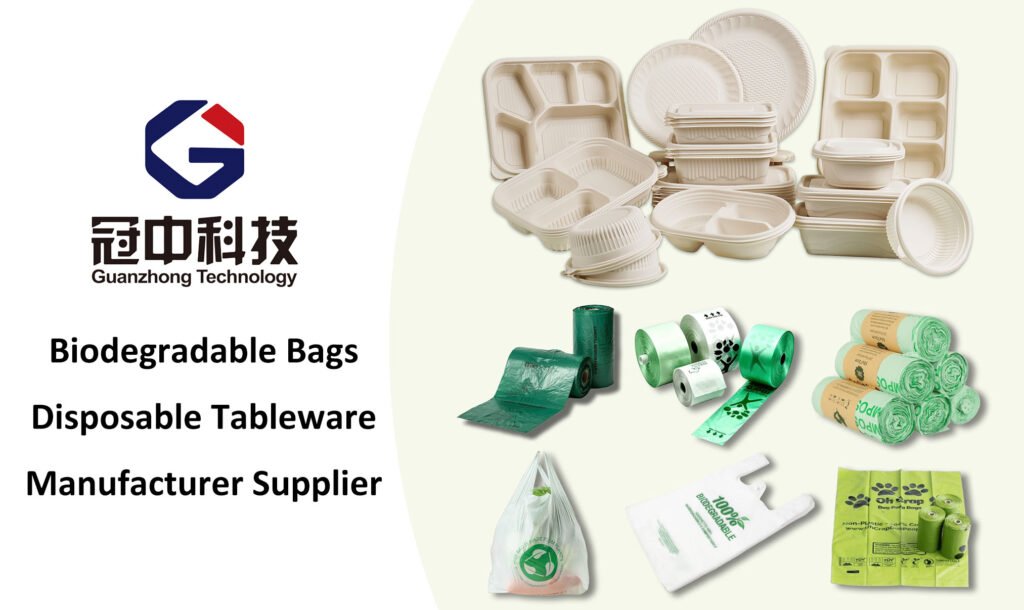
Corn starch biodegradable tableware is an eco-friendly disposable tableware made primarily from natural corn starch through modern processing technology. It not only offers excellent performance but also aligns with global environmental trends, gaining increasing favor among businesses and consumers. Here are the ten core benefits of choosing corn starch tableware:
Rapid Biodegradability
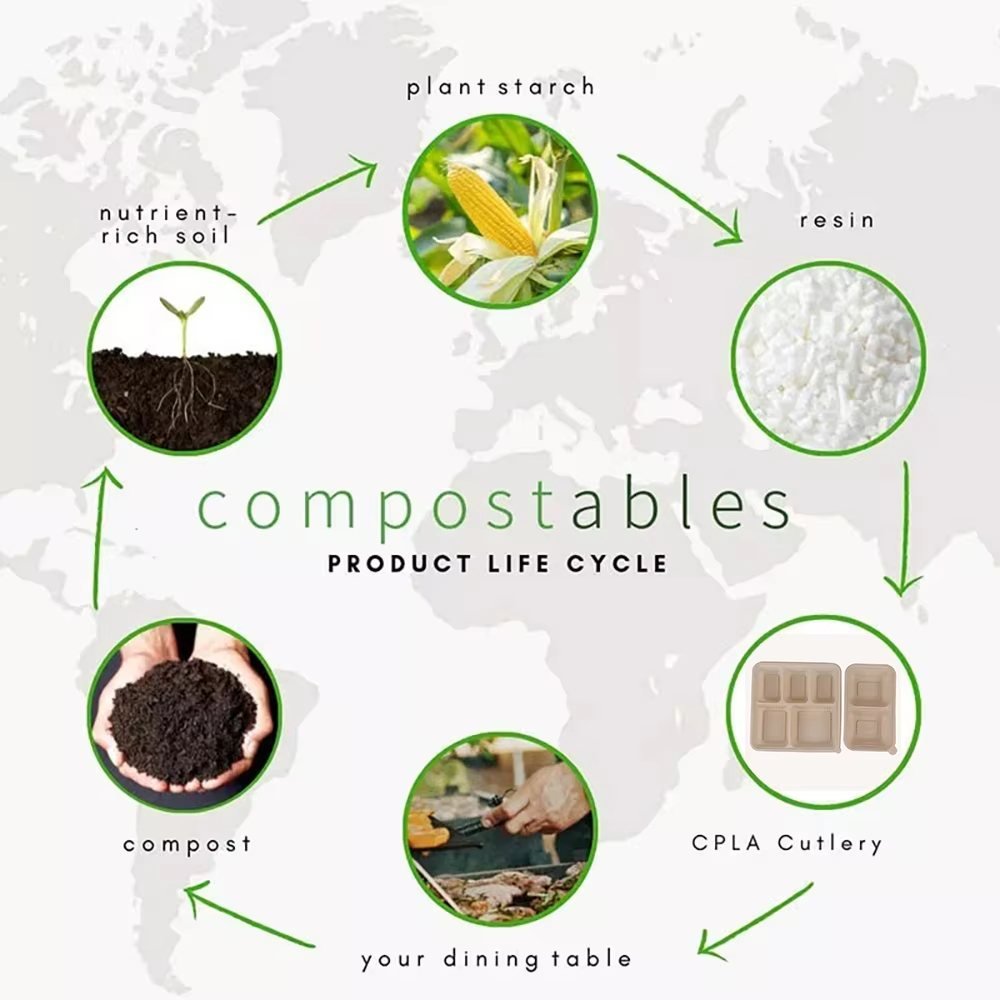
Corn starch tableware can fully degrade under suitable conditions, producing water and carbon dioxide with no microplastic residue. According to international standards such as ASTM D6400 and DIN EN 13432, this type of tableware can completely decompose in industrial compost environments within 3–6 months, posing no harm to soil or water.
Renewable Raw Materials and Environmental Sustainability
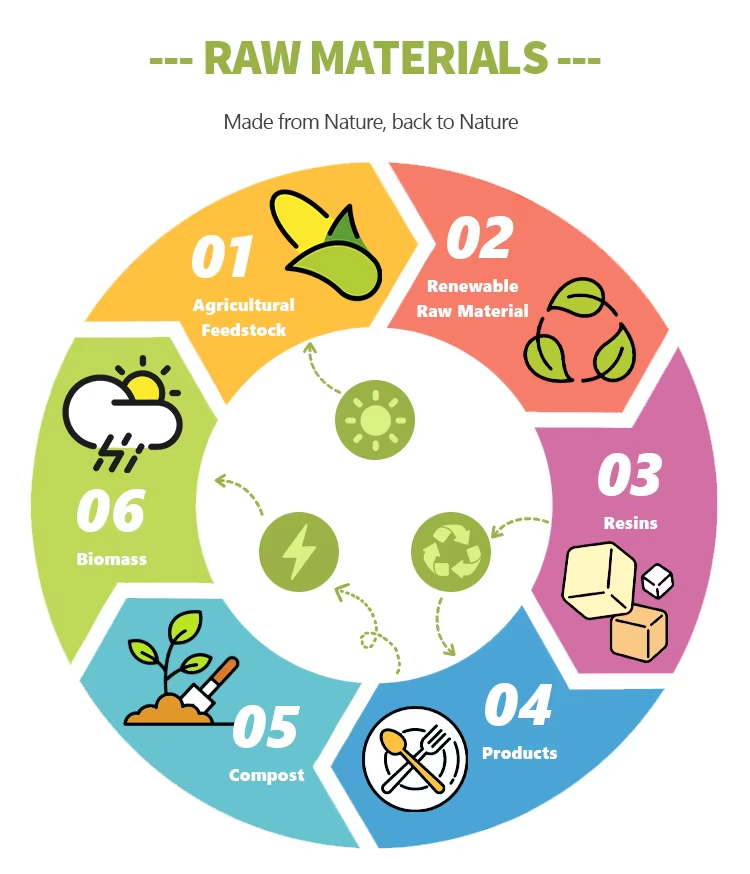
Corn starch comes from renewable corn crops, which can be harvested annually, ensuring stable and eco-friendly supply. Compared with traditional petroleum-based plastics, corn starch tableware reduces dependence on non-renewable resources and supports a circular economy.
Lower Lifecycle Carbon Emissions (Based on LCA Data)
Life Cycle Assessment (LCA) shows that corn starch tableware has about 50% lower carbon emissions from raw material extraction, production, to disposal compared to disposable plastic tableware. The crop growth stage absorbs CO₂, and industrial composting further reduces greenhouse gas emissions.
Higher Food Safety (Compliant with FDA/EU Standards)
Corn starch tableware is made from natural plant materials and contains no harmful substances such as BPA or phthalates. It meets FDA, LFGB, and other international food contact safety standards, safely holding hot, oily, and cold foods.
Excellent Heat, Oil, and Water Resistance
Modified corn starch tableware can withstand temperatures up to 90°C and has good water- and oil-resistance. It maintains shape and prevents leakage when holding soups, coffee, or greasy foods, suitable for takeout, restaurants, hotels, and other scenarios.
High Strength and Structural Stability
By incorporating bio-resins and optimized molding techniques, corn starch tableware exhibits improved compression and impact resistance, ensuring durability during delivery and high-frequency restaurant use.
Flexible Design for Various Tableware Shapes
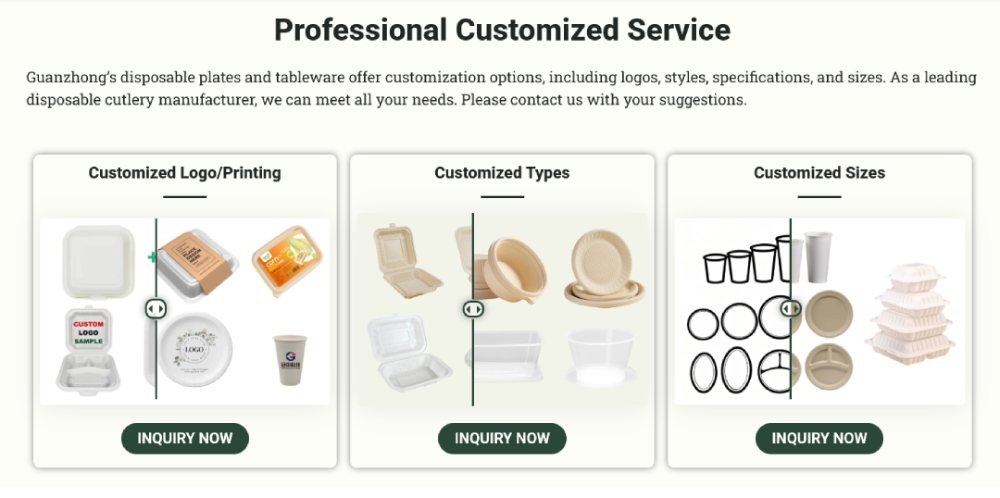
Corn starch tableware can be customized into plates, bowls, cutlery, and other shapes, with options for logo printing and color customization, helping companies create a unique brand identity.
Compliance with Global Plastic Ban Regulations and Environmental Trends
With increasing plastic restrictions worldwide, corn starch tableware complies with EU SUP directives, North American, and Chinese plastic bans, helping businesses pass regulatory audits and reduce legal risks.
Enhances Brand Image and Consumer Recognition
Using corn starch tableware communicates an eco-friendly corporate image, enhancing social responsibility. Many brands leverage green tableware to strengthen consumer trust and loyalty.
Mature Supply Chain and Scalable Production Lower Costs
With mature production technologies, corn starch tableware benefits from industrial-scale supply, allowing enterprises to obtain stable supply and cost advantages while balancing environmental and economic benefits.
The Science Behind Corn Starch Materials
The environmental and performance advantages of corn starch tableware are rooted in its material science. Corn starch mainly consists of amylose and amylopectin, which can be processed and modified to form thermoplastic materials.
1. Modified Starch Forms Thermoplastic Material
By adding plasticizers, bio-resins, and reinforcements, corn starch becomes moldable when heated and retains shape upon cooling. This ensures both ease of production and strength/durability of the tableware.
2. Biodegradation Mechanism
Corn starch polysaccharide chains are broken down by microorganisms in soil or compost into water and CO₂. Microbes secrete enzymes that cleave polysaccharide chains, completing natural recycling without lasting pollution.
3. Comparison with Other Materials
- PLA (Polylactic Acid): Slightly better heat resistance but higher cost
- Pulp Tableware: Degrades quickly but absorbs water and softens
- Conventional Plastic: Strong but non-degradable and environmentally harmful
Corn starch tableware balances food safety, biodegradability, mechanical properties, and process flexibility, making it an ideal plastic alternative.
Performance of Corn Starch Tableware in Practical Use
1. Physical Stability
Performs well in hot, oily, and wet environments, holding soups, coffee, or fried foods without deformation or leakage.
2. Mechanical Test Data
Resistant to compression, impact, and bending, suitable for takeout delivery and high-frequency restaurant use.
3. Wide Application Scenarios
- Takeout: Ensures food safety and durability
- Restaurant Chains: Complies with plastic ban regulations
- Schools & Hospitals: Food-safe and non-toxic
- Outdoor Events: Lightweight, convenient, and eco-friendly
4. Comparison with Plastic, PLA, and Pulp Tableware
- Plastic: Non-degradable, environmentally harmful
- PLA: Better heat resistance but higher cost
- Pulp: Fast degradation but prone to softening
Corn starch tableware balances safety, degradability, and practicality
5. Cost and Supply Chain Stability
With large-scale production, corn starch tableware costs are decreasing, and supply chains are mature, supporting bulk purchase and customization for businesses.

Choosing Guanzhong: A Trusted Partner for Corn Starch Biodegradable Tableware
- R&D and Material Advantages: Guanzhong has an advanced R&D center and experienced team focused on modifying and optimizing corn starch and bio-based materials. Scientific formulations ensure stable heat, oil, and water resistance while meeting international food safety standards. Multiple patents guarantee leading performance and biodegradability.
- Scalable Production Capacity: Guanzhong’s total factory area is about 200,000 m², with production workshops over 100,000 m², equipped with injection molding, thermoforming, blow molding, and modified material production lines, producing thousands of tons monthly. Large-scale automated production ensures stable supply and supports bulk customization and fast delivery.
- International Quality and Certification: Products pass China GB/T, ASTM D6400/D6866, DIN EN 13432, and US FDA tests, and have international industrial composting and BPI certifications. Exported to Europe, North America, and Asia, Guanzhong’s products meet global environmental regulations.
- Global Supply and Customization Services: Guanzhong supports OEM/ODM customization including tableware shape, size, logo, color, and packaging. Short mold development and flexible production cycles enable enterprises to meet differentiated needs and create personalized brand products.
- Comparative Advantages: Compared with ordinary biodegradable plates and cups manufacturers or biodegradable plate manufacturer, Guanzhong offers more mature R&D, reliable supply chains, strict quality control, and rich global export experience. Partnering with Guanzhong ensures high-quality, stable supply, professional customization, and comprehensive after-sales support.
| Start Your Customization | WhatsApp: +86 13665956245 | Email: peters@quanzhong-bio.com |
Corn starch biodegradable tableware combines environmental friendliness, degradability, safety, and practicality, making it an ideal replacement for traditional disposable plastics. The ten core benefits clearly show its value in environmental protection, regulatory compliance, brand image enhancement, and economic efficiency.
Choosing a professional supplier is crucial. Guanzhong, with strong R&D capabilities, scalable production, international certifications, and global supply experience, provides high-quality, customizable corn starch tableware solutions and serves as a key partner for enterprises moving toward a greener future.
Through scientific material selection and reliable supply chains, businesses can achieve both environmental and economic benefits while contributing to global sustainable development.