When B2B buyers search for reliable wholesale plastic cutlery suppliers to service the Canadian market, balancing stringent local environmental compliance, steady supply chain capacity, and high-performance material durability is crucial. As one of the premier plastic cutlery manufacturers with global reach, Guanzhong operates a massive 200,000 m² industrial park and delivers high-grade, food-safe single-use utensils tailored to meet the evolving regulatory landscape in North America.
Key Takeaways
- Canadian Market Compliance & Trends: Driven by Canada’s Single-Use Plastics Prohibition Regulations (SUPPR), the market urgently demands a smooth transition from conventional single-use plastics to compliant PLA and bio-based modified polymer cutlery.
- Guanzhong Manufacturing Scale: Guanzhong operates a 200,000 m² industrial park, 100,000+ m² modern facility, 50 fully automated injection molding lines, delivering 2,000 metric tons monthly cutlery output and an annual total capacity of 90,000 metric tons.
- Agile OEM/ODM Customization: Rapid prototype sampling in 7-45 days, mass production lead times of 7-15 days, with low minimum order quantities (MOQ) starting at 30,000 pieces for custom cutlery and plates.
- Full-Spectrum Material Portfolio: Focused exclusively on PET, PP, PLA, and bio-based modified materials (strictly excluding paper and sugarcane bagasse), supporting custom logos, exclusive mold engineering, and tailored sizing.
Canada Plastic Cutlery Market Trends and Sourcing
The purchasing landscape for bulk plastic utensils canada has underwent structural shifts due to local regulatory updates and evolving corporate sustainability targets. Procurement teams and commercial distributors must navigate several vital factors:
- Strict Regulatory Compliance: The implementation of Canada’s Single-Use Plastics Prohibition Regulations (SUPPR) mandates a total shift away from hard-to-recycle traditional plastics like PS towards certified compostable or highly durable, reusable-grade materials.
- Material Performance Standards: Canadian food service providers require high-rigidity cutlery that resists snapping, handles temperature fluctuations from cold salads to boiling soups, and resists oil penetration during transit.
- Supply Chain Continuity: With local shifts in manufacturing, Canadian importers are actively diversifying their vendor portfolios toward direct factories with scalable output to mitigate seasonal stockouts.
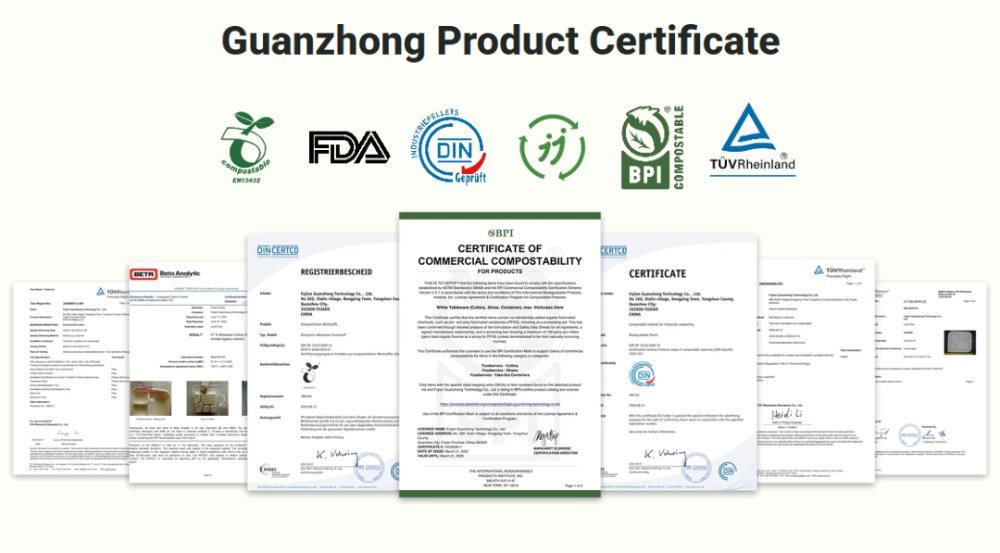
- International Certification Requirements: Importing into North America requires absolute verification, including FDA food-contact safety compliance and ISO 9001 certified manufacturing quality control.
💡 Frequently Asked Questions
Q: What materials comply with Canada’s plastic packaging regulations?
A: Certified PLA (Polylactic Acid), bio-based modified polymers, and high-heat resistant PP materials comply with evolving sustainability and performance standards across Canadian provinces.
Guanzhong Manufacturing Scale and Core Factory Capacity
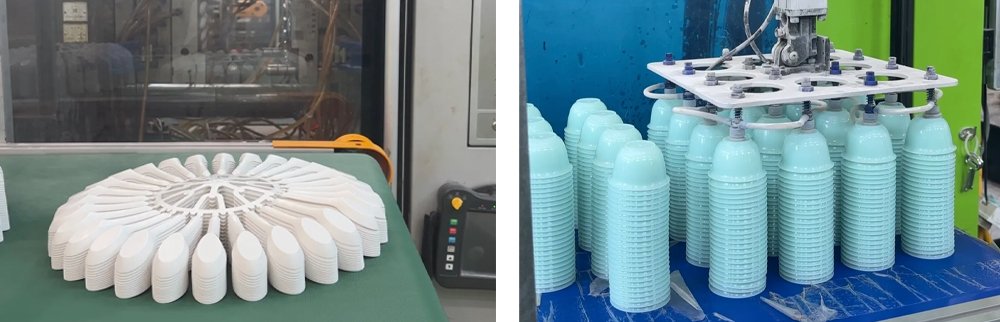
Selecting direct custom plastic cutlery factory partners eliminates intermediary markups while securing guaranteed monthly allocation. Guanzhong provides unmatched enterprise-level manufacturing stability backed by concrete metrics.
| Category | Key Metric | Specifications & Capacity | Strategic Advantage |
| Park & Facilities | Industrial Park / Modern Workshops | 200,000 m² Park / 100,000+ m² Workshops | Intensive production with ample expansion room |
| Molding & Equipment | Injection Lines / Monthly Output | 50 Auto Injection Lines / ~2,000 Tons/Month | High automation ensures stable, fast bulk delivery |
| Annual Capacity | Total Output / Skilled Workforce | 90,000 Tons Annual Capacity / 180+ Technicians | Ample allocation for global chains and wholesalers |
| R&D & Patents | R&D Center / Proprietary Patents | Standardized R&D Center / 10+ Patents | Continuous material innovation meeting NA standards |
Our facility houses 50 fully automated injection molding production lines specifically dedicated to cutlery manufacturing, ensuring an impressive monthly output of approximately 2,000 metric tons for molded utensils.
💡 Frequently Asked Questions
Q: What is Guanzhong’s monthly output for injection-molded cutlery?
A: Guanzhong produces approximately 2,000 metric tons of injection-molded plastic cutlery monthly, supported by 50 fully automated production lines.
High Performance Materials for Diverse Foodservice Needs
To fulfill diverse catering, supermarket, and quick-service restaurant (QSR) scenarios, sourcing specialized biodegradable plastic cutlery wholesale options requires strict control over raw resin properties.
Guanzhong specializes strictly in high-grade synthetic formulations, completely excluding paper or sugarcane bagasse from our cutlery catalog to avoid moisture breakdown and splintering during use.
- PET Material: High clarity, excellent rigidity, ideal for cold catering and high-end deli displays.
- PP Resin: Superior heat resistance, microwave-safe performance, and high bend resistance.
- PLA & Bio-Based Composites: Fully bio-degradable under industrial composting, delivering conventional plastic strength with low carbon footprints.
- Bio-based Masterbatch: Produced in-house via 5 specialized masterbatch lines (2,000 tons/month), ensuring complete raw material consistency.
| Material Type | Temp Range | Primary Applications | Eco-Compliance & Features |
| PET Premium | -20°C to 60°C | Cold drinks, premium cold deli sets | 100% recyclable, ultra-high clarity |
| PP High-Heat | -10°C to 110°C | Hot takeout, microwave-safe packaging | Heat-resistant, shatterproof, durable |
| PLA Bio-Degradable | -10°C to 70°C | Commercial compostable dining, green QSRs | Fully biodegradable, low-carbon |
| Bio-Based Composite | -15°C to 90°C | All-weather catering, heavy-oil foods | Reduced petroleum reliance, high toughness |
💡 Frequently Asked Questions
Q: Can Guanzhong provide heat-resistant eco-friendly cutlery?
A: Yes, Guanzhong offers engineered PP and modified bio-based composite materials capable of withstanding temperatures up to 110°C without warping.
Fast OEM Customization and Flexible Order Terms
Working directly with an oem plastic utensils supplier like Guanzhong allows distributor brands to rapidly scale private label cutlery programs without astronomical initial investment.
We maintain highly agile production workflows, enabling rapid prototype sampling in 7 to 45 days, while standard full-container order production cycles are executed in just 7 to 15 days.
- Low MOQ Advantage: Custom cutlery and plate production starts at an accessible threshold of 30,000 pieces.
- Exclusive Mold Engineering: Custom CAD design and precision mold creation for proprietary knife, fork, spoon, and spork geometries.
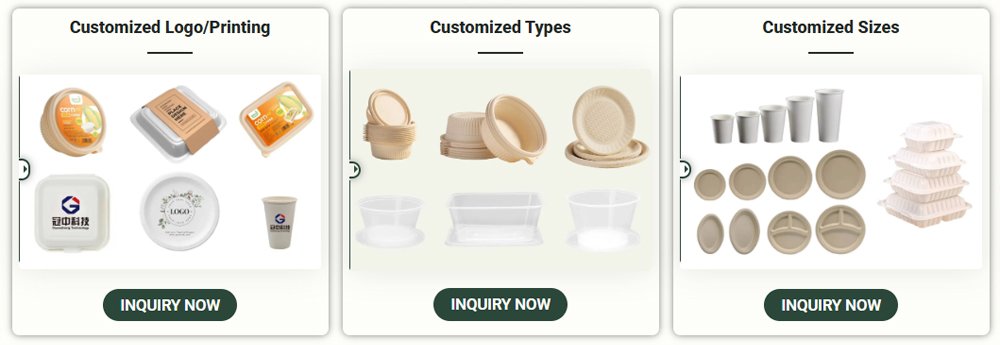
- Custom Logo & Branding: High-precision embossing on handle surfaces, custom-printed outer wrap films, and branded retail packaging boxes.
- Tailored Dimensions & Weight: Adjustable length, handle thickness, and wall density engineered to fit specific takeaway box compartments or heavy-duty dining requirements.
- Custom Color Matching: Precise Pantone color matching for branded restaurant chains, catering sets, and seasonal promotional lines.
- Packaging Versatility: Hygienic single-piece flow wrapping, multi-in-one cutlery sets (with napkin/salt/pepper), and retail-ready hanging boxes.
💡 Frequently Asked Questions
Q: What is the minimum order quantity for custom plastic cutlery?
A: The minimum order quantity (MOQ) for custom-designed cutlery and plates is 30,000 pieces, ensuring low barrier entry for brand testing.
Strategic Advantages of Choosing Guanzhong in Canada
Partnering with reliable plastic cutlery manufacturers guarantees long-term supply resilience, consistent batch quality, and direct wholesale pricing structure.
Canadian procurement managers gain significant competitive edges by leveraging Guanzhong’s manufacturing footprint:
- Vertical Raw Material Control: Operating 5 in-house bio-based modified masterbatch lines (2,000 tons monthly capacity) allows us to control resin quality from the source while insulating clients from market price volatility.
- Unrivaled Scalability: With 90,000 tons annual capacity and 100,000+ m² standardized production workshops, we seamlessly absorb major market demand surges and bulk container shipments.
- Technical Innovation: Backed by an advanced R&D center and 10+ proprietary patents, our team continuously innovates lighter, stronger, and environmentally compliant material formulations.
- Rapid Turnaround Times: Rapid prototyping within 7 to 45 days and lead manufacturing cycles of 7 to 15 days minimize supply chain lag times for Canadian buyers.
💡 Frequently Asked Questions
Q: Why source plastic cutlery directly from a manufacturer like Guanzhong?
A: Direct sourcing eliminates intermediate agent costs, grants direct access to 90,000-ton annual capacity, and provides full OEM/ODM custom branding flexibility.
| Start Your Customization | WhatsApp: +86 13665956245 | Email: peters@quanzhong-bio.com |
For Canadian enterprise buyers, restaurant chains, and packaging distributors seeking a dependable manufacturing partner, Guanzhong provides the ultimate balance of massive production scale, rapid delivery, and regulatory compliance.
Whether you need bulk standard polypropylene utensils or private-label biodegradable cutlery sets, our engineering team is equipped to execute your project seamlessly.
Ready to elevate your supply chain? Contact our technical sales team today to discuss your project specs, request full technical data sheets, and claim your free product samples!