Key Takeaways
- Root Causes of Deformation: Cheap disposable food bowls collapse under hot food because of low Vicat softening points, thin wall profiles, unrefined polymer crystallization, and high recycled-scrap ratios.
- Material Selection Matters: Unmodified PLA and standard PET soften at just 55°C–60°C, whereas heat-modified Polypropylene (PP) and Crystallized Poly Lactic Acid (CPLA) safely endure temperatures up to 100°C–120°C.
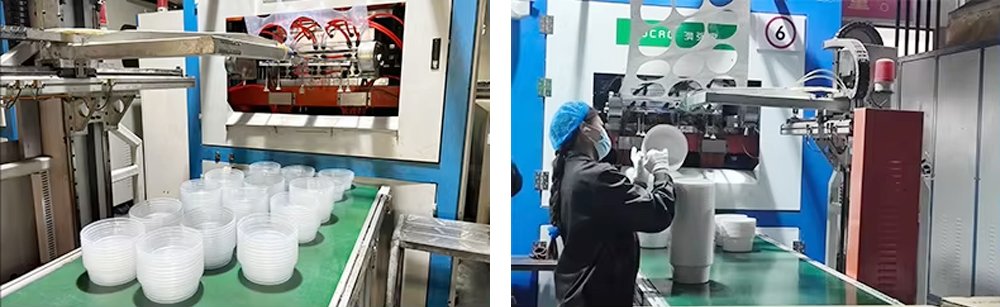
- Precision Manufacturing: Advanced automated injection molding (50 lines) and thermoforming (8 lines) eliminate internal residual stresses and yield uniform wall structures that prevent thermal warping.
- Enterprise Manufacturing Partner: Operating a 200,000 m² industrial park with a 90,000-ton annual output, guanzhong provides OEM/ODM solutions in PET, PLA, PP, and bio-based composites with low 30,000-piece MOQs and 7–15 day production cycles.
Why do cheap food containers deform when hot liquid hits them? As a leading food container box manufacturer, we see distributors and restaurant chains face customer complaints over warped takeaway packaging every day. When hot soup or reheated food is poured into low-grade tableware, structural collapse happens in seconds due to molecular-chain sliding under thermal pressure. Sourcing high-quality disposable containers for food wholesale requires looking beyond upfront price tags to evaluate polymer crystallization, heat deflection temperatures, and manufacturing precision.
Thermal Resistance Science in Wholesale Disposable Containers
The failure of low-cost disposable bowls under elevated heat comes down to fundamental physical chemistry during food contact. Polymer materials inherently contain both amorphous regions with random molecular arrangements and crystalline regions where molecular chains form tight, highly ordered structures. When liquid above 60°C enters a low-grade bowl, thermal energy quickly surpasses the polymer’s glass transition temperature (Tg), causing unreinforced molecular chains to slide past one another and trigger rapid collapse.
| Material Property | Low-Grade Disposable Bowl | Engineered Heat-Resistant Bowl |
| Primary Polymer Base | Unrefined Recycled PP / Raw PLA | High-Purity Virgin PP / Modified Bio-Composites |
| Glass Transition Temp (Tg) | 50°C – 55°C | 85°C – 100°C |
| Vicat Softening Point | 60°C – 70°C | 110°C – 125°C |
| Wall Thickness Uniformity | High Variance (± 0.15mm) | Precision Molded (± 0.02mm) |
| Max Safe Service Temp | 65°C (Warm Food Only) | 120°C (Hot Oils & Microwaving) |
In high-volume food packaging, structural warping compromises container lids and leads to hazardous spills during delivery. Selecting engineered disposable containers for food wholesale ensures structural integrity even when exposed to boiling broths, hot oils, and microwave reheating environments.
💡 Frequently Asked Questions
Q: Why do cheap plastic bowls deform when poured with hot soup?
A: Cheap plastic bowls deform because they are made with low-grade, unrefined materials or uneven wall profiles with high internal stress. When exposed to hot liquids exceeding their Vicat softening point (often below 65°C), the polymer chains slide apart, causing immediate structural collapse.
Material Comparison for Food Container Box Manufacturers
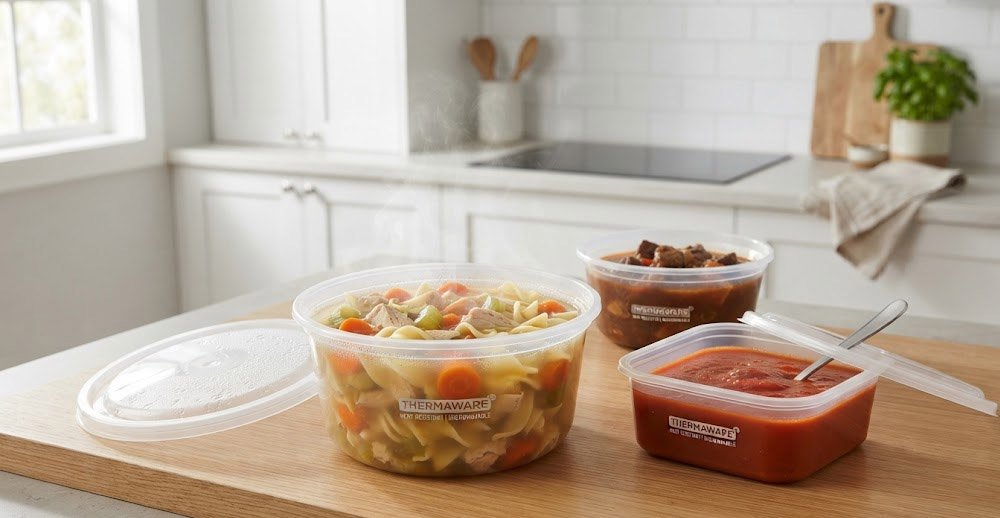
Choosing the right polymer matrix is the most critical decision for any food container box manufacturer seeking to eliminate thermal warping. Different resin formulations offer vastly different heat deflection temperatures (HDT) under load, directly governing their suitability for hot food applications.
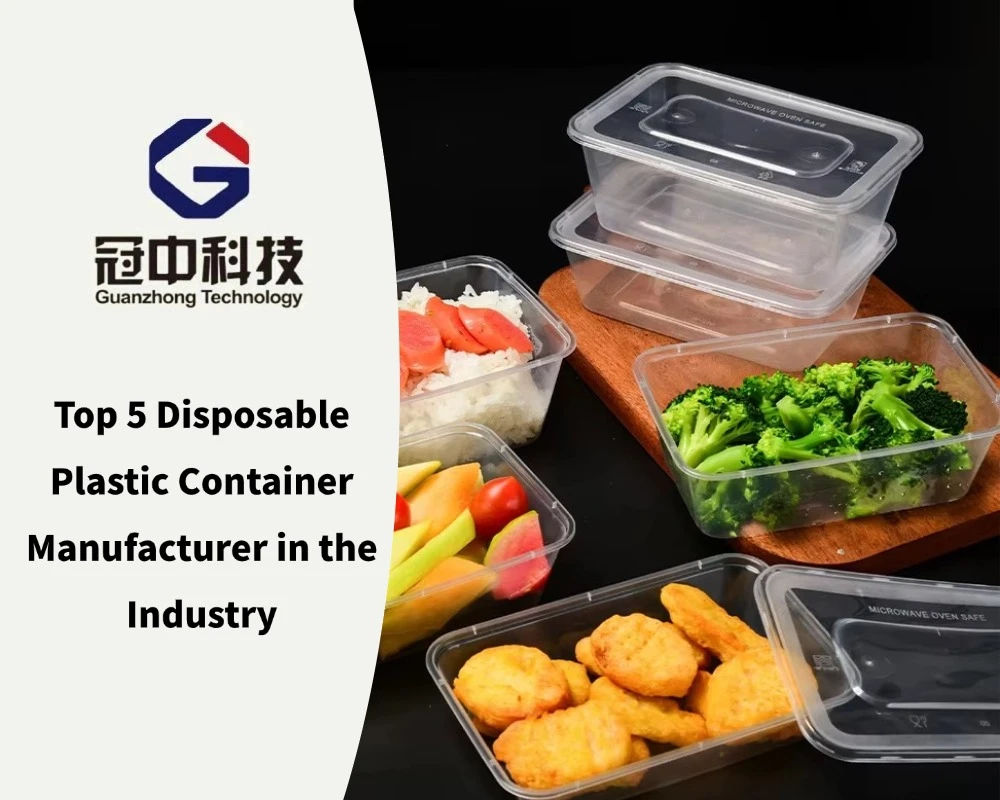
- Polyethylene Terephthalate (PET): Features exceptional optical clarity but has a low HDT around 60°C, strictly limiting its use to cold beverages, deli salads, and fresh fruit packaging.
- Polylactic Acid (PLA): Raw bio-based PLA softens near 55°C, but when modified into Crystallized PLA (CPLA), its thermal threshold increases significantly to 90°C–100°C.
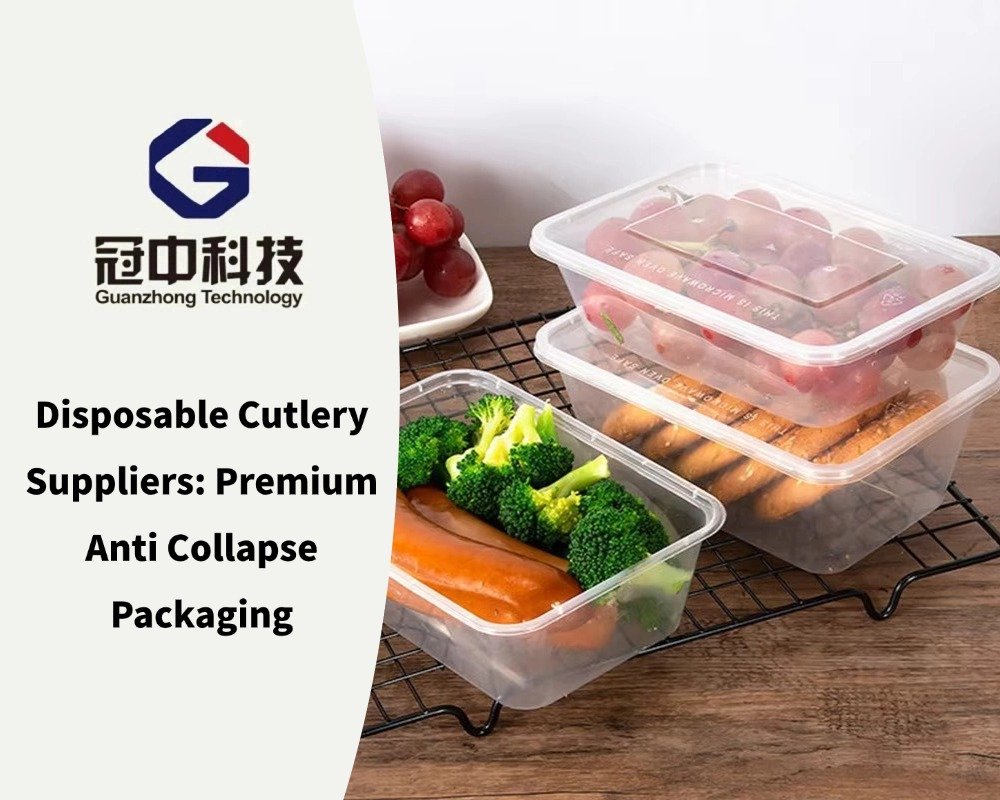
- Polypropylene (PP): Represents the industry gold standard for hot takeaway containers, offering a melting point near 160°C and easily handling continuous food contact up to 120°C.
- Bio-Based & Biodegradable Composites: Advanced composite formulations combine natural fillers with heat-modified matrices, matching traditional PP performance while enabling degradation with 7 to 45 days germination times.
Understanding these material thresholds allows commercial buyers to match container specifications directly with operational temperature requirements. Matching the appropriate polymer matrix to the exact food temperature profile prevents costly structural failures and enhances overall end-user safety.
💡 Frequently Asked Questions
Q: Which disposable plastic container material is best for high heat?
A: Polypropylene (PP) and Crystallized PLA (CPLA) are the top performers for elevated temperatures. High-grade PP containers withstand continuous exposure up to 120°C, making them completely safe for boiling soups, hot takeout meals, and microwave reheating.
Manufacturing Precision Prevents Heat Deformation in Tableware
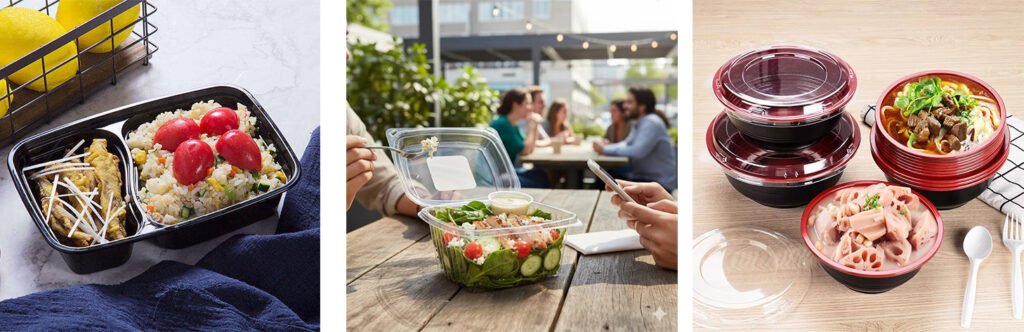
Even premium-grade resins will fail if the manufacturing process introduces internal structural defects during processing. Thermal resistance depends heavily on precision processing during high-speed injection molding and thermoforming cycles.
- Internal Residual Stress Control: Rapid or uneven cooling inside low-end mold cavities locks severe internal stress into container walls, which relaxes and warps the moment hot food is introduced.
- Uniform Wall Thickness Distribution: Precision automated molds maintain tight tolerances (± 0.02mm), preventing thin spots that act as thermal weak points during hot oil containment.
- Optimized Crystallization Kinetics: Precise temperature management across thermal zones grants polymer chains adequate time to align into dense crystalline structures, directly boosting heat deflection levels.
Mastering these variable processing conditions requires state-of-the-art automated machinery and stringent quality control protocols across every production batch. Precise mold cooling and stress-relief cycles ensure that every container leaves the line completely flat, stable, and ready for hot food exposure.
💡 Frequently Asked Questions
Q: How can food container box manufacturers increase thermal resistance?
A: Manufacturers increase thermal resistance by using high-purity virgin resins, incorporating bio-based thermal modifiers, enforcing strict wall-thickness tolerances during automated injection molding, and optimizing mold cooling cycles to maximize polymer crystallization.
Industrial Infrastructure and Enterprise Capacity at guanzhong
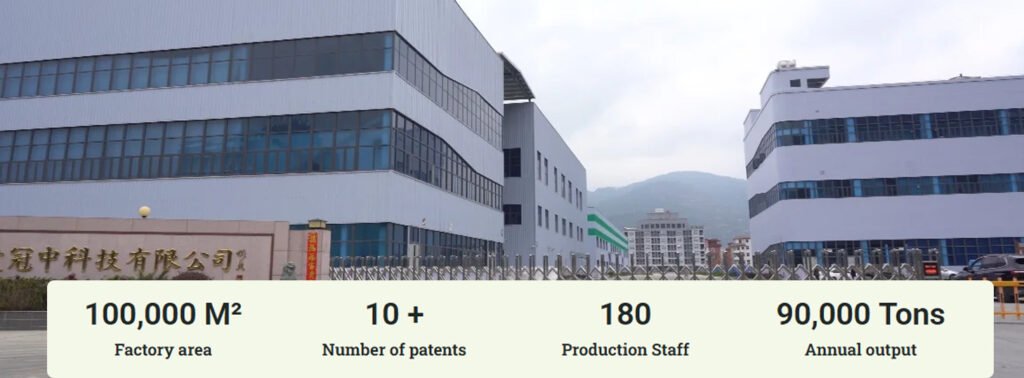
As a premier food container box manufacturer, guanzhong operates an expansive 200,000 square meter industrial park designed for large-scale, sustainable tableware manufacturing. Our facility features 100,000+ square meters of production space alongside a 100,000 square meter standardized plant and advanced R&D center.
- Injection Molding Division: Operates 50 fully automatic injection molding lines delivering a robust monthly capacity of approximately 2,000 tons.
- Blister Thermoforming Division: Utilizes 8 fully automatic blister forming lines producing roughly 800 tons per month of high-precision tableware.
- Bio-Film & Bag Production: Integrates 50 biodegradable film blowing lines and 25 bag-making lines, reaching 1,500 tons in monthly output.
- Bio-Based Material Modification: Features 3 bio-sheet extrusion lines and 5 bio-based masterbatch lines yielding 2,000 tons monthly, complemented by 5 automatic straw extrusion lines producing 250 tons per month.
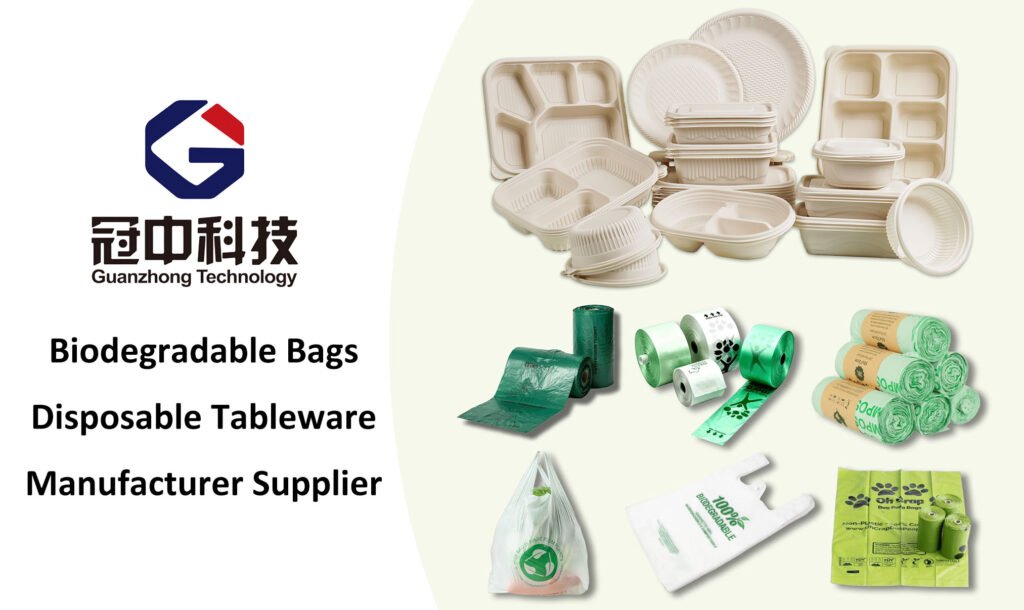
With an annual production output of 90,000 tons powered by 180 specialized technical workers and supported by 10+ patents, our automated infrastructure guarantees reliable supply continuity for international buyers. Our eco-conscious packaging solutions exclude raw paper and sugarcane materials, focusing exclusively on engineered PET, PLA, PP, bio-based, and biodegradable composites.
💡 Frequently Asked Questions
Q: What is the production capacity and manufacturing scale of guanzhong?
A: guanzhong operates a 200,000 m² industrial park featuring over 100,000 m² of plant space and an annual output of 90,000 tons. Its facilities house 50 automated injection lines, 8 thermoforming lines, and specialized bio-material compounding equipment.
Custom OEM and ODM Tableware Solutions
To meet the global demand for sustainable disposable containers for food wholesale, guanzhong provides comprehensive OEM and ODM custom manufacturing tailored to commercial buyers, distributors, and restaurant chains.
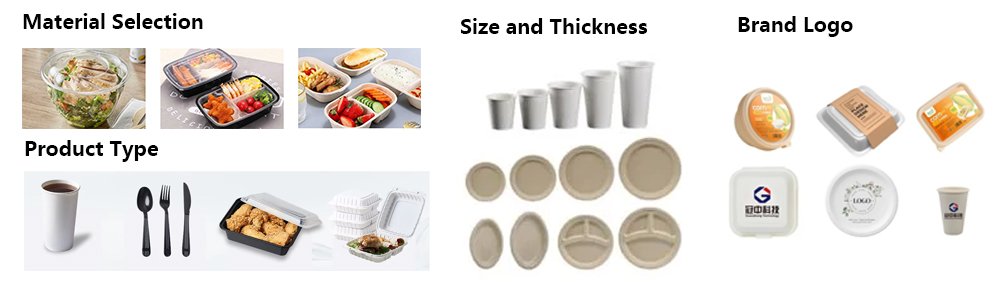
- Bespoke Branding & Sizing: Full support for custom logo embossing, specialized multi-color printing, tailored container dimensions, and custom mold creation.
- Engineered Composite Materials: Custom formulation across high-grade PET, heat-modified PP, PLA, and bio-based composites engineered for 7–45 day germination rates.
- Low MOQ Requirements: Low Minimum Order Quantity (MOQ) starting at just 30,000 pieces for custom tableware, bowls, and dining plates.
- Rapid Turnaround Schedule: Highly optimized production workflows guarantee complete order fulfillment within a fast 7–15 day production cycle.
By combining proprietary resin compounding with large-scale automated lines, guanzhong delivers high-performance tableware that withstands heat deformation while backing your business growth with environmentally responsible solutions.
💡 Frequently Asked Questions
Q: What is the typical lead time and MOQ for custom disposable tableware?
A: For custom disposable tableware, manufacturers like guanzhong offer a fast production cycle of 7–15 days with a low Minimum Order Quantity (MOQ) of 30,000 pieces for customized logos, sizes, and prints.
Upgrade Your Packaging Strategy with Heat-Resistant Tableware Partner directly with guanzhong, a source manufacturer with a 200,000 m² industrial park, 90,000-ton annual capacity, and 10+ patents. Contact our technical team today to request a custom quote and receive free product samples for your business!
| Start Your Customization | WhatsApp: +86 13665956245 | Email: peters@quanzhong-bio.com |
Preventing thermal deformation in disposable tableware requires a thorough understanding of polymer science, resin selection, and automated manufacturing precision. Cheap food containers fail under heat because of unrefined raw materials, internal stress, and poor crystallization control.
As a premier food container box manufacturer, guanzhong is committed to protecting the global environment and supporting your business growth with high-performance eco-friendly solutions. Operating a massive 200,000 m² industrial park with an annual capacity of 90,000 tons and holding 10+ patents, guanzhong produces top-tier disposable tableware, food containers, and cutlery using engineered PET, PLA, PP, bio-based, and biodegradable composites. Partnering with guanzhong ensures high heat resistance, reliable OEM/ODM customization, and superior quality that elevates your brand and protects every meal.