Table of contents
- Materials Determine Performance: Fundamental Differences Between Biodegradable Plates and Plastic Plates
- Detailed Comparison of Core Usage Performance
- Performance Differences in Real Foodservice Scenarios
- How to Choose the Right Disposable Plate Based on Performance Needs
- Partnering With Guanzhong to Build High-Performance Disposable Tableware
Materials Determine Performance: Fundamental Differences Between Biodegradable Plates and Plastic Plates
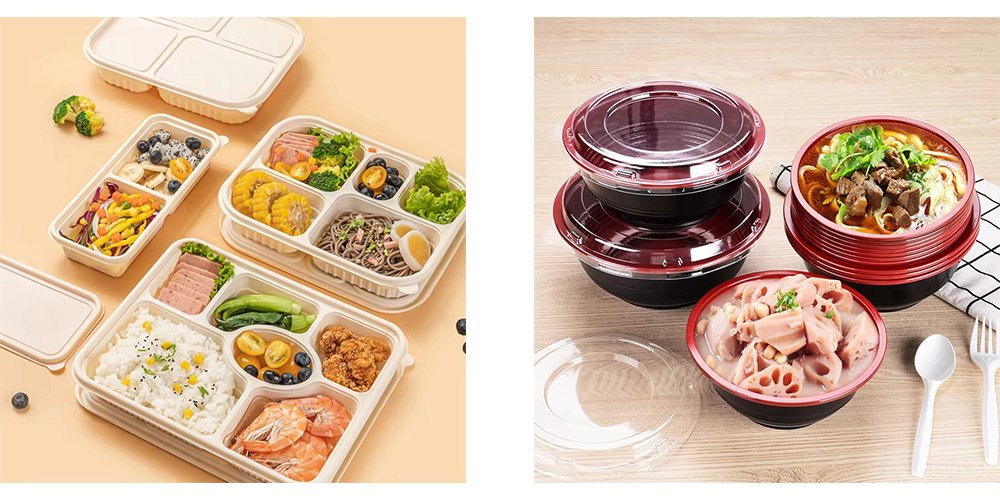
- Material Characteristics and Performance Foundations of Traditional Plastic Plates: Traditional disposable plastic plates are mainly made from PP (polypropylene) and PET (polyethylene terephthalate). These materials have stable molecular structures and high crystallinity, resulting in consistent performance during high-temperature forming and large-scale production, which is why they have been widely used in the foodservice industry for a long time. PP stands out for its heat resistance, while PET offers advantages in rigidity and molding precision.
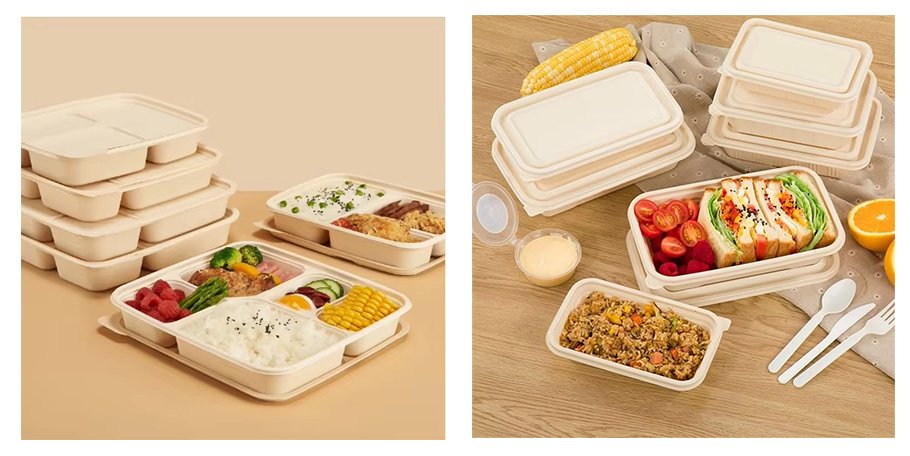
- Material Composition and Basic Principles of Biodegradable Plates: Biodegradable plates are not made from a single material. Instead, they are composed of PLA, bio-based modified materials, and various biodegradable composite materials. These materials are partially or fully derived from renewable resources, and their molecular structures can be broken down by microorganisms under specific conditions, enabling biodegradation.
- How Material Structure Affects Real-World Performance: The molecular arrangement and thermal stability of different materials directly determine plate strength, heat resistance, and deformation resistance. Through formulation optimization and structural design, biodegradable materials are now capable of delivering reliable physical performance in most foodservice scenarios.
- Clarifying a Common Misconception: Biodegradable Does Not Mean Low Performance: Many early perceptions still equate “biodegradable” with “easy to deform,” but with advances in material technology, this view is clearly outdated. Performance differences today are more about suitability for specific conditions rather than inherent material superiority or inferiority.
Detailed Comparison of Core Usage Performance
| Performance Dimension | Biodegradable Plates | Plastic Plates |
|---|---|---|
| Heat Resistance | Suitable for common hot foods, ultra-high temperatures should be avoided | Wider heat resistance range |
| Load-Bearing Capacity | Can meet daily needs through structural design | Naturally strong load-bearing performance |
| Leak Resistance | Stable for short-term use,dependent on structure and processing | Consistently stable |
| User Feel | More natural texture with stronger environmental perception | Primarily function-oriented |
| Batch Consistency | Depends on production and quality control capability | Mature processes with high consistency |
| Sustainability Attribute | Can biodegrade under specific conditions | No biodegradation capability |
Performance Differences in Real Foodservice Scenarios
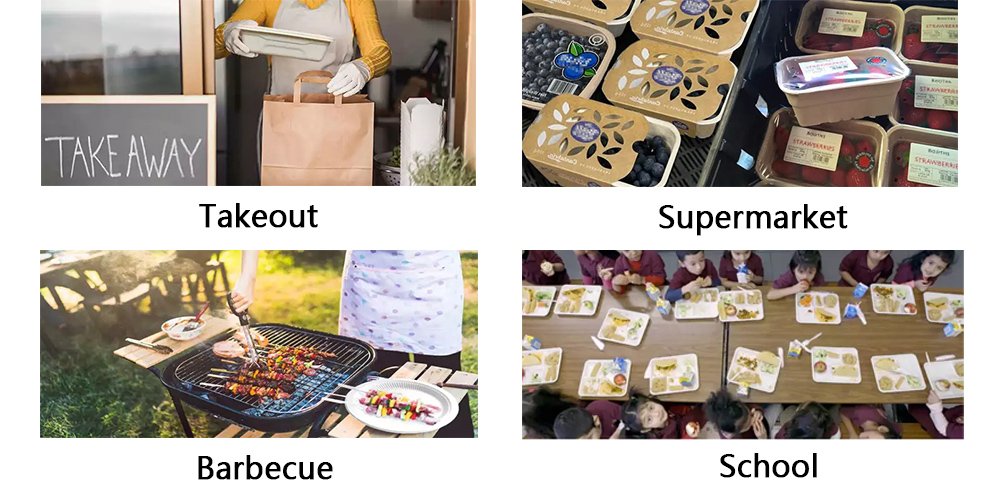
- Overall Performance in Takeout and Delivery Scenarios: During takeout delivery, plates must handle movement, tilting, and temperature changes simultaneously. Compared with extreme heat resistance, structural stability and sealing reliability are more critical. Biodegradable plates with well-designed structures are already capable of meeting the stability requirements of mainstream delivery scenarios.
- Usage Requirements in Dine-In and Fast-Food Chains: Dine-in and fast-food chains emphasize efficiency and dining experience. The natural texture and appearance of biodegradable plates make them easier for consumers to accept in these settings, without noticeably affecting service workflows.
- Applications for Cold Foods, Desserts, and Retail Prepared Foods: In cold food, salad, and dessert applications, heat resistance requirements are relatively limited. Biodegradable plates perform stably in these scenarios while helping brands communicate environmental and sustainability values more clearly.
- Adaptability for High-Fat and Soup-Based Foods: For oily or liquid-rich foods, leak resistance is especially important. Through material modification and mold precision control, biodegradable plates can remain stable during short-term holding and delivery, as long as usage conditions stay within design limits.
- Performance in Stacking Storage and Back-End Operations: In central kitchens, store backrooms, and warehouses, plates are frequently stacked and handled. Dimensional consistency and edge stability directly affect operational efficiency, and performance-stable plates help reduce breakage rates.
- Consumer Experience and Brand Perception Differences: Beyond physical performance, consumer perception also shapes the dining experience. Biodegradable plates are more likely to be seen as an environmentally responsible choice, reinforcing brand image, while plastic plates are generally viewed as purely functional.
How to Choose the Right Disposable Plate Based on Performance Needs
- Define Basic Performance Requirements Based on Food Type: Different foods place different demands on plate performance. Hot and oily foods rely more on heat resistance and structural strength, while cold and dry foods focus more on shape stability and food-contact safety.
- Match Performance to Actual Usage Duration: Immediate-use dine-in scenarios and delivery scenarios impose different stability requirements. Clarifying real usage duration helps balance performance and cost.
- Pay Attention to the Practical Impact of Structural Design: Wall thickness distribution, edge reinforcement, and bottom support structures often influence real-world performance more than material names alone, making sample testing essential.
- Evaluate Consistency in Large-Scale Use: For bulk procurement, dimensional and thickness consistency directly affect operational efficiency and user experience. Consistency is often more important than single-item peak performance.
- Assess Compatibility With Back-End Operational Processes: Ease of stacking, handling, and portioning directly impacts the efficiency of stores and central kitchens.
- Include Supplier Support Capabilities in Selection Criteria: Working with experienced wholesale disposable cutlery suppliers or biodegradable cutlery suppliers helps reduce trial-and-error costs during selection and later-stage adjustments.
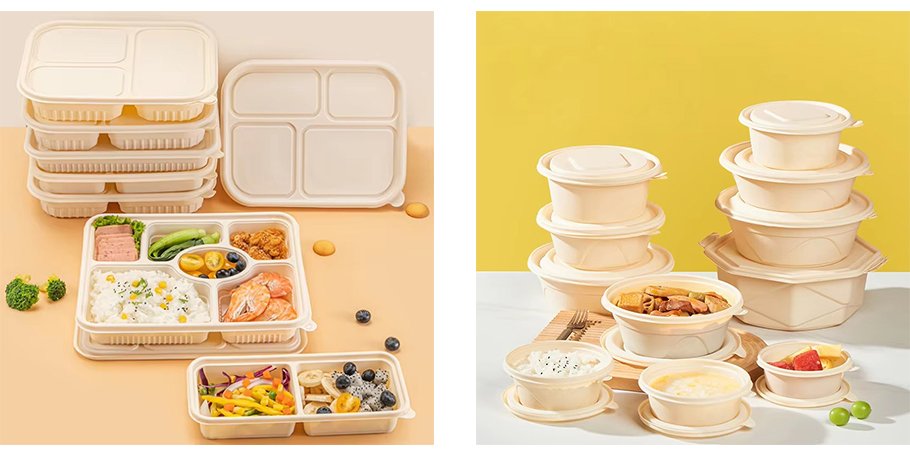
Partnering With Guanzhong to Build High-Performance Disposable Tableware
- Multi-Material Systems Supporting Diverse Performance Needs: Guanzhong has long applied PET, PLA, PP, and bio-based and biodegradable composite materials (excluding paper and sugarcane) in disposable tableware. Based on food type, usage temperature, and load requirements, appropriate material combinations are selected to better match real foodservice scenarios.
- Structural and Mold Design Focused on Real Usage Performance: High-performance plates depend not only on materials but also on structural details. Through bottom embossing, anti-deformation edges, and optimized wall thickness distribution, Guanzhong enhances load-bearing capacity and stability, ensuring reliable performance for hot foods, oily dishes, and delivery use.
- Standardized Production Ensuring Batch Consistency: For chain restaurants and bulk buyers, performance consistency is often more important than extreme performance. With independent standardized workshops for injection molding and thermoforming, Guanzhong’s automated production helps control dimensions and thickness, reducing breakage during high-frequency use.
- Performance Validation Based on Food-Contact Safety: Guanzhong’s disposable tableware products undergo multiple food-contact and material performance tests to ensure safety and stability under normal usage conditions. Performance design is always built on a compliance-first foundation.
- Flexible Customization Supporting Different Business Models: From takeout brands to retail prepared foods, Guanzhong offers customization options including size, thickness, structure, and branding. Through 3D modeling and mold development, performance solutions can be implemented within relatively short timelines, reducing customer trial costs.
- Long-Term Performance Optimization Through Ongoing Collaboration: Rather than focusing on one-time transactions, Guanzhong emphasizes continuous optimization based on real usage feedback. By understanding evolving foodservice scenarios and accumulating material application experience, performance parameters can be refined in subsequent projects to help customers build stable and scalable disposable tableware solutions.
| Start Your Customization | WhatsApp: +86 13665956245 | Email: peters@quanzhong-bio.com |
The differences between biodegradable plates and plastic plates are not simply a matter of which is better or worse, but rather a comprehensive balance between material characteristics, usage scenarios, and long-term needs. As material technologies continue to mature, biodegradable plates have become practically viable in most foodservice applications. The most rational choice lies in understanding performance boundaries and applying the right solution to the right scenario. When performance is no longer a barrier, sustainable choices naturally become the more forward-looking decision.