Table of contents
- Define Custom Requirements: From Application to Performance Indicators
- Material Selection and Scientific Principles: PLA + PBAT Biodegradable System
- Bag Design and Brand Printing
- Detailed Production Process: Standardized Manufacturing from Raw Material to Finished Product
- Quality Control and Compliance Certification
- Choosing Guanzhong: Professional Manufacturer Specializing in Custom Biodegradable Bags
Define Custom Requirements: From Application to Performance Indicators
Before customizing biodegradable bags, defining your requirements is the first and most critical step. Different application scenarios require different bag performance, and planning ahead can prevent repeated modifications or wasted costs during production.
Application Scenario Analysis:
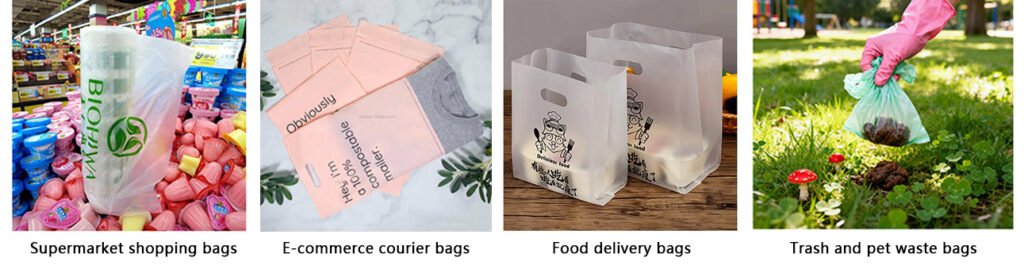
- Supermarket shopping bags: Require high load-bearing capacity, tear resistance, and durability, capable of carrying sharp items or liquids.
- E-commerce courier bags: Focus on wear resistance, moisture protection, and clear printing, as the bag carries both products and brand image.
- Food delivery bags: Usually require oil and water resistance, compliance with food safety, and the ability to degrade naturally or in industrial compost conditions.
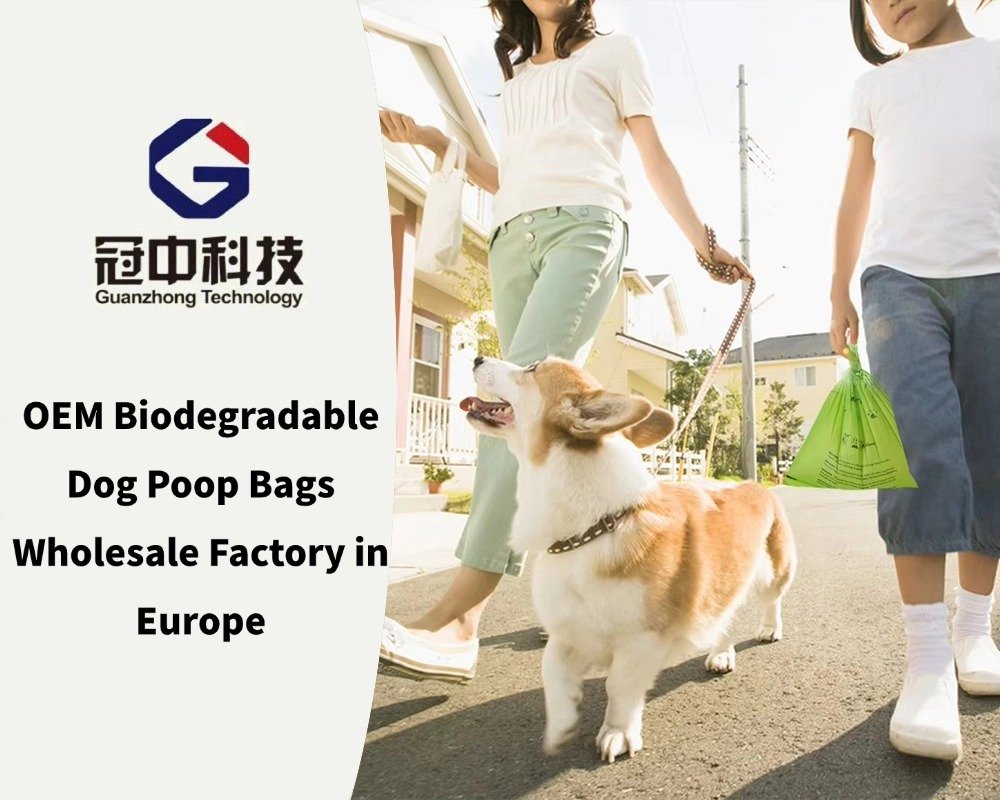
- Trash and pet waste bags: Require extremely high tensile and puncture resistance, while rapidly degrading after use to minimize environmental impact.
Performance Indicators:
- Load capacity: Determine maximum weight based on bag usage to prevent breakage.
- Tear resistance: Reinforce handles, seams, and edges to avoid tearing during daily use.
- Water and oil resistance: Use material selection and film thickness to prevent leakage.
- Environmental degradability: Choose PLA+PBAT or other biobased composites to ensure degradation under industrial compost or soil conditions.
Communication Tools and Methods:
- Requirement forms: List size, thickness, printing needs, color, and minimum order quantity.
- Sample verification: Provide small batches for practical testing.
- Digital simulation: Some factories offer 3D modeling or structural simulation to assess load capacity and usability in advance.
Through scientific evaluation of requirements, companies can set clear product specifications to guide subsequent design and production.
Material Selection and Scientific Principles: PLA + PBAT Biodegradable System
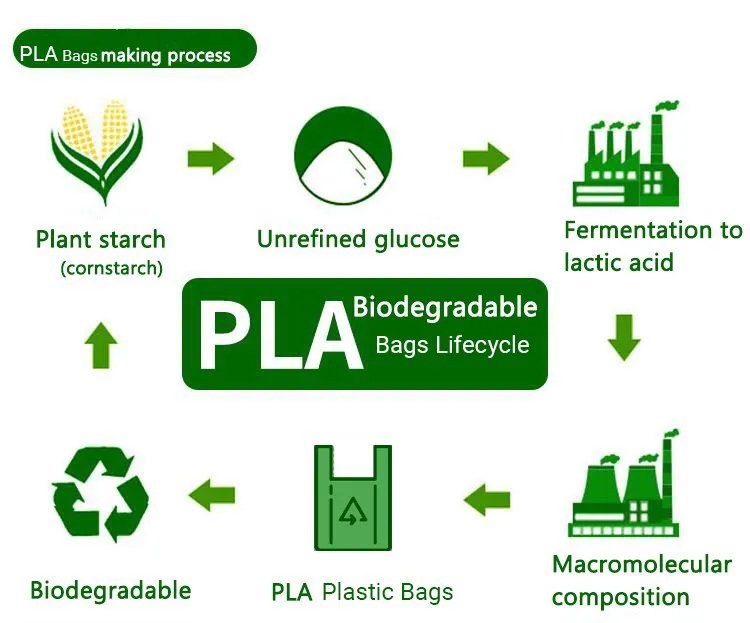
Materials are the core of biodegradable bags. In the biodegradable plastic bag industry, PLA (Polylactic Acid) and PBAT (Polybutylene Adipate Terephthalate) composite materials are the mainstream choice.
PLA Features:
- Biobased material derived from starch fermentation (corn or sugarcane) into lactic acid, then polymerized.
- Can degrade under industrial composting conditions, non-toxic and safe.
- Relatively low toughness, often requires modification or blending.
PBAT Features:
- Biodegradable synthetic polyester with excellent flexibility and tensile properties.
- When blended with PLA, it improves toughness and tear resistance, suitable for shopping or vest-style bags.
Composite Ratio and Performance Balance:
- Typically, PLA 60%-80%, PBAT 20%-40%, adjustable based on usage.
- Higher PLA ratio increases degradation speed; higher PBAT ratio enhances flexibility.
Degradation Mechanism and Environmental Standards:
- Under industrial composting conditions (temperature ~58°C, controlled humidity), can degrade to CO₂ and water within about 180 days.
- Certified via ASTM D6400, DIN EN 13432, GB/T 20197, etc.
Material Selection by Application:
- Supermarket shopping bags: balance toughness and degradability, film thickness 25-40 µm.
- Pet waste bags: higher PBAT ratio for puncture resistance.
- Trash bags: high tensile and puncture resistance while remaining eco-friendly.
Professional biodegradable bag factories provide customized material ratios and internal testing to ensure stable performance.
Bag Design and Brand Printing
Structural design and printing are key to functionality and brand value.
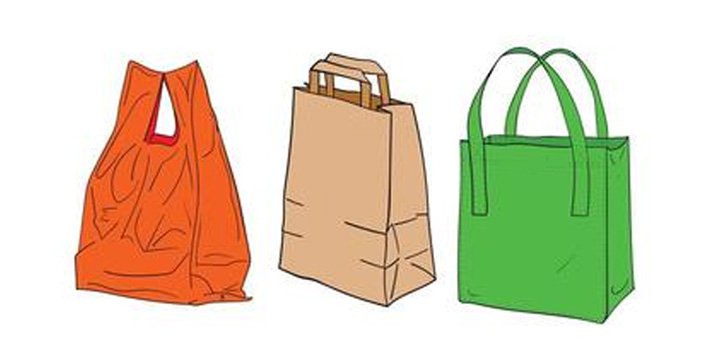
Bag Type Selection:
- Flat bags: Suitable for light shopping or courier packaging.
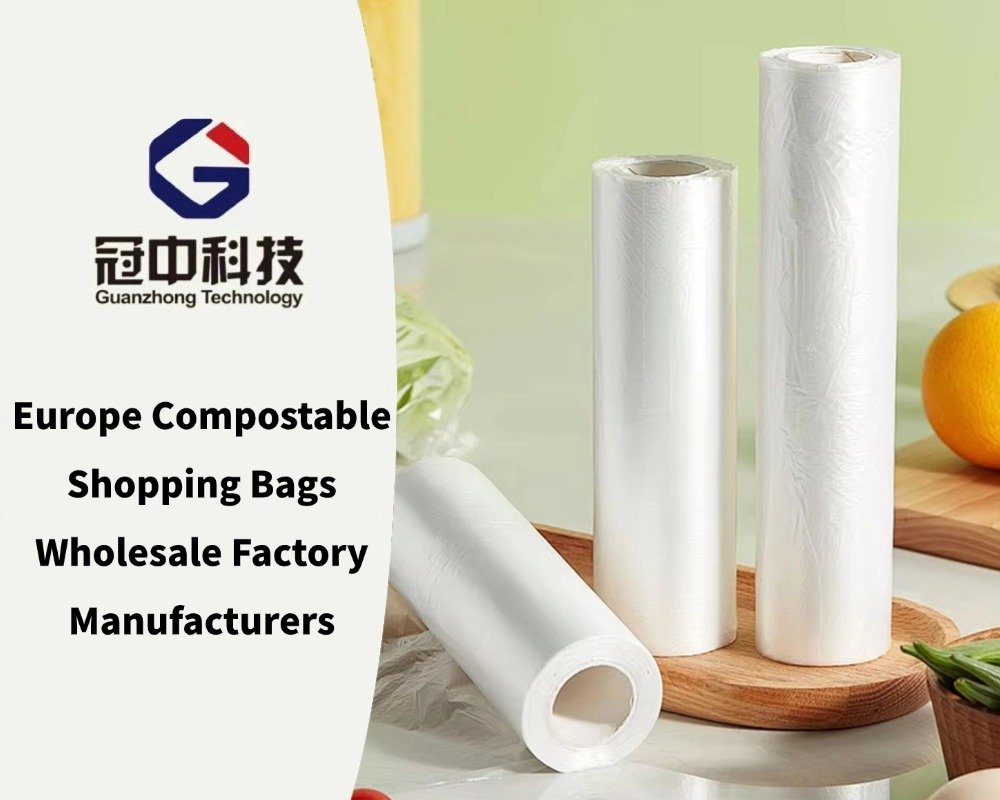
- Vest-style bags: Common for supermarkets, balancing toughness and load capacity.
- Gusseted / Box-bottom bags: Suitable for large-capacity or stable-placement requirements.
Thickness and Load Design:
- Thickness typically 20–50 µm based on use and load.
- Double-layer or reinforced designs improve durability, especially at openings and handles.
Printing Process:
- Water-based or eco-friendly inks: Compatible with biodegradable films, clear printing without affecting degradability.
- Sample Evaluation: Small batches undergo stretch, abrasion, and colorfastness testing.
- Brand Presentation: Custom logos, text, patterns, and colors enhance brand recognition.
Scientific design ensures bags meet functional needs and serve as marketing tools.
Detailed Production Process: Standardized Manufacturing from Raw Material to Finished Product
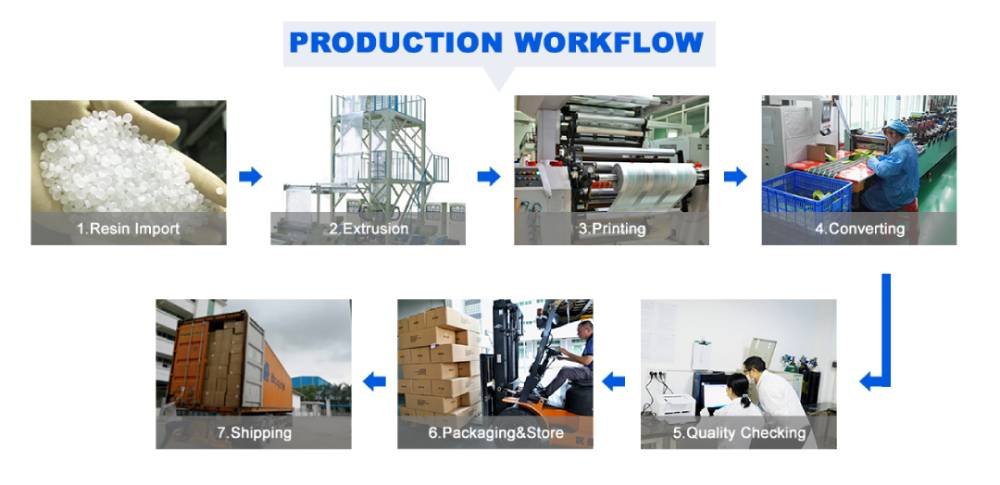
In a professional biodegradable bag factory, the production process is highly standardized, and each step directly affects the bag’s quality and degradability. Key steps include:
- Raw Material Drying and Preprocessing: PLA and PBAT must be strictly dried before production, with moisture below 0.3% to prevent degradation during extrusion or film blowing. Materials are screened, cleaned, and blended to ensure accurate ratios for consistent film quality.
- Film Formation: Blown or cast film technologies are used to produce uniform films. Process parameters such as temperature, stretching speed, and cooling rate determine toughness, transparency, and tear resistance. Optimizing these ensures stable performance in printing, bag making, and final use.
- Printing Process: Water-based or eco-friendly inks are applied, ensuring adhesion without affecting biodegradability. Sample testing includes abrasion, stretching, and colorfastness evaluation. Printing conveys brand identity while matching material properties.
- Bag Conversion: Films undergo heat sealing, cutting, folding, and punching. Each bag type has precise process standards to ensure structural integrity and load-bearing capacity. Heat-seal temperature and pressure are carefully controlled to maintain flexibility and degradability.
- Inspection and Packaging: Each batch is tested for tensile strength, load capacity, and print quality. Qualified products are packaged per client requirements, with eco-friendly packaging where possible to maintain the full lifecycle green standard.
Quality Control and Compliance Certification
Quality control and certification ensure reliability and market compliance.
Performance Testing:
- Tensile strength, elongation at break, heat-seal strength, and load testing ensure bags won’t fail during use.
Degradability and Compost Verification:
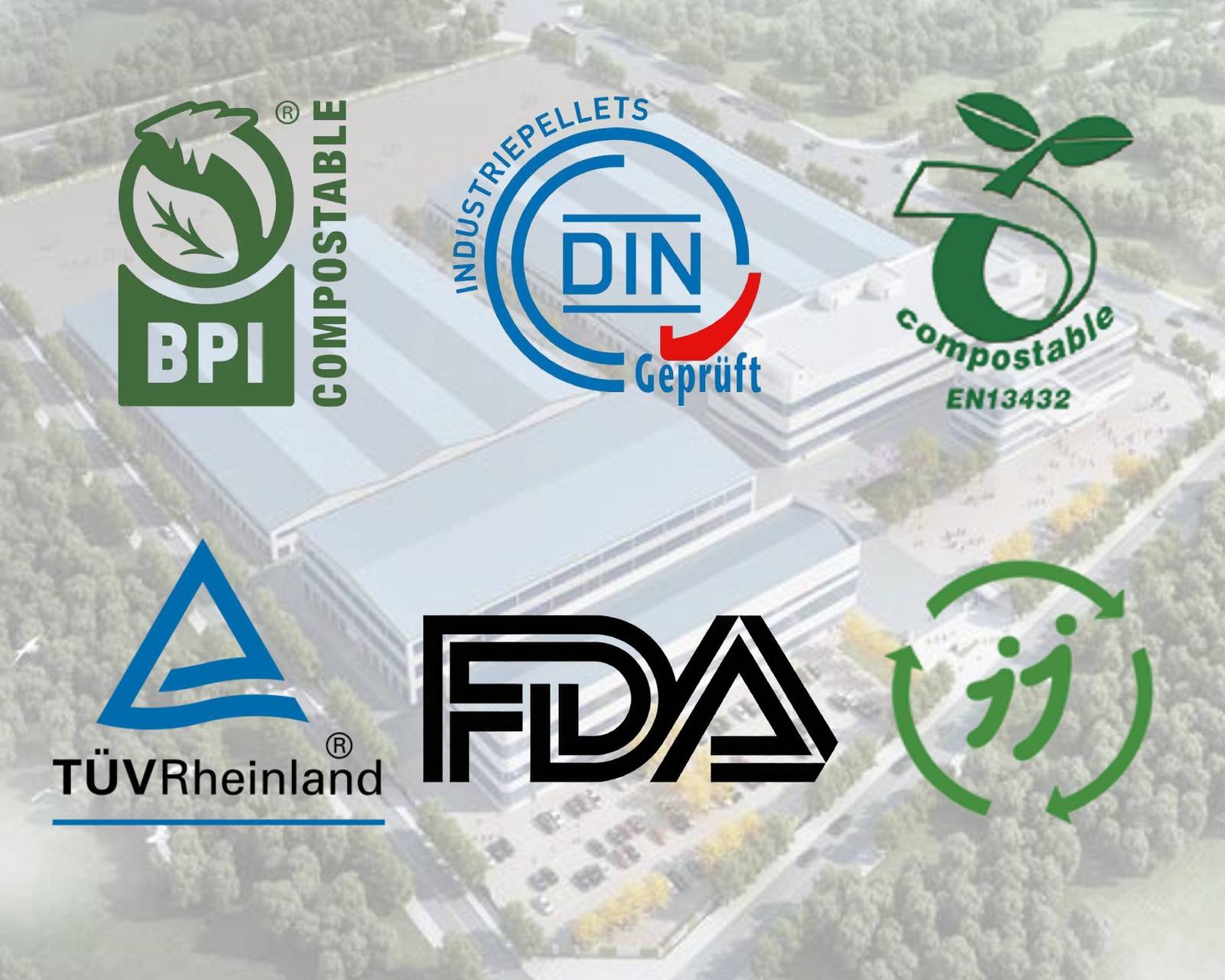
- Certified via ASTM D6400, DIN EN 13432, GB/T 20197.
- Industrial composting achieves nearly complete degradation in ~180 days with low ecological toxicity.
Regulations and Market Entry:
- Domestic: GB/T 20197, GB/T 19277.1, GB/T 4806.7 (degradation and food contact).
- International: ASTM D6866, ASTM D6400, DIN EN 13432.
- Food contact: FDA approved.
- Certifications: BPI, DIN industrial compost, DIN biobased product certifications.
Strict testing and certification ensure products are environmentally safe and suitable for export.
Choosing Guanzhong: Professional Manufacturer Specializing in Custom Biodegradable Bags
When selecting a biodegradable bag factory, R&D capability, production capacity, material technology, customization experience, and certification credentials are key factors. Guanzhong operates a nearly 200,000 m² industrial park and over 100,000 m² of production facilities, making it a leading manufacturer of custom printed biodegradable plastic bags in China.
Production Strengths and Process Advantages
Guanzhong has 50 fully automatic injection molding lines, 50 blown film lines, 25 bag-making lines, 3 biodegradable sheet extrusion lines, and 5 biobased masterbatch lines, with an annual output of approximately 90,000 tons. The complete system covers raw material preparation, film forming, printing, and bag making, ensuring stable quality and degradability.
Material and Product Advantages
Using PLA+PBAT composite materials, Guanzhong produces non-toxic, biodegradable bags with reinforced double-layer design for high tensile and tear resistance. Custom options include size, thickness, color, bag style (vest or partition), and printed logos/patterns.
Certification and Testing System
Products meet Chinese GB/T 20197, GB/T 19277.1, GB/T 4806.7 degradation and food contact standards, ASTM D6866, ASTM D6400, DIN EN 13432 international standards, FDA food contact testing, and BPI, DIN industrial compost, and DIN biobased product certifications.
Customization and Service Capabilities
Guanzhong provides full OEM/ODM services with customizable options:
- Size and thickness: Tailored for application and load requirements.
- Bag design: Vest, partition, box-bottom, roll bags.
- Printing and branding: Custom logos, text, patterns, colors with eco-friendly inks.
- Functional improvements: Enhanced tensile, puncture, water/oil resistance.
- Packaging: Bulk, roll, or retail packaging.
- Small-batch trial and rapid prototyping: MOQ 1 ton of raw material, mold time 7 days, production 15 days.
With strong production capacity, material technology, certifications, and flexible services, Guanzhong is an ideal partner for companies seeking high-quality custom printed biodegradable plastic bags.
| Start Your Customization | WhatsApp: +86 13665956245 | Email: peters@quanzhong-bio.com |
By following these steps—from requirement analysis → material selection → bag design and printing → standardized production → quality control and certification → choosing a professional factory—companies can achieve high-quality custom biodegradable bags. Partnering with an experienced biodegradable bag factory like Guanzhong provides comprehensive support in material R&D, production capacity, certification, and customization, ensuring safe, eco-friendly, and compliant products. With professional production processes and customization capabilities, companies can meet practical needs while enhancing brand recognition, achieving both environmental and commercial value.