Table of contents
Raw Materials: The Foundation of Plastic Food Packaging
The production of plastic food packaging relies on high-quality raw materials. Common materials include PET (polyethylene terephthalate), PLA (polylactic acid), PP (polypropylene), bio-based plastics, and biodegradable materials. Each material has its advantages and suitable applications:
- PET: High transparency and heat resistance, commonly used for beverage bottles, take-out boxes, and food trays. PET is easy to recycle and meets most food safety standards (such as FDA and EU regulations).
- PLA: Derived from corn starch or sugarcane, a bio-based plastic that is biodegradable, suitable for cold food, dessert packaging, and eco-friendly take-out containers.
- PP: Excellent heat and chemical resistance, suitable for microwaveable packaging, widely used in lunch boxes and take-out containers.
- Bio-based and biodegradable materials: With the rise of environmental awareness, these materials have become popular in the catering and retail markets, ensuring food safety while reducing environmental impact.
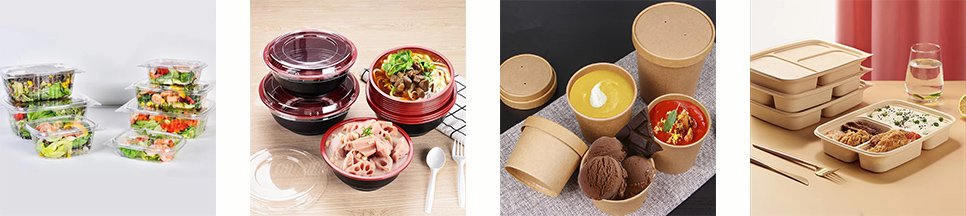
When selecting raw materials, one must consider not only the type of food but also packaging heat resistance, chemical resistance, sealing, and cost. For example, high-temperature resistant PP is recommended for hot meals, while transparent PET or PLA is suitable for cold drinks and desserts. With professional material selection, the produced packaging can balance safety, practicality, and environmental protection.
The Production Process of Plastic Food Packaging: From Raw Material to Finished Product
The production of plastic food packaging is a systematic process. From raw material processing to molding, finishing, and final product, every step is crucial. Understanding the process helps businesses and consumers recognize packaging safety and quality assurance measures.
- Raw Material Preparation and Processing
- PET, PLA, PP, and other plastic raw materials are dried, melted, or blended to ensure uniformity and impurity-free material during molding.
- Bio-based or biodegradable materials may include additives or stabilizers to ensure consistent performance.
- Molding Stage
- Injection molding: Molten plastic is injected into molds and cooled, suitable for complex packaging like lunch box lids and compartment trays.
- Blow molding: Used for hollow containers such as beverage bottles and liquid food containers, ensuring thin yet strong walls.
- Thermoforming: Heating sheets and pressing into molds to produce trays, food boxes, and flat packaging, efficient for large-scale production.
- Processing and Finishing
- Molded packaging may undergo trimming, embossing, punching, welding, or sealing.
- Printing can add brand logos, patterns, or QR codes, enhancing aesthetics and brand recognition.
- Quality Inspection
- Dimensions, sealing, heat resistance, and material safety are checked during production to ensure each batch meets food safety standards.
- Guanzhong, as a plastic food packaging supplier, applies advanced testing equipment and a mature QC system to ensure high consistency and reliability.
- Packaging and Warehousing
- Finished products are checked, packaged, labeled, and stored or shipped directly to clients.
- This step ensures safe transportation and prevents contamination or damage.
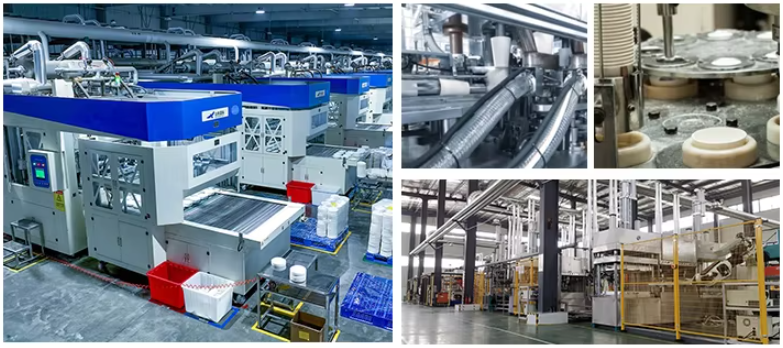
Through this complete production process, plastic food packaging, from raw material to finished product, is carefully controlled to ensure safety, reliability, and compliance with food-use standards. Guanzhong, with advanced equipment and extensive experience, provides efficient, high-quality service for catering, take-out, and retail markets.
Quality Control: Ensuring Safe and Reliable Packaging
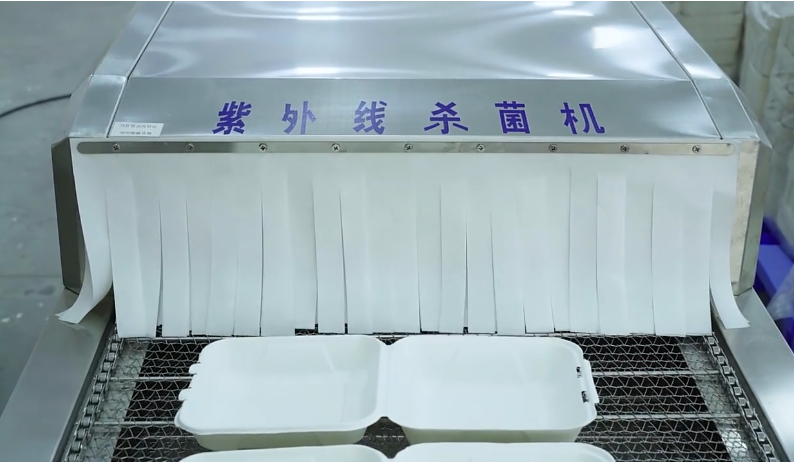
The quality of food packaging directly affects consumer safety and brand reputation, making strict quality control essential. Key measures include:
- Dimensional accuracy inspection: Ensures lids and boxes, containers, and trays fit perfectly, preventing leaks or contamination.
- Heat resistance and sealing tests: For microwaveable packaging, verify heat resistance and sealing performance to avoid deformation or leakage.
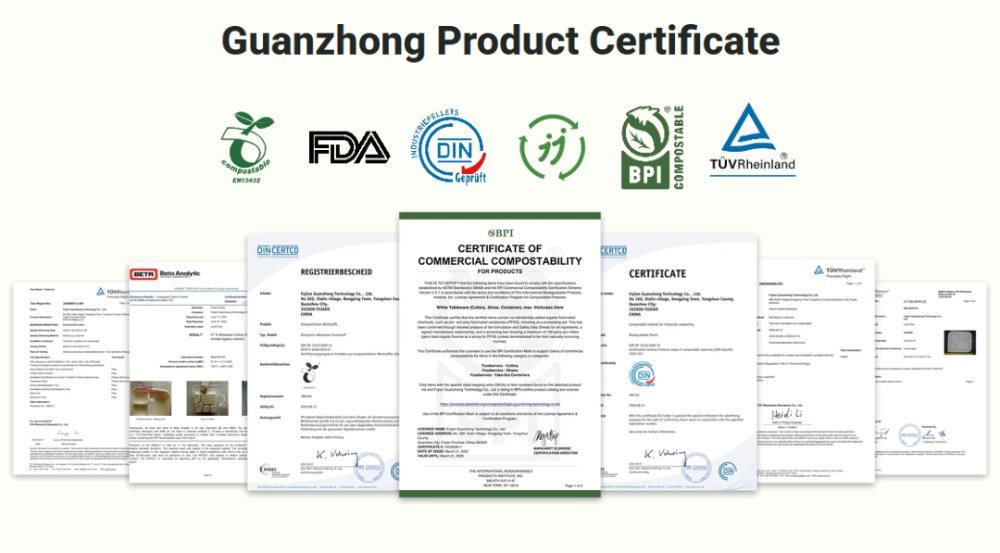
- Material safety testing: Food contact safety, chemical resistance, and biodegradability tests ensure materials comply with international standards (ISO 9001, ISO 14001).
- Operational advice: Batch sampling, record keeping, and regular equipment calibration reduce quality risks and maintain consistency.
Guanzhong, as a disposable food packaging suppliers, employs advanced testing equipment and strictly follows international food safety standards, providing safe and reliable customized packaging. Even for small batch orders, the high QC standards are maintained.
Customization and Supplier Services
- How to Choose Customized Packaging for Catering, Take-Out, or Retail
- Select appropriate materials and processes based on food type and application. For example, high-temperature resistant PP for hot meals, PET or PLA for cold drinks and desserts.
- Consider packaging dimensions, thickness, sealing, and transport convenience to ensure food reaches customers intact.
- For varying order sizes, small batches can be prioritized for rapid prototyping, while large batches require stable supply chains and cost management.
- Guanzhong Customizable Options
- Materials: PET, PLA, PP, and bio-based/biodegradable composite materials (excluding paper and sugarcane), ensuring food safety and environmental protection.
- Sizes and Shapes: Various specifications for trays, tableware, and straws; clients can customize capacity, length, width, height, and compartment design.
- Thickness: Optimized for strength and cost-efficiency, ensuring durable packaging.
- Printing and Design: Logos, corporate marks, patterns, and QR codes can be customized to enhance brand recognition.
- Functional Enhancements: Designs can include leak-proof lids, embossed bottoms, compartment dividers, improving usability.
- Visual and Brand Consistency: Color, surface texture, and patterns can be customized to align packaging with brand image and increase market recognition.
- Advantages of Working with Guanzhong
- Strong Production Capacity: Owns nearly 200,000 m² factory area, with over 100,000 m² production workshops, equipped with injection molding, thermoforming, blow molding, and extrusion standardized workshops.
- Advanced Equipment and Technology: 50 fully automatic injection molding lines, 8 thermoforming lines, 50 biodegradable film blow molding and printing lines, 25 bag-making lines, and straw extrusion lines ensure stable supply in large volumes.
- Professional Custom Services: Supports 3D modeling, mold production, sample prototyping, and final product delivery, offering OEM/ODM services.
- Environmental Safety: All materials are bio-based/biodegradable composites, non-toxic, odorless, and compliant with GB/T 20197, GB/T 19277.1, GB/T 4806.7, and FDA food contact tests.
- High Reliability of Supply: Annual output of 90,000 tons, with 180 professional production staff ensuring timely order completion.
By partnering with Guanzhong, catering companies, take-out platforms, and retail businesses can obtain safe, reliable, eco-friendly, and customizable tableware and trays, enhancing brand value, customer experience, and sustainability. Guanzhong serves as a professional plastic food packaging supplier and disposable food packaging suppliers capable of meeting diverse market needs.
Practical Applications of Plastic Food Packaging
Plastic food packaging has extensive applications in modern catering and retail industries:
- Restaurants and Take-Out: Disposable lunch boxes, trays, lids, and utensils provide convenient and safe dining experiences.
- Fast Food Chains: Standardized packaging ensures fast production and delivery while maintaining food temperature and quality.
- Retail Food: Transparent PET trays and sealed containers allow consumers to see products clearly and extend food shelf life.
Material characteristics in real-world applications:
- PET: Transparent and attractive, suitable for displaying cakes, desserts, and cold drinks.
- PLA: Eco-friendly and biodegradable, ideal for cold food and desserts, aligning with environmental trends.
- PP: Heat-resistant, suitable for microwave heating, ideal for hot meals and soup containers.
When selecting packaging, food type, temperature, storage time, and transportation conditions must be considered. For instance, liquid foods require leak-proof packaging, hot meals require heat-resistant materials. Proper materials and processes significantly reduce food loss and transport damage, enhancing consumer experience. Guanzhong, as an experienced plastic food packaging supplier, provides safe, practical, and customizable packaging solutions for catering, take-out, and retail clients.
| Start Your Customization | WhatsApp: +86 13665956245 | Email: peters@quanzhong-bio.com |
From raw material selection to production processes, quality control, customization services, and practical application, every step in plastic food packaging is critical. Working with a professional supplier like Guanzhong, businesses can obtain high-quality, reliable, and customizable tableware and trays, enhancing product competitiveness and customer satisfaction.
When choosing a supplier, businesses should focus on material safety, process maturity, customization capability, and service responsiveness. They should also select appropriate packaging materials and processes based on food type to ensure food safety, aesthetics, and convenience.
Through scientific material selection, strict production, and reasonable customization, plastic food packaging can truly achieve efficient and safe delivery from factory to table.
For businesses looking for a reliable partner, Guanzhong, as a professional plastic food packaging supplier and disposable food packaging suppliers, provides full-process services from material selection, process customization, prototyping, to large-scale production. Companies are welcome to contact Guanzhong for professional consultation and customized solutions.