Table of contents
Understanding Biodegradable Plastic Bags
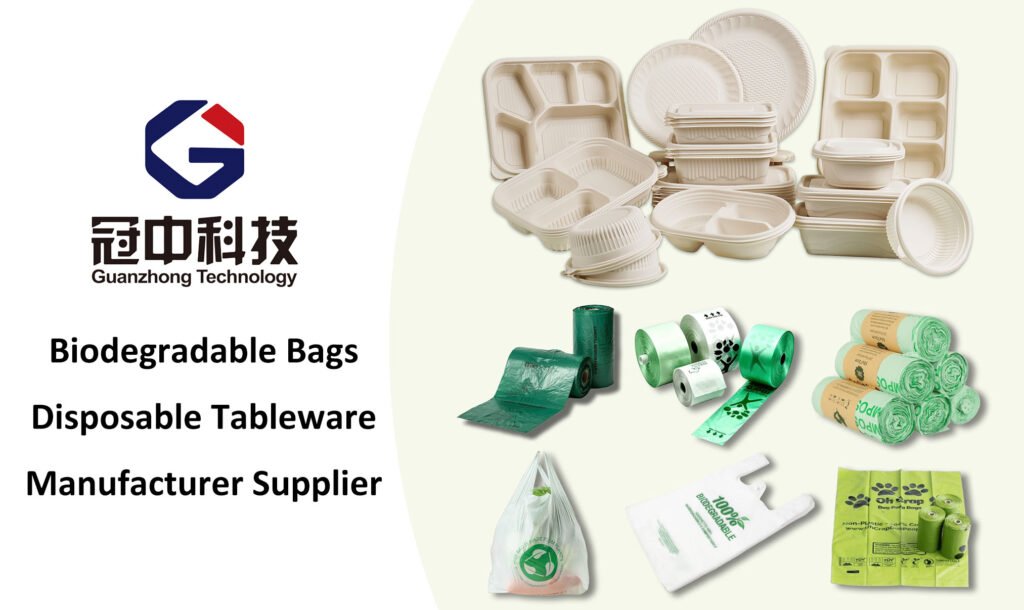
Biodegradable plastic bags are environmentally friendly bags that naturally decompose into water, carbon dioxide, and biomass through microbial action under specific environmental conditions. Modern biodegradable plastic bags mainly use PLA (Polylactic Acid) and PBAT (Polybutylene Adipate Terephthalate), or a composite of the two. PLA is derived from renewable resources such as corn starch or sugarcane, offering high transparency and good hardness; PBAT provides flexibility, enhancing tear resistance and durability of the bags.
Difference from traditional plastic bags
- Traditional PE plastic bags have long degradation periods, remaining in the environment for hundreds of years, causing long-term ecological pollution.
- Biodegradable plastic bags can decompose within 90–180 days under industrial composting conditions, reducing environmental impact.
International standards and certifications
- ISO 17088: International compostable plastics standard, specifying material composition, degradation rate, and safety.
- EN 13432: European packaging compostability standard, covering biodegradability, disintegration, and ecological safety.
- ASTM D6400 / ASTM D6866: US industrial composting standards, verifying biobased content and degradability.
Scientific principle
- Microorganisms metabolize polymer chains, ultimately converting them into water, carbon dioxide, and biomass.
- Industrial composting maintains temperatures of 55–60°C to accelerate decomposition; home compost conditions are less stable, taking 6–12 months.
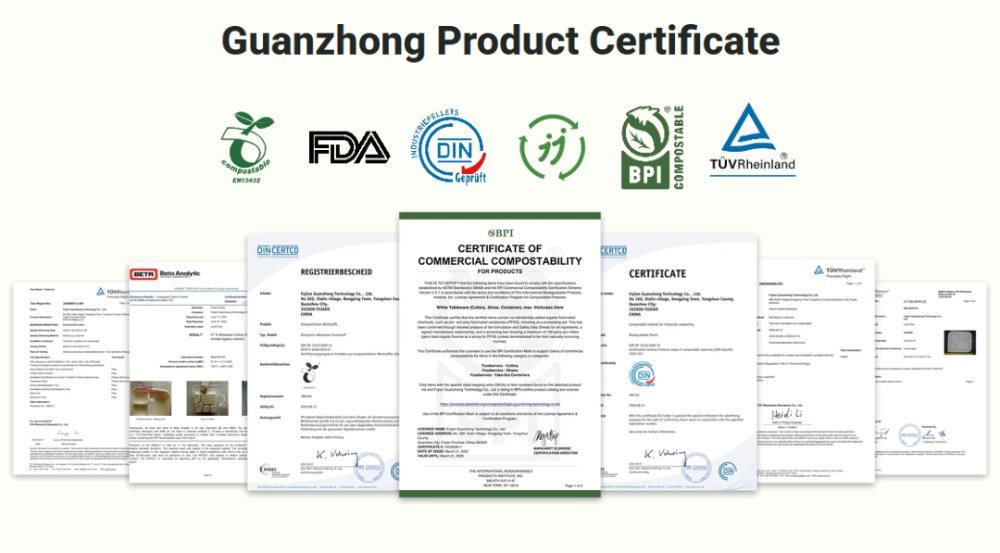
- Guanzhong products use selected grains to extract starch, ferment it into lactic acid, and synthesize polylactic acid for production. The bags can safely degrade in soil and meet GB/T 20197, GB/T 19277.1, GB/T 4806.7, ASTM, and EN standards, and pass FDA food contact testing.
Choosing the Right Biodegradable Bag Materials
Material selection is fundamental, directly affecting the bag’s functionality, durability, and environmental performance.
Main materials and properties
- PLA: High hardness and transparency, suitable for lightweight shopping bags and display packaging; limited load-bearing capacity.
- PBAT: Flexible, suitable for food packaging or heavier loads.
- PLA+PBAT composites: Balance hardness and flexibility, suitable for a wide range of applications; the ratio can be adjusted according to purpose.
Application matching
- Retail shopping bags: transparent PLA to showcase products.
- Food packaging bags: PBAT enhances flexibility and oil/water resistance.
- Heavy-load or reusable bags: PLA+PBAT composite ensures toughness and durability.
Guanzhong’s material advantages
- Uses biobased and biodegradable composite materials that are safe, non-toxic, and odorless.
- Minimum order quantity as low as 1 ton of raw material, providing flexible OEM/ODM service.
Designing Your Biodegradable Plastic Bag
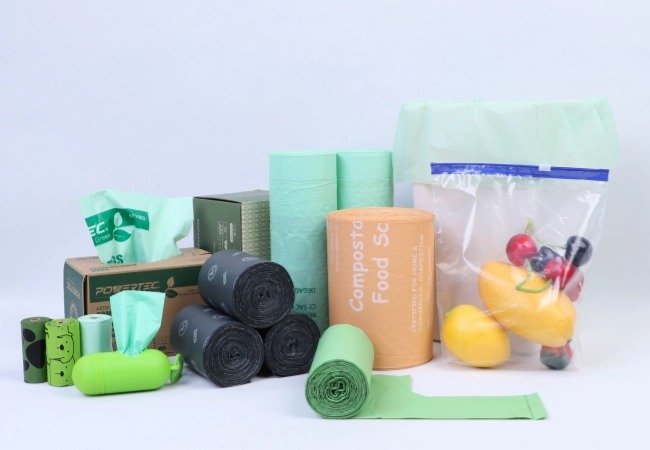
Bag design directly impacts aesthetics, user experience, and functionality. A well-designed bag balances environmental performance, load-bearing capacity, and appearance, enhancing consumer satisfaction.
Size, thickness, and shape
- Common types include flat bags, tote bags, vest bags, zipper bags, and compartment bags. Each type has different use scenarios:
- Flat bags: suitable for light packaging, simple structure, easy to fold and store.
- Tote/vest bags: suitable for retail shopping; handle design must ensure comfortable load-bearing.
- Zipper bags: suitable for food, snacks, or small items; good sealing performance, convenient for repeated use.
- Compartment bags: suitable for fruits and vegetables to prevent crushing.
- Thickness selection: lightweight shopping bags 30–50 microns, medium load 50–70 microns, heavy-load or reusable bags up to 100 microns. Thickness should balance toughness and degradation rate.
- Size matching: bag size should fit the packaged items to ensure load-bearing and portability while minimizing material waste.
Printing and brand customization
- Use water-based eco-friendly or biodegradable inks to avoid secondary environmental pollution.
- Customize logos, patterns, color combinations, and packaging information to enhance brand recognition.
- Include eco-labels, degradation instructions, and usage recommendations to increase consumer awareness of environmental performance.
- Guanzhong provides professional design support, assisting customers in revising design drafts, printing samples, and multiple optimizations to ensure the final printing effect meets expectations.
Functional and structural design
- Handle reinforcement: double-layer thickening or ring reinforcement to improve load capacity.
- Seal design: options include heat seal, zipper, clip seal, or fold-over seal; food bags are recommended to use zipper or clip seal for better sealing.
- Water and oil resistance: important for food packaging, wet items, or kitchen use to prevent liquid or oil penetration.
- Reusable design: easy to fold, wear-resistant, tear-resistant, suitable for multiple uses, increasing environmental value.
- Special function design: such as ventilation holes, anti-static treatment, and compartment structure, customized for different scenarios.
Collaborating with a Biodegradable Bag Factory
Choosing a reliable biodegradable bag factory is crucial for customizing custom biodegradable plastic bags, as the factory’s R&D capability, equipment, production capacity, quality control, and customization experience directly affect the bag’s environmental performance and usability.
Assessing factory capabilities
- Certifications and standards: ensure the factory has ISO9001, Oeko-Tex, ASTM, EN13432, etc., proving production, raw materials, and finished products comply with international environmental and safety standards.
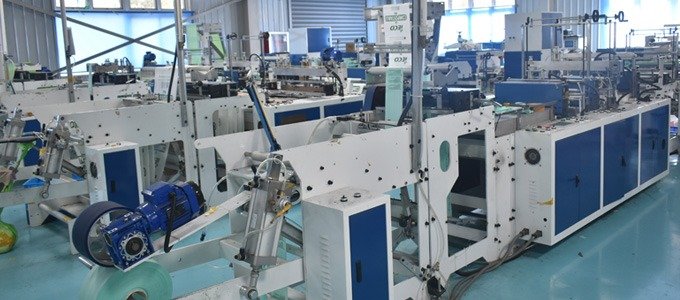
- Production capacity and equipment: Guanzhong owns a 200,000 m² industrial park with 100,000+ m² production facilities, equipped with injection molding, film blowing, bag-making workshops, and standardized production lines.
- R&D and technology: advanced R&D center capable of optimizing material ratios, simulating printing effects, and improving durability design; supports efficient sample development and technical improvements.
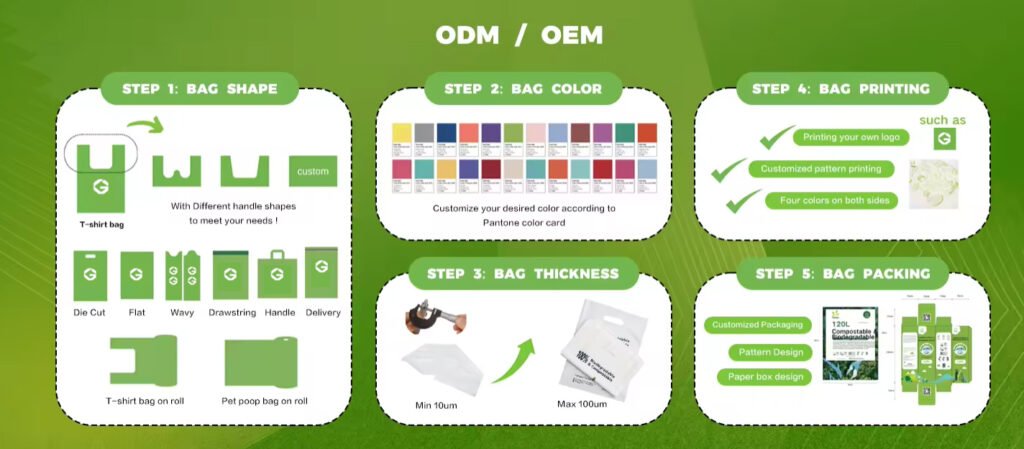
Customization process
- Customer requirements: clarify the bag’s purpose, load, size, thickness, printing, and functional design.
- Design and evaluation: engineers provide preliminary design with 3D rendering and functional structure plans.
- Sample production: make samples according to design drawings; test tensile strength, water resistance, tear resistance, and print adhesion.
- Design optimization: adjust thickness, handle structure, material ratio, or printing based on test results to ensure final product meets environmental and practical requirements.
- Mass production: after optimization, proceed to batch production with full quality control to ensure compliance.
Guanzhong service advantages
- Flexible minimum order: supports small-batch customization from 1 ton of raw material and large-batch orders.
- Fast response: mold production cycle 7 days, production cycle about 15 days.
- Comprehensive customization: supports logo printing, pattern design, color matching, size, and thickness.
- Professional support: provides one-stop service from design to production, including material selection guidance, functional optimization, and environmental certification advice.
Testing and Quality Assurance Tips
Durability testing
- Tensile tests, drop tests, and handle load tests to ensure safe use.
Degradability testing
- Industrial composting simulation (55–60°C, 6–8 weeks).
- Soil burial tests (6–12 months).
- Compliance with EN 13432, ASTM D6400, and FDA food contact tests.
Common issues and solutions
- Bag too brittle → increase PBAT ratio.
- Printing peeling → use compatible ink or surface treatment.
- Slow degradation → ensure material meets certification standards.
| Start Your Customization | WhatsApp: +86 13665956245 | Email: peters@quanzhong-bio.com |
Customizing custom biodegradable plastic bags requires careful consideration of material selection, scientific design, collaboration with a reliable biodegradable bag factory, and strict testing. Working with Guanzhong, a company with strong R&D, certification, and stable production capabilities, ensures environmentally friendly, safe, and practical products that meet brand requirements.
Whether for retail, catering, household items, or disposable tableware and food packaging, customizing biodegradable bags helps companies implement green practices and improve competitiveness.