Table of contents
PET, PP & PLA Material Characteristics
The materials used for disposable tableware directly affect food safety, user experience, and environmental impact. The most common materials on the market are PET (Polyethylene Terephthalate), PP (Polypropylene), and PLA (Polylactic Acid), each with different physical properties and application advantages.
Material Features
PET offers high transparency, light weight, and good pressure resistance, making it suitable for displaying cold food or desserts with excellent visual appeal, while maintaining good toughness. PP is heat-resistant, impact-resistant, and suitable for hot meals and microwavable foods. PLA is made from renewable bio-based materials and is biodegradable, making it ideal for eco-conscious dining establishments.
PET, PP & PLA Material Characteristics Comparison
| Material | Advantages | Disadvantages | Typical Uses |
|---|---|---|---|
| PET | High transparency, lightweight, good toughness | Not heat-resistant, prone to scratches | Cold food, desserts, salads, takeaway cold meals |
| PP | Heat-resistant, impact-resistant, microwave-safe | Moderate transparency | Hot meals, takeaway containers, microwavable foods |
| PLA | Biodegradable, eco-friendly, promotes green image | Lower heat resistance, brittle | Eco-friendly restaurants, outdoor events, corporate meetings |
By comparing the materials, businesses can choose the most suitable one based on food type, temperature, and environmental branding requirements.
Applications and Scenarios of Different Materials
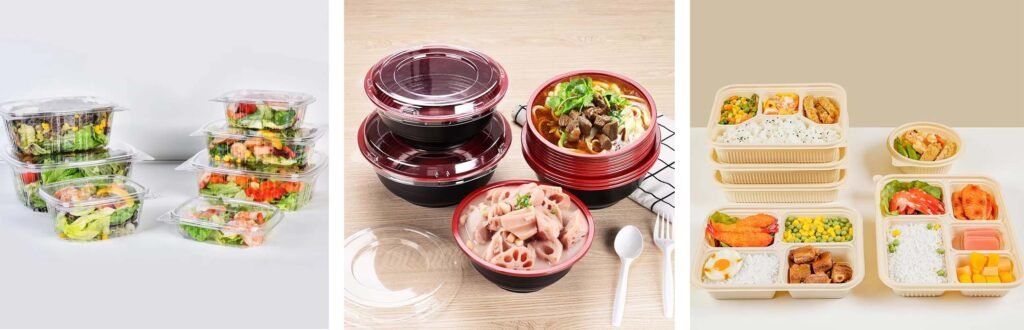
Choosing the right disposable tableware material not only affects the dining experience but also directly impacts food safety and customer satisfaction. The typical applications of these three materials are as follows:
PET Disposable Containers
- Cold Food and Salad Packaging: High transparency showcases the food color, suitable for salads, desserts, and cold drinks.
- Takeaway and Snack Packaging: Lightweight and pressure-resistant, reducing deformation and leakage during transport.
- Commercial Use: Ideal for supermarket pre-packaged fruits, convenience store salads, and chain restaurant cold food packaging.
PP Disposable Tableware
- Hot Food and Microwave Use: Heat-resistant, suitable for hot meals, soups, and microwavable foods.
- Takeaway Boxes: Especially suitable for fast food, rice meals, and other hot takeaway orders.
- Food Processing and Distribution: Durable and reusable for temporary food storage, reducing breakage.
PLA Disposable Tableware
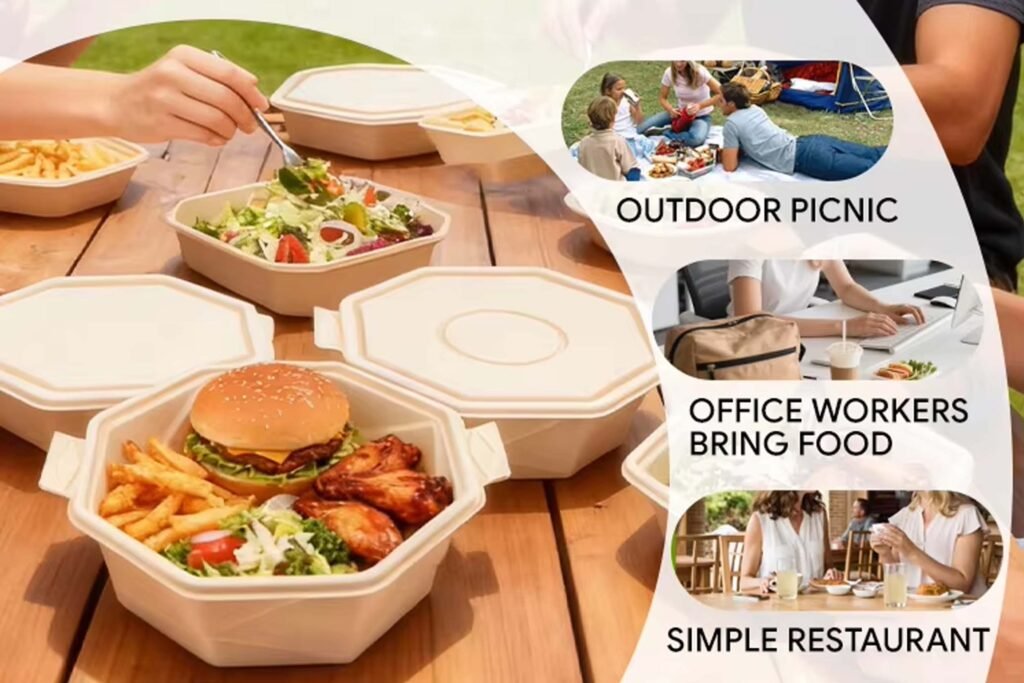
- Eco-friendly Restaurants: Preferred by green dining establishments to reduce plastic pollution.
- Events and Takeaway: Suitable for corporate meetings, outdoor events, and eco-conscious takeaway services, enhancing brand image.
- Green Marketing: Compliant with EN13432, OK Compost, and other biodegradability standards, aiding companies in promoting sustainability.
Overall, PET is preferred for cold food, PP for hot food, and PLA for environmentally conscious businesses. Materials should be selected based on food type, temperature, and brand requirements.
Production and Customization Process
Understanding the production process of disposable tableware helps businesses choose a reliable disposable plastic container manufacturer and ensures product quality.
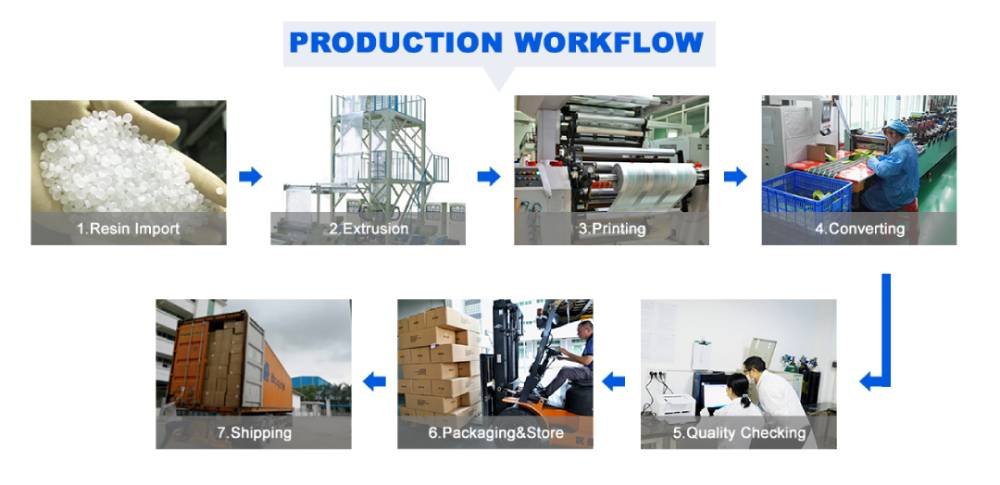
Production Process Overview
- Raw Material Selection and Preparation
PET, PP, or PLA must pass food-grade certifications such as FDA and EU 10/2011 to ensure safety. Bio-based PLA should have traceable sources and stable quality. - Forming Techniques
- Injection Molding: Suitable for complex tableware like lidded lunch boxes or compartment trays, providing high precision and strength.
- Thermoforming: Ideal for thin trays or cold food containers, simple and cost-effective.
- Blow Molding: Common for transparent cups or large-capacity containers, ensuring stable shape.
- Surface Treatment and Printing
Surfaces can undergo anti-slip, glossy, or matte finishes to improve touch and visual appeal. Custom printing of logos, barcodes, or QR codes is supported to enhance brand recognition.
By understanding the production process, businesses can grasp key manufacturing steps and quality control points, laying a solid foundation for procurement or customization.
Food Safety, Environmental Certifications, and Standards
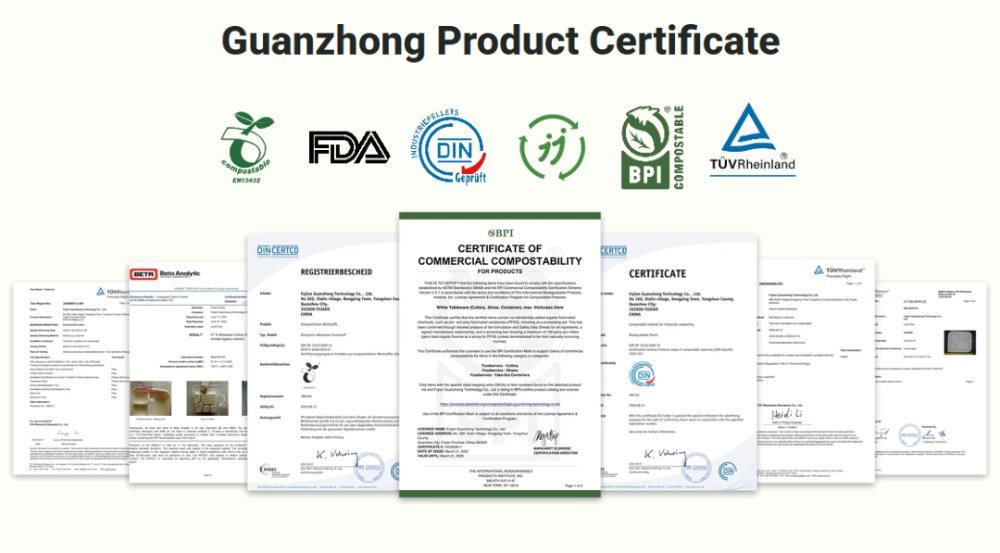
Food safety and environmental certifications are crucial when purchasing or customizing disposable tableware. Choosing products that meet international standards ensures consumer safety and enhances corporate reputation.
Key Food Safety Standards
- FDA (U.S. Food and Drug Administration): Ensures materials are non-toxic and safe for food contact.
- EU 10/2011 (EU Food Contact Materials Regulation): Strict limits on plastic migration into food.
Environmental and Biodegradability Standards
- EN13432: EU industrial composting standard, ensuring PLA fully degrades under composting conditions.
- OK Compost: Verifies biodegradability of materials in composting environments.
- DIN PLUS: German standard evaluating the degradation of bio-based materials.
Recycling and Degradation Considerations
- PET and PP: Recyclable but dependent on local recycling systems.
- PLA: Suitable for industrial composting; slower degradation in household waste environments, requiring proper disposal.
Selecting tableware that complies with food safety and environmental standards helps businesses achieve both safety and sustainability goals.
Customization and Selection Guide with Guanzhong
Choosing suitable plastic disposable food containers wholesale or a reliable disposable plastic container manufacturer is critical for restaurants and retailers. Guanzhong, a leading manufacturer of bio-based and biodegradable disposable tableware, offers comprehensive customization and procurement services.
Guanzhong’s Production and Customization Advantages
- Strong Production Capacity
Over 100,000 m² of standardized facilities with injection molding, thermoforming, blow molding, and straw extrusion lines. Annual production reaches 90,000 tons, ensuring stable delivery for large orders. - Professional Customization Capabilities
- Material Options: PET, PP, PLA, and bio-based biodegradable composites (excluding paper and sugarcane)
- Product Types: Disposable plates, cutlery, forks, straws, and food containers
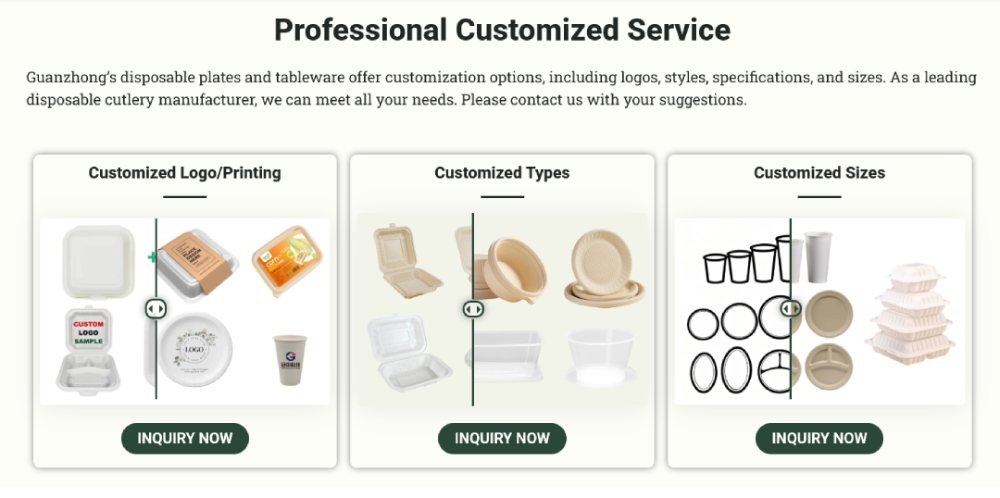
- Customization: Logo printing, size/thickness, design, lamination, and packaging
- Minimum Order: Plates 30,000 units, forks 300,000 units
- Mold & Production Time: Mold 7–45 days, production 7–15 days
- Strict Food Safety and Environmental Certifications
Products comply with China GB/T 20197, GB/T 19277.1, GB/T 4806.7, ASTM D6866, ASTM D6400, DIN EN 13432 standards, and pass FDA food contact tests.
Selection and Cooperation Tips
- Clarify Needs: Choose materials, sizes, and thickness based on food type, temperature, and storage requirements.
- Follow Customization Process: From requirement confirmation to 3D modeling, mold production, and finished product delivery, ensuring functionality and brand image.
- Check Certifications: Select products that meet food safety and environmental standards to reduce compliance risk.
- Consider Order Size: Flexible MOQs meet different business scales.
- After-Sales Support: Guanzhong provides technical consultation, material testing, and packaging optimization to ensure smooth cooperation.
Following these guidelines allows businesses to efficiently collaborate with Guanzhong, obtaining safe, eco-friendly, and fully customizable disposable plastic food containers.
| Start Your Customization | WhatsApp: +86 13665956245 | Email: peters@quanzhong-bio.com |
PET, PP, and PLA disposable tableware play a vital role in modern dining and takeaway services. By understanding material characteristics, applications, production processes, and safety standards, businesses can make informed choices to enhance customer experience and brand image. Partnering with a reliable disposable plastic container manufacturer, such as Guanzhong, ensures high-quality tableware, professional customization, and technical support. Whether for cold food, hot meals, or eco-conscious businesses, selecting the right materials and suppliers is key to food safety, customer satisfaction, and sustainable business growth.