Table of contents
Compostable Bags Significantly Reduce Long-Term Environmental Damage
The biggest environmental problem of traditional petroleum-based plastic bags lies in their extremely long degradation cycle. According to research by the United Nations Environment Programme (UNEP), common polyethylene (PE) plastic bags are almost impossible to fully decompose in natural environments, with a decomposition period of 400–500 years. During this time, plastic bags accumulate in soil, rivers, and oceans, eventually forming microplastics and entering the food chain, causing long-term ecological damage.
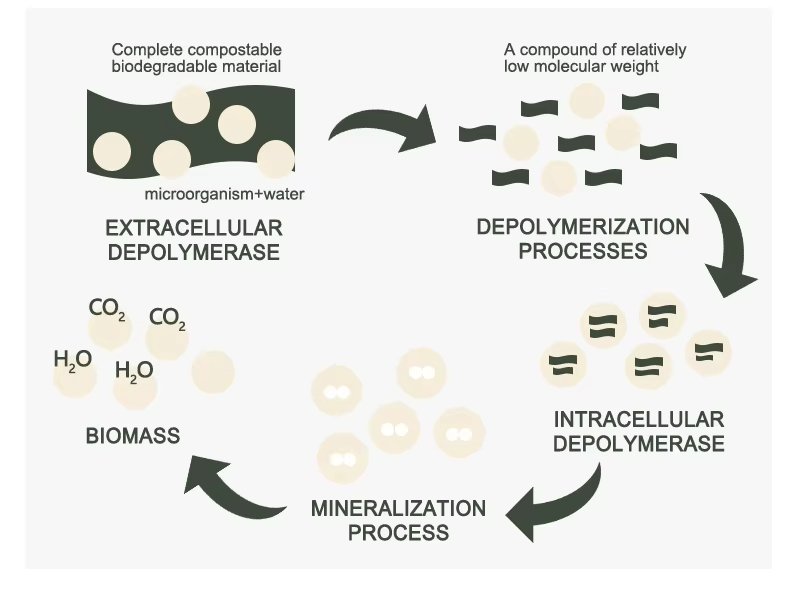
In contrast, PLA+PBAT compostable bags adopt a completely different degradation mechanism:
- Hydrolysis and thermal decomposition stage: In humid and warm environments, PLA molecular chains break down into lactic acid monomers.
- Microbial decomposition stage: Microorganisms in soil and compost systems consume these monomers as nutrients.
- Final products: Carbon dioxide, water, and biomass, without harmful residues.
Under industrial composting conditions (58°C, 90% humidity, adequate oxygen), PLA+PBAT bags can degrade over 90% within 180 days. This efficient degradation not only reduces solid waste accumulation but also prevents the spread of “white pollution,” making a significant contribution to environmental protection.
Biodegradable Bags Quickly Disappear in the Environment
Besides reducing long-term pollution, another remarkable advantage of compostable bags is that they almost “disappear” in the environment. In home composting or industrial composting systems, PLA+PBAT materials quickly decompose under microbial action, unlike traditional plastic, which persists for centuries.
Scientific studies show:
- Under standard composting conditions, PLA+PBAT bags can complete the majority of degradation within 3–6 months.
- In comparison, ordinary PE plastic bags hardly degrade in soil or water, easily forming microplastics and polluting soil and water sources.
The rapid disappearance of these bags brings practical benefits:
- Less visible waste: No plastic residues remain in streets, parks, or home compost systems.
- Reduced ecological risk: Lower chance of wildlife ingestion and less harm to aquatic and terrestrial organisms.
In this way, compostable bags not only improve daily environmental quality but also subtly enhance public environmental awareness.
Safer for Food Contact: Non-toxic and Additive-Free
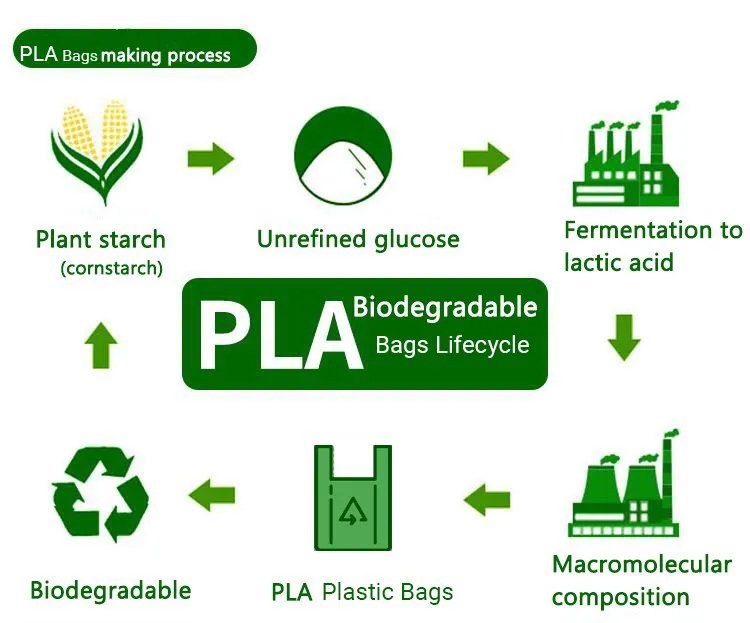
Compostable bags are increasingly used for food packaging and fresh groceries, mainly due to the natural food safety of the PLA+PBAT system. PLA has passed multiple food contact safety tests by the US FDA and the EU EFSA, making it suitable for food packaging, disposable tableware, and takeout containers.
Compared with traditional plastic bags, compostable bags do not require plasticizers or harmful additives during production, featuring:
- Free of BPA (Bisphenol A)
- Free of phthalates
- Free of heavy metals or toxic residues
These properties ensure that compostable bags are safer when handling fruits, vegetables, fresh products, children’s food, and takeout meals. Households can use them with confidence, while retailers and food service providers can enhance product safety credibility.

Reduce Landfill Pressure
With the global push for “plastic reduction,” plastic waste management has become increasingly challenging. Traditional single-use plastic bags are hard to recycle, bulky, and have low recovery value, placing huge pressure on landfills and incineration facilities.
The advantages of compostable bags include:
- Resource utilization: Can enter industrial composting systems for organic waste recycling.
- Co-processing with food waste: No special sorting needed, reducing labor and sorting costs.
- Reduced incineration: Lower harmful gas emissions and environmental pollution risks.
For example, many European countries have integrated compostable bags into food waste collection systems, improving sorting efficiency and significantly reducing urban waste management pressure. Businesses using compostable bags can enhance their ESG performance, and city managers can reduce solid waste costs while encouraging public participation in environmental protection.
Strong Practical Performance, Suitable for Modern Life
Many people mistakenly think compostable bags are “not strong enough,” but modern PLA+PBAT engineering formulas have greatly improved material performance to meet everyday needs:
- Load-bearing capacity: PBAT’s flexibility and extensibility enhance bag tensile strength, easily supporting groceries and fresh produce.
- Puncture resistance: The crystal structure of PLA+PBAT is soft, reducing the risk of tearing from sharp objects.
- Wet waste adaptability: Bags remain stable under high moisture, ideal for wet kitchen waste and fresh produce transport.
Usage suggestions:
- Kitchen wet waste: ≥18μm thick with leak-proof design
- Fresh produce transport: reinforced bottom sealing to prevent leakage
- Daily shopping: 12–15μm medium thickness is sufficient
Selecting the right bag specifications and design significantly improves user experience while maintaining eco-friendly characteristics.

How to Choose the Right Biodegradable Bags
Nowadays, there are many types of “biodegradable bags” on the market, including products that falsely claim to be compostable while being only “oxo-degradable” or partially biobased. Here is a practical guide:
- Check certification: A genuine compostable bag should have at least one international certification: EN13432 (EU), OK Compost (Home/Industrial), or ASTM D6400 (USA). These certifications indicate that the product can safely and completely degrade under specific conditions.
- Check raw materials: Choose bags clearly labeled as PLA, PBAT, PLA+PBAT modified system, or starch-based compostable materials. Avoid products labeled only as “degradable” without material information to prevent buying fake compostable bags.
- Select specifications according to use: For wet waste, choose thickened bags ≥18μm; for fresh produce, select leak-proof structures; for daily shopping, medium thickness with reinforced bottom is sufficient.
- Pay attention to storage conditions: Compostable bags are sensitive to the environment and should be kept away from direct sunlight, stored in dry and cool places. Unopened, they usually last 10–12 months.
- Avoid “fake biodegradable bags”: Products labeled as “crackable,” “fragmentable,” or “eco-plastic” without certification, or made of “PE+additives,” are usually oxo-degradable plastics that break into microplastics but do not truly degrade.
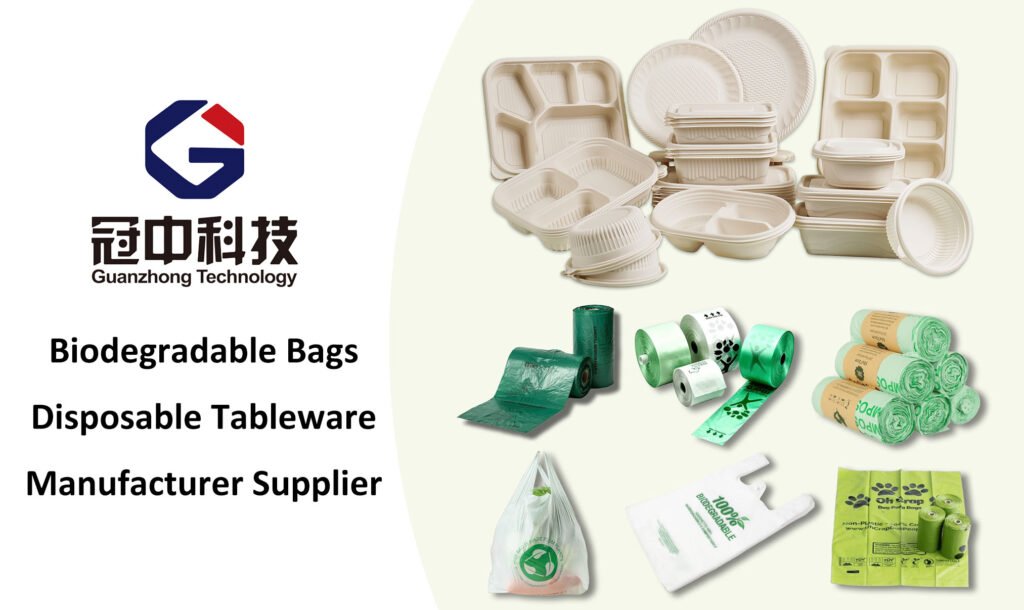
Why choose Guanzhong biodegradable bags?
- Made with 100% PLA+PBAT modified system, high transparency, strong flexibility, stable degradation
- Fully certified by EN13432 and ASTM D6400
- Supports multiple specifications customization: thickness, size, color, and bottom sealing structure
- Strict factory quality control ensures food-grade safety and durability
- Supports brand and packaging customization, providing long-term reliable supply for supermarkets, fresh produce brands, and e-commerce
| Start Your Customization | WhatsApp: +86 13665956245 | Email: peters@quanzhong-bio.com |
Choosing compostable bags is not only a lifestyle change but also a responsibility toward the environment, resources, and future. From reducing microplastic pollution to promoting renewable material cycles, improving food safety, and lowering carbon emissions, compostable bags’ full lifecycle advantages make them a necessary choice under the global green trend.
Among many compostable bag products, Guanzhong, a trusted biodegradable carry bags manufacturer and bio bags manufacturer, provides high-quality PLA+PBAT biodegradable bags, offering reliable and sustainable solutions for households, businesses, and cities.