Table of contents
Guanzhong’s Manufacturing Strength and Core Competitive Advantages
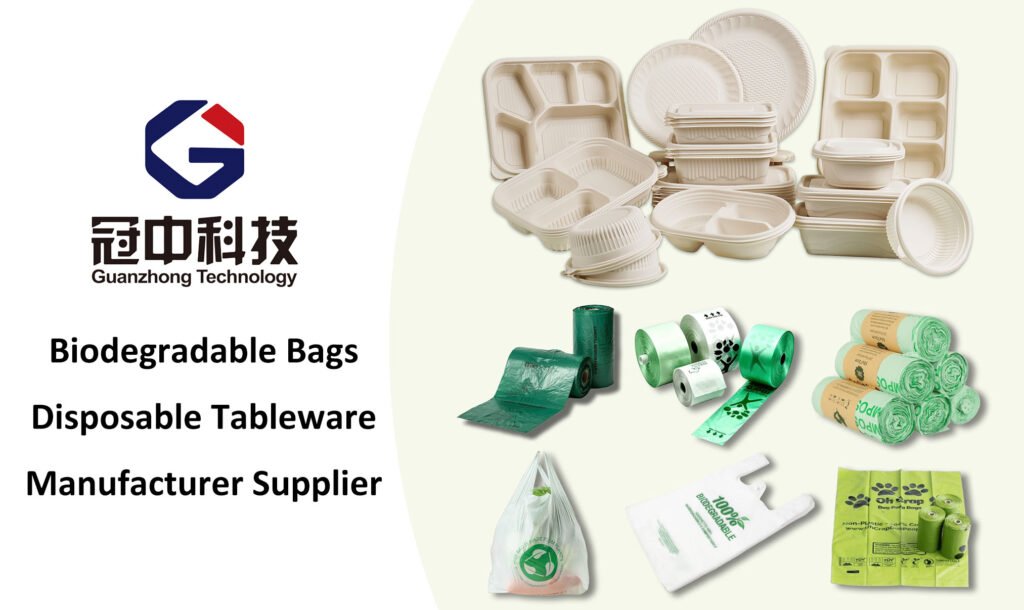
As a leading biodegradable food containers manufacturer in China, Guanzhong has built a complete industrial system covering R&D, material modification, injection molding, and large-scale production, focusing on the global supply of eco-friendly disposable food containers.
1. Ultra-Large Industrial Park and Production Foundation
Guanzhong has an industrial park of nearly 200,000 square meters, forming a highly integrated production base for eco-friendly food containers:
- Industrial park total scale: approx. 200,000㎡
- Production facility area: 100,000㎡+
- Standardized factories and R&D center: approx. 100,000㎡
- Production staff: approx. 180 people
- Patents: 10+ environmental material and structural design patents
2. Annual Production Capacity and Production Line System
Guanzhong has established a multi-process biodegradable food container production system with an annual capacity of approximately 90,000 tons, enabling stable support for global B2B bulk orders.
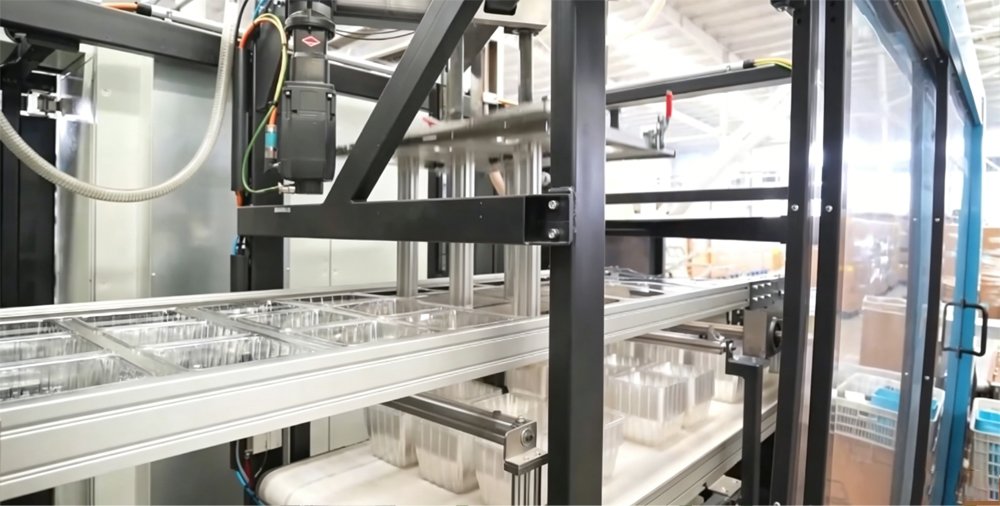
- Injection molding system: 50 fully automated production lines, monthly capacity approx. 2,000 tons, mainly used for PLA and CPLA food container structural parts, featuring high-precision automation control to ensure product consistency and structural stability.
- Thermoforming system: 8 fully automated production lines, monthly capacity approx. 800 tons, mainly used for lightweight food packaging and transparent containers, improving material efficiency while maintaining strength.
- Biodegradable film system: 50 film blowing lines and 25 bag-making lines, monthly capacity approx. 1,500 tons, used for outer protective food packaging materials to meet transport protection and environmental requirements.
- Bio-based modified material system: 3 sheet extrusion lines and 5 masterbatch production lines, monthly capacity approx. 2,000 tons, used to optimize PLA material performance, improving heat resistance and processing stability.
3. Core Competitive Advantages Summary
Guanzhong’s industry position mainly comes from four dimensions:
- Scale advantage: 200,000㎡ industrial park supporting large-scale stable supply
- Production line diversity: covering injection molding, thermoforming, and bio-based material modification
- Technical stability: multiple fully automated production lines ensuring consistency
- Environmental orientation: focusing on PLA/CPLA biodegradable systems
Guanzhong Core Materials: PLA and CPLA
Guanzhong focuses on PLA and CPLA two major bio-based material systems, ensuring consistent performance and food safety compliance of biodegradable food containers under different temperature and application scenarios.
1. PLA (Polylactic Acid): Eco-Friendly Cold Food Packaging Core Material
PLA is a bio-based material derived from plant starch and is one of the most widely used biodegradable plastics globally. In Guanzhong’s food container system, PLA is mainly used for cold and room-temperature food packaging, offering excellent transparency and molding stability.
- Material source: fermented from corn, cassava, and other plant starches, renewable in nature
- Appearance: high transparency, similar to traditional plastic, suitable for display packaging
- Structural properties: good rigidity and stable molding, suitable for standardized production
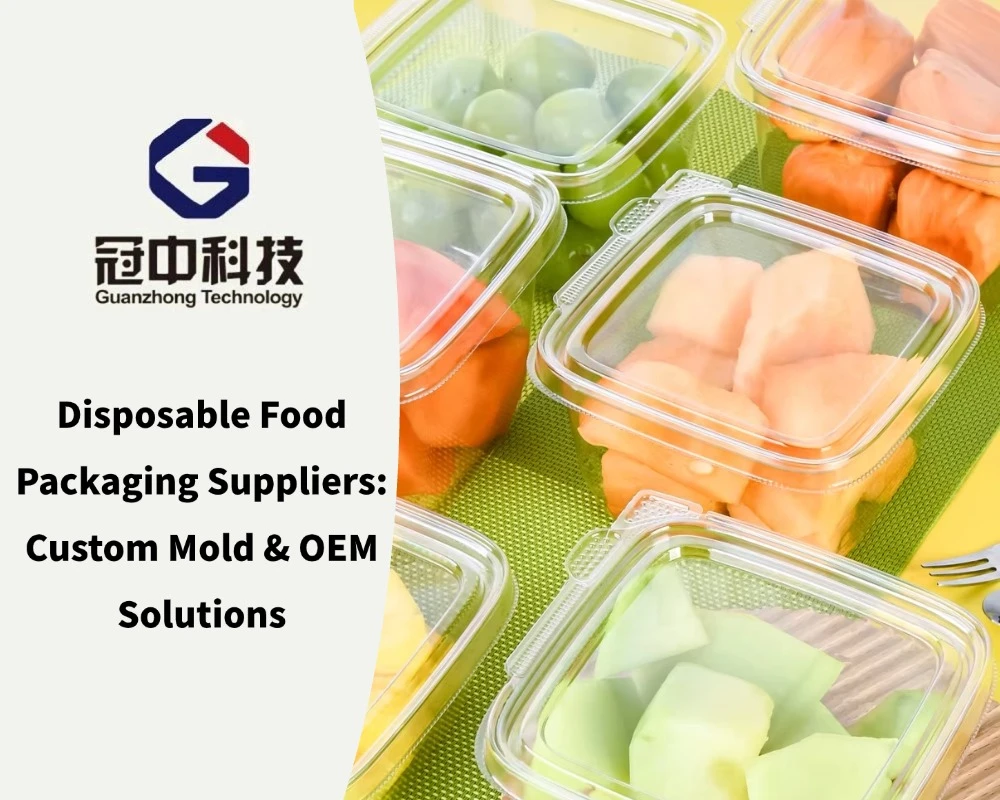
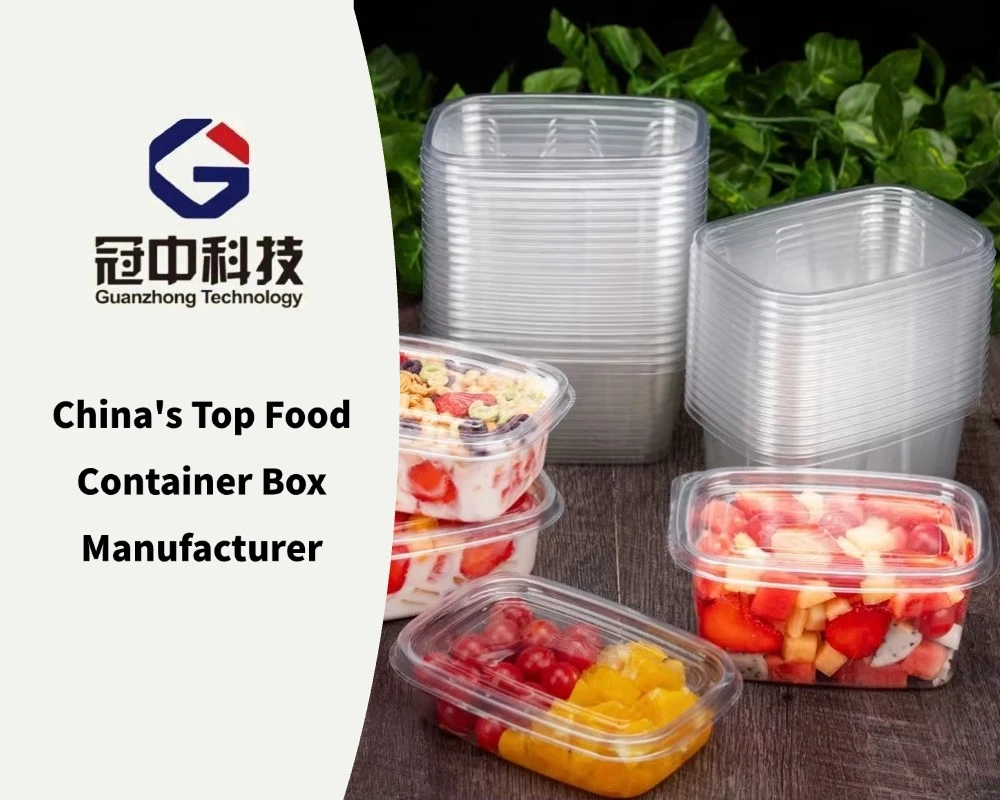
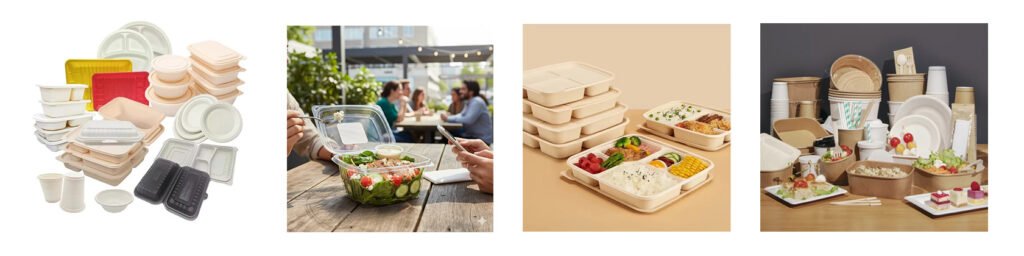
- Applications: salad boxes, fruit boxes, cold drink cups, and refrigerated food packaging
- Usage limitation: temperature resistance approx. 0°C–50°C, not suitable for high-temperature or microwave use
2. CPLA (Crystallized Polylactic Acid): High-Temperature Food Packaging Solution
CPLA is an upgraded material formed by crystallizing PLA through modification processes, significantly improving heat resistance for hot food packaging applications.
- Heat resistance: can withstand approx. 85°C–100°C
- Structural stability: strong anti-deformation performance, suitable for hot food delivery scenarios
- Material properties: retains bio-based origin and industrial compostability
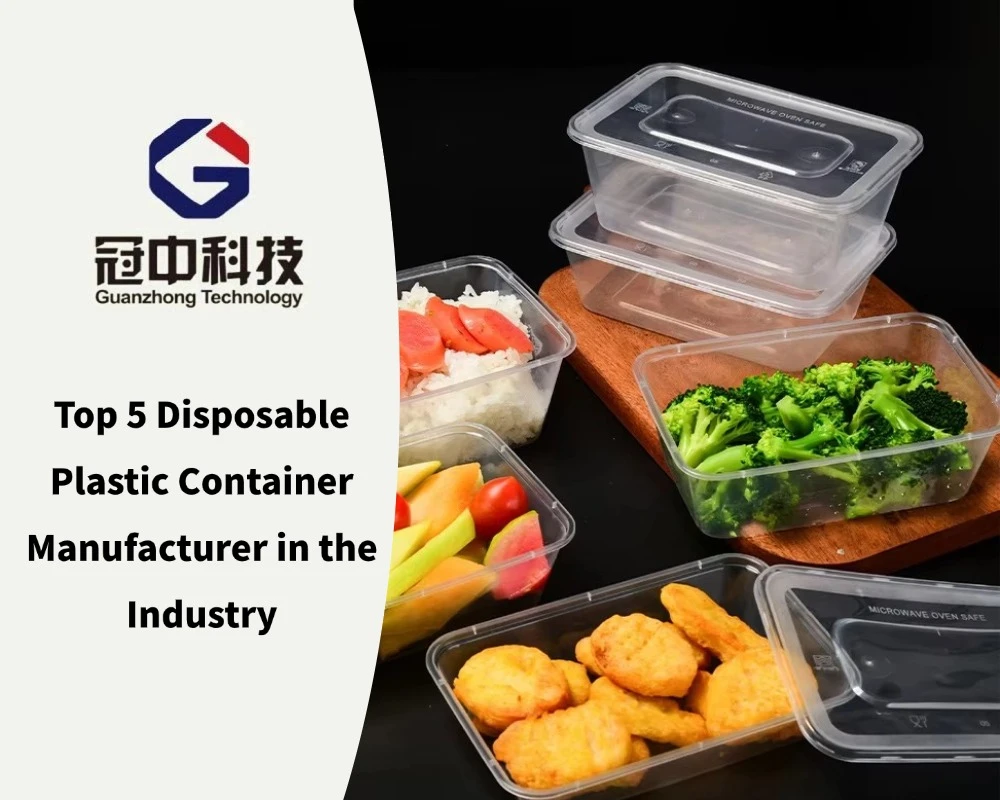
- Applications: hot food delivery boxes, coffee cup lids, beverage lids, and hot meal packaging
- Technical advantage: higher strength and thermal stability compared to PLA, better suited for modern food delivery systems
Production Process and Quality Control System
Guanzhong has established a complete industrial system covering raw material processing to final product delivery, ensuring stability and consistency of biodegradable food containers in the global market through standardized production processes and strict quality control mechanisms.
1. Production Process System (Industrial Manufacturing from Raw Materials to Finished Products)
Guanzhong adopts a highly automated and standardized production model, converting PLA and CPLA bio-based materials into high-quality food container products through fully controlled production processes.
- Raw material inspection: testing melt index, purity, and food-grade safety of PLA and CPLA materials to ensure compliance with production standards
- Molding production: using fully automated injection molding and thermoforming equipment, injection molding for structural parts and thermoforming for lightweight and transparent packaging products
- Surface treatment: food-grade oil-resistant coating and structural optimization including leak-proof design and edge reinforcement
- Finished packaging: standardized moisture-proof and pressure-resistant packaging with batch coding traceability system
2. Quality Control System (Full Process Inspection and Standardized Management)
Guanzhong has established a full-process quality management system to ensure each batch meets international food contact safety and biodegradable material standards.
- Raw material control: all PLA and CPLA materials must pass food-grade safety testing with no harmful residues
- Process monitoring: real-time monitoring of temperature, pressure, and molding time to ensure product consistency and batch stability
- Finished product testing: high-temperature resistance, compression, sealing, and simulated compost degradation tests
- Traceability system: batch coding management for full lifecycle traceability and accountability
Customization Capabilities: Solutions for Global B2B Procurement Needs
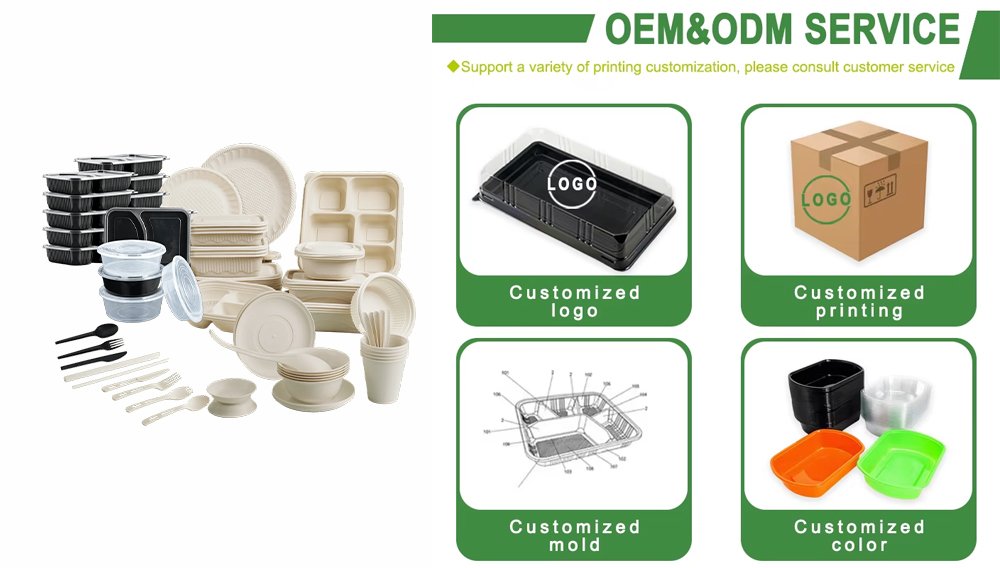
Guanzhong provides high-flexibility customization services for global food brands based on mature PLA/CPLA material systems and industrial manufacturing capabilities, covering structure, specification, branding, and material performance.
- Product Structure Customization: Guanzhong supports single-compartment, multi-compartment, and partitioned container designs, optimizing leak-proof and sealing performance according to different food service scenarios.
- Capacity and Size Customization: Product specifications range from approx. 300ml to over 1000ml, supporting various packaging needs from light meals to main courses and allowing market-specific adjustments.
- Brand Visual Customization: Supports logo embossing and packaging design customization, aligning food containers with brand identity and improving market recognition.
- Material Combination Customization: Based on PLA and CPLA systems, different material combinations are provided for cold and hot food applications, optimizing thermal and structural performance while maintaining environmental properties.
- Functional Enhancement Customization: Performance improvements such as oil resistance, leak-proofing, and compression resistance can be customized to enhance stability in delivery and high-frequency use scenarios.
- Mold Development and Rapid Prototyping Capability: With an industrial mold development system, rapid sampling and structural iteration are supported, shortening product development cycles for faster market launch.
Environmental Regulations and International Certifications
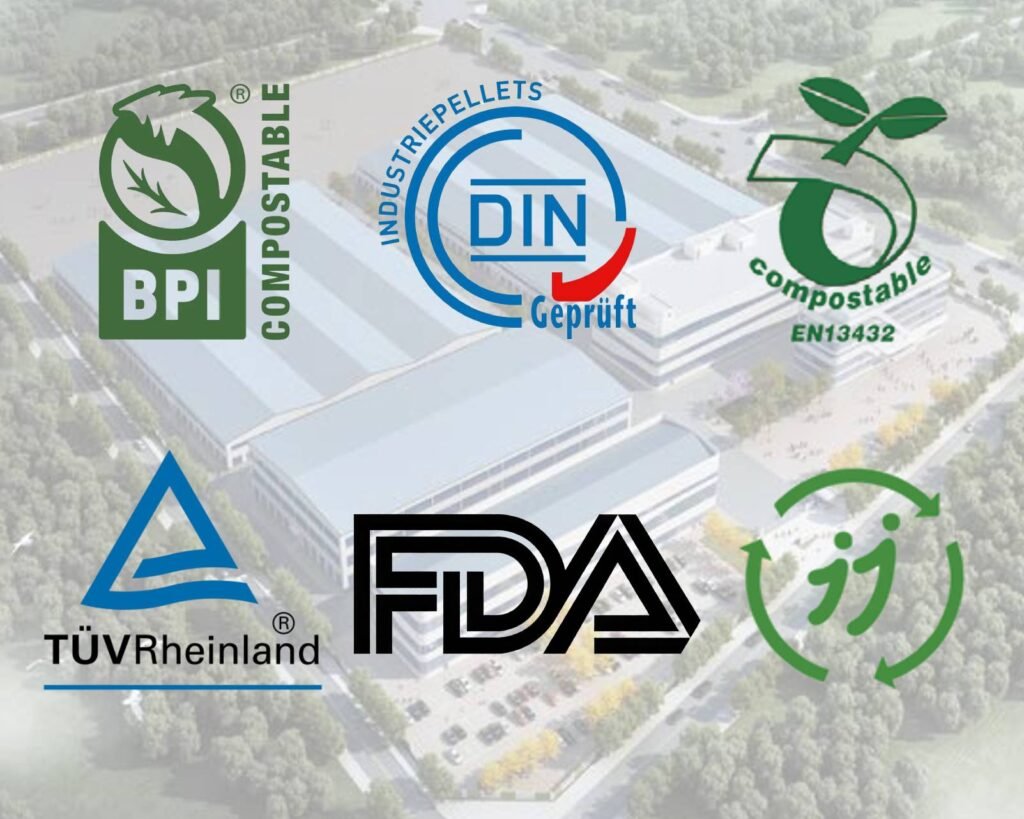
Guanzhong has established a comprehensive international certification system in the biodegradable food container industry, ensuring compliance with global environmental, safety, and food contact material standards for stable supply to Europe, North America, and other regulated markets.
- EN13432 industrial composting certification: products comply with EU EN13432 standards, ensuring biodegradability under industrial composting conditions and meeting European market requirements.
- ASTM D6400 compostable plastic standard: products comply with US ASTM D6400 standards, verifying degradation performance and environmental safety in composting environments.
- ISO9001 quality management system certification: standardized management covering raw material procurement, production control, and finished product inspection.
- FDA food contact material compliance: ensures safety and stability for food use, meeting export requirements.
| Start Your Customization | WhatsApp: +86 13665956245 | Email: peters@quanzhong-bio.com |
The global food packaging industry is rapidly shifting toward sustainable material systems, and biodegradable food containers are becoming the mainstream solution.
With an industrial park of approximately 200,000㎡, an annual capacity of 90,000 tons, and a complete production chain covering injection molding, thermoforming, and bio-based material modification, Guanzhong has become a leading biodegradable food containers manufacturer in China.
It is also positioned among the trusted disposable food container manufacturers in the global packaging supply chain.
By focusing on PLA and CPLA material systems, strict quality control, and international certification systems, Guanzhong continues to provide stable, safe, and eco-friendly disposable food containers for global food brands.
In the future, as environmental regulations continue to tighten worldwide, biodegradable tableware will become a standard in the food service industry, and Guanzhong will continue to play a core role in this global transition.