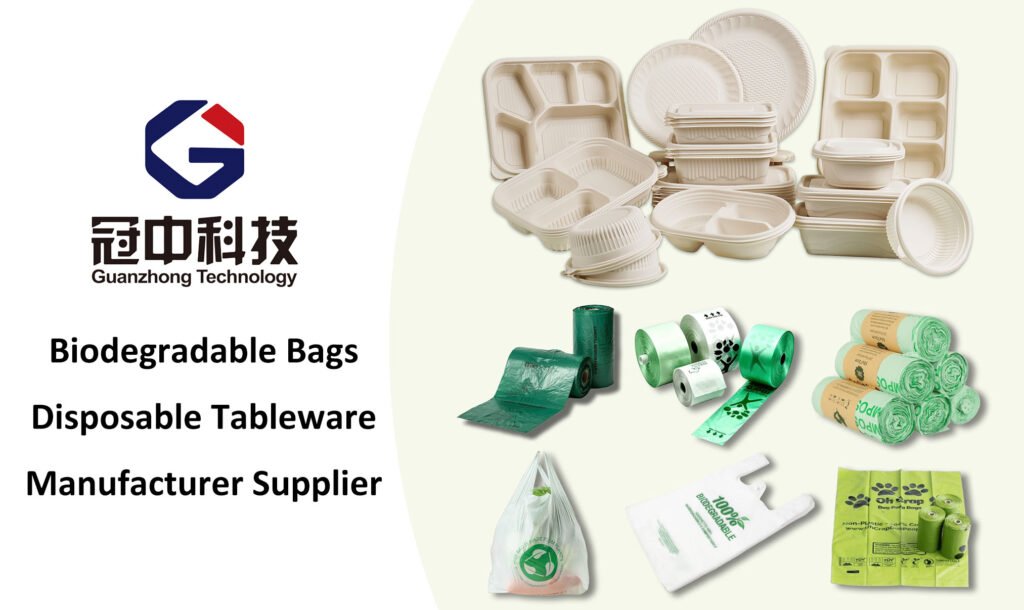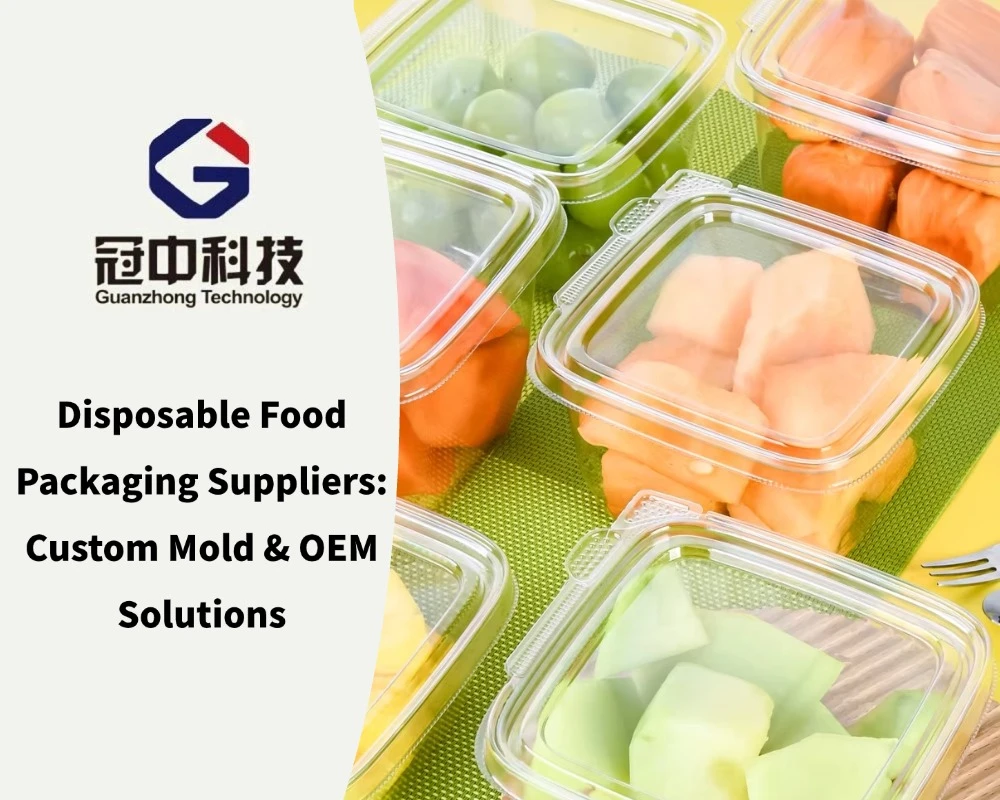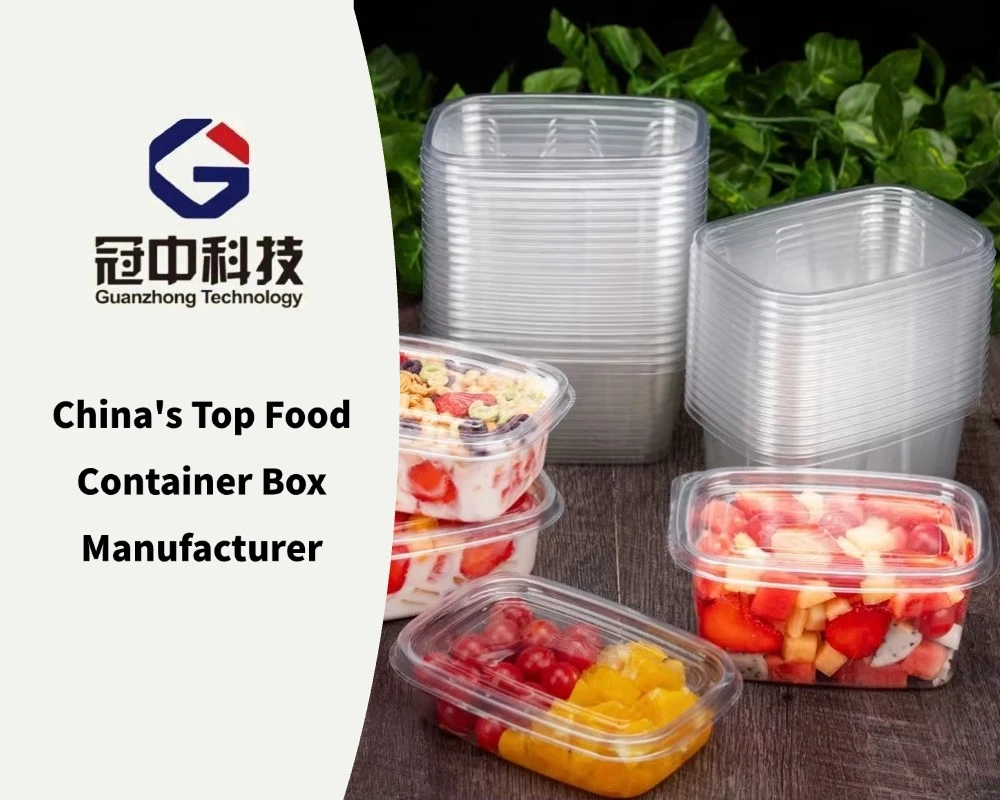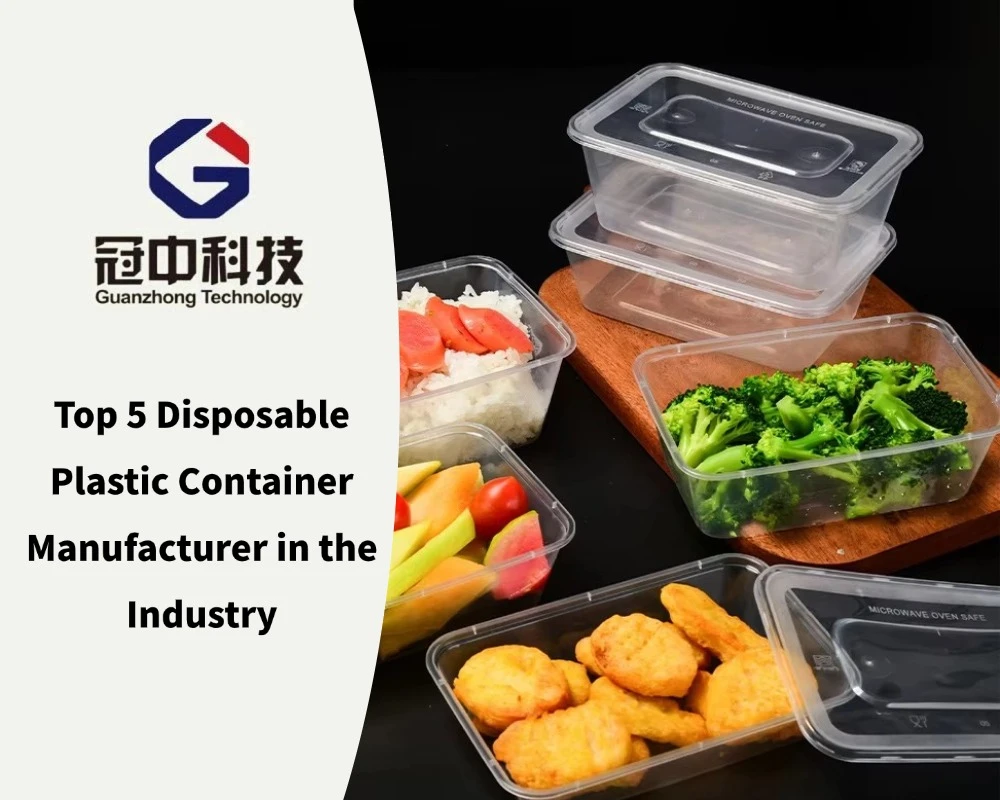
For commercial food businesses and catering wholesalers across the UK, finding reliable eco friendly food packaging manufacturers is no longer just a trend—it is a critical regulatory necessity. With the UK Plastic Packaging Tax and increasing consumer demand for sustainable dining, sourcing directly from a large-scale eco friendly food packaging supplier ensures your business stays compliant, cost-effective, and green. Guanzhong stands out as a global premier manufacturer, delivering advanced bio-based food packaging solutions designed to support your commercial scale-up without compromising on premium quality.
Key Takeaways
- Guanzhong operates a massive 200,000 m² industrial park with a 90,000-ton annual capacity for large-scale B2B supply.
- High-performance certified materials include PET, PLA, PP, and bio-based biodegradable composites (excluding paper and sugarcane).
- Short lead times of 7-15 days combined with a fast biodegradation germination time of 7-45 days.
- Full OEM/ODM one-stop custom services supporting bespoke sizes, structural types, logos, and custom printing.
Guanzhong Top Eco Friendly Food Packaging Manufacturers
As a top-tier brand serving the UK market, Guanzhong has built an undisputed reputation as one of the leading eco friendly food packaging manufacturers globally. We specialize in producing high-end, reliable disposable tableware, food containers, and cutlery designed specifically to meet the strict quality standards of European catering and food service industries.
To bridge the gap between ecological responsibility and heavy-duty industrial supply, we have established a world-class manufacturing infrastructure optimized for global B2B procurement:
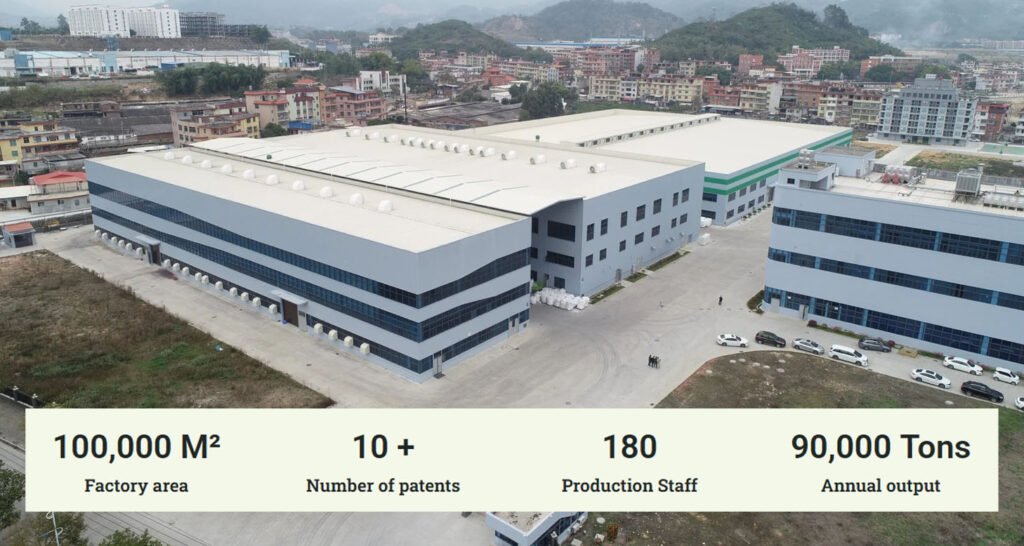
- Massive Production Footprint: We operate an extensive 100,000+ square meter production facility situated within a sprawling 200,000 square meter industrial park, ensuring catering brands and packaging distributors never have to worry about stock shortages or shipping delays.
- Proprietary Innovation: Backed by 10+ core patents and an advanced standardized R&D center, we continuously engineer non-paper, non-sugarcane polymer alternatives that provide the superior physical durability high-volume food businesses demand.
- Elite International Certifications: Our entire infrastructure fully complies with premier global operational frameworks, proudly holding BRCGS, ISO 9001, and ISO 14001 quality and environmental management certifications.
- Strict Food Safety Compliance: All manufactured goods carry authoritative FDA food-contact safety certifications and European EN13432 compostability approvals, ensuring 100% regulatory compliance for UK customs and European market distribution.
💡 Frequently Asked Questions
- Question: Why should UK distributors source from Guanzhong instead of traditional suppliers?
- Answer: Guanzhong offers a specialized focus on advanced polymer materials (PET, PLA, PP, bio-composites) backed by BRCGS, ISO, and FDA certifications to guarantee international compliance.
Mass Production of Eco Friendly Food Packaging Supplier
Scaling your business requires an eco friendly food packaging supplier that possesses unmatched manufacturing capacity and state-of-the-art automation. Guanzhong employs over 180 skilled production specialists and operates with an incredible annual output of 90,000 tons, making us the ultimate backbone for your wholesale supply chain.
| Production Line Type | Machinery & Infrastructure | Monthly Production Capacity |
| Injection Molding | 50 Fully Automatic Injection Molding Lines | Approx. 2,000 Tons |
| Blister Molding | 8 Fully Automatic Thermoforming Lines | Approx. 800 Tons |
| Film Blowing & Printing | 50 Biodegradable Film Blowing & Printing Lines | Approx. 1,500 Tons |
| Bag Making | 25 High-Speed Bag Making Lines | Integrated with Film Blowing |
| Bio-based Modifications | 3 Extrusion Lines & 5 Masterbatch Lines | Approx. 2,000 Tons |
| Straw Extrusion | 5 Fully Automatic Straw Extrusion Lines | Approx. 250 Tons |
With our 50 fully automatic injection molding lines and 8 thermoforming lines, we ensure that every single batch of disposable food containers, cutlery, and plates exhibits perfect dimensional stability and clean finishes. This advanced automation minimizes human error, decreases manufacturing waste, and directly lowers the unit cost for our B2B partners.
💡 Frequently Asked Questions
- Question: What is the monthly capacity of a large-scale eco friendly food packaging supplier?
- Answer: A world-class supplier like Guanzhong delivers over 6,500 tons of combined monthly capacity across injection molding, blister thermoforming, film blowing, and straw extrusion lines.
Guanzhong Advanced Tableware Production And Processing Craftsmanship
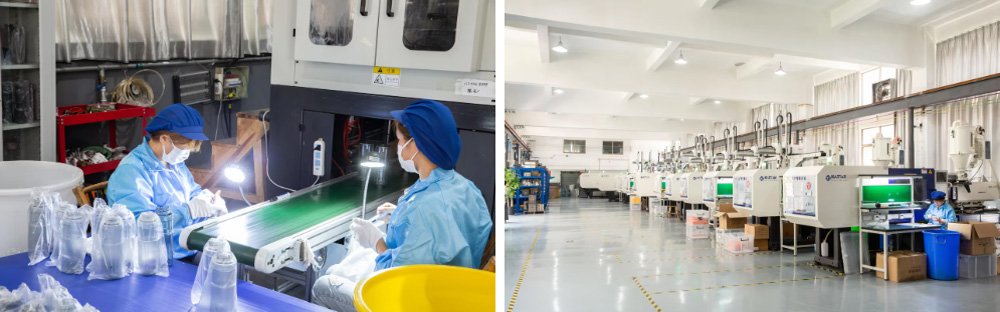
Guanzhong integrates advanced polymer technology with automated machinery to achieve unmatched production efficiency and pristine tableware quality.
- Bio-based Modification: Raw components are precisely blended across 3 extrusion lines and 5 masterbatch lines to modify PET, PLA, and PP, preventing brittleness during fast-paced commercial usage.
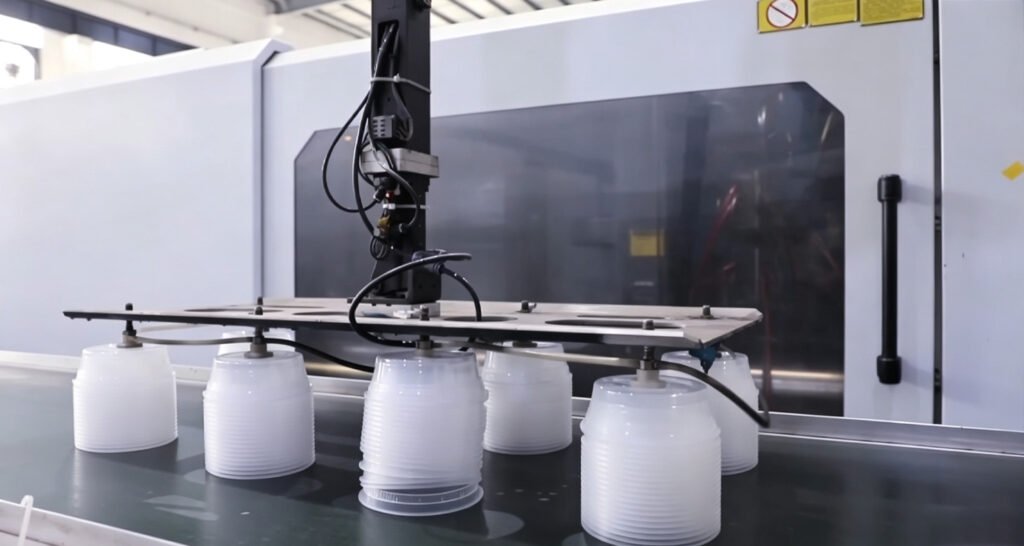
- Precision Injection Molding: Utilizing 50 fully automatic injection molding lines, modified materials are injected into CNC molds under strict heat thresholds to ensure highly rigid eco-cutlery and heavyweight containers.
- High Speed Blister Thermoforming: For larger products like catering trays, our 8 fully automatic thermoforming lines heat bio-sheets evenly to stamp out consistent shapes and perfectly fitting leak-proof lids.
- Film Blowing And Printing: We operate 50 biodegradable film blowing lines alongside 25 high-speed bag making units to extrude eco-friendly food wraps with excellent tensile strength and vibrant ink adhesion.
- Automated Product Inspection: Every production run passes through continuous visual scanning systems and automated load-bearing testing to verify dimensional stability and flawless sealing performance before final packaging.
💡 Frequently Asked Questions
- Question: What machinery advantages does Guanzhong possess for commercial tableware production?
- Answer: Guanzhong operates 50 automatic injection lines and 8 blister lines backed by advanced color and temperature control systems to deliver flawlessly formed catering disposables.
High Performance Certified Eco Friendly Materials Guide
Modern food service requires materials that perform exceptionally under diverse temperature and moisture conditions. Unlike paper and sugarcane bagasse—which can easily become soggy, leak oil, or lose structural integrity—Guanzhong uses premium PET, PLA, PP, and bio-based biodegradable composite materials.
These advanced materials are specifically engineered to provide excellent barrier properties against grease, water, and heat. Our biodegradable composites feature an incredibly fast germination and degradation time of just 7-45 days under industrial composting conditions, converting back into natural elements without leaving microplastics behind.
- PET & PP Containers: Perfect for microwaveable meals, hot soups, and high-clarity cold deli packaging.
- PLA & Bio-composites: 100% plant-derived, compostable plastics ideal for cold drinks, fresh salads, and eco-cutlery.
- Zero Contamination: Completely free from toxic chemical liners, binders, or harmful PFAS, making them 100% food-contact safe.
💡 Frequently Asked Questions
- Question: How fast do Guanzhong’s bio-based food packaging materials decompose?
- Answer: Our premium biodegradable composites boast an ultra-fast commercial composting germination and degradation cycle of 7-45 days, returning safely to nature.
One Stop Custom Eco Friendly Food Packaging Solutions
Every brand has a unique story, and standard off-the-shelf packaging is rarely enough to stand out in the competitive UK food sector. At Guanzhong, we offer an all-inclusive one-stop custom service backed by our advanced 100,000 square meter standardized manufacturing plants to manage your entire packaging project from concept to final delivery.
Our in-house design and engineering teams work collaboratively with your business to create completely tailored food packaging that reflects your brand identity and operational requirements. We handle all elements of structural engineering, prototyping, custom mold fabrication, and automated printing under a single roof.
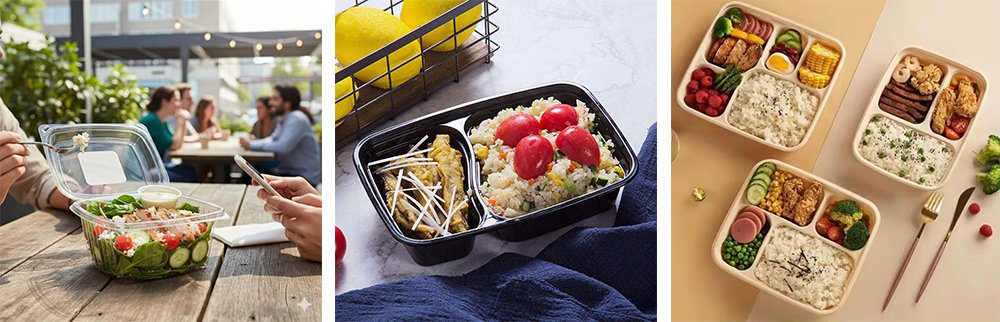
- Custom Packaging Dimensions: Fully tailorable depth, diameter, and volume configurations to accommodate specific food portions.
- Bespoke Product Types: Custom-engineered multi-compartment lunchboxes, specialized salad bowls, portion cups, and heavy-duty cutlery sets.
- Custom Sizes & Profiles: Precision-molded structural shapes designed to optimize stackability and maximize heat retention.
- Brand Logo & Custom Printing: High-definition multi-color printing utilizing food-grade eco-inks for striking brand exposure.
- Rapid Turnaround Time: Highly optimized scheduling delivers an incredibly fast production cycle of just 7-15 days.
💡 Frequently Asked Questions
- Question: What custom options are available through Guanzhong’s one-stop eco-friendly service?
- Answer: Guanzhong supports full OEM/ODM customization covering custom sizes, specific structural types, custom dimensions, brand logos, and specialized multi-color printing.
| Start Your Customization | WhatsApp: +86 13665956245 | Email: peters@quanzhong-bio.com |
Navigating the transition to sustainable food service requires a strong, capable, and highly automated manufacturing partner. Guanzhong offers the perfect synergy of massive industrial scale, advanced material technology, and flexible custom design services. Let us help you elevate your brand image while safeguarding our planet.
Contact our sales team today to request your free samples and custom B2B quote!