Table of contents
- Commonly Used Materials for Disposable Cutlery: PET, PLA, PP, Bio-Based and Biodegradable Materials Compared
- From Concept to Finished Product: A Complete Breakdown of the Custom Disposable Cutlery Production Process
- Materials and Design Choices That Shape Disposable Cutlery Performance
- Certification and Compliance Requirements: Essential Market Entry Thresholds for Disposable Cutlery
- Practical Advantages of Customizing Disposable Cutlery with Guanzhong
Commonly Used Materials for Disposable Cutlery: PET, PLA, PP, Bio-Based and Biodegradable Materials Compared
When customizing disposable cutlery, material selection is the foundation of all decisions. Differences in safety, performance, and environmental attributes determine whether a product is truly suitable for its target market.
PP (Polypropylene): Mature, Stable, and Widely Applicable
PP is currently one of the most widely used materials for disposable cutlery. It has stable heat resistance and can typically withstand temperatures close to 100°C, making it suitable for hot food and takeaway scenarios. It also offers good toughness and is not easy to break. With mature mold technology and controllable overall costs, PP remains a mainstream choice in markets where environmental requirements are relatively flexible.
PET: Clear Appearance, Suitable for Cold Food Applications
The main advantages of PET are its high transparency and rigid structure. It is commonly used for salads, desserts, fruits, and other cold or room-temperature foods. However, PET has limited heat resistance and may deform when used with high-temperature foods. Therefore, usage boundaries must be clearly defined during customization.
PLA: Bio-Based Material with an Emphasis on Environmental Performance
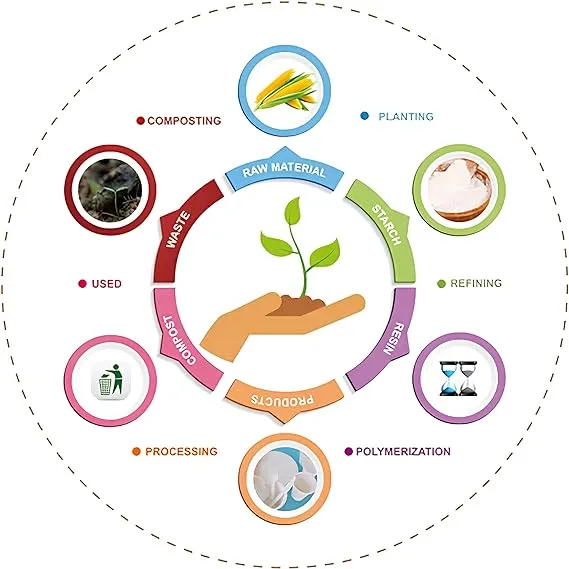
PLA is derived from renewable resources such as corn and can biodegrade under industrial composting conditions. This characteristic has made it highly attractive in the eco-friendly tableware sector. However, PLA is more sensitive to temperature, with relatively limited heat resistance and toughness, which need to be addressed through structural design or usage restrictions.
Bio-Based and Biodegradable Composite Materials: A Balanced Solution for Performance and Sustainability
Some customized projects choose modified or composite materials to enhance environmental attributes while maintaining a certain level of performance. These materials place higher demands on processing experience and quality control, making them more suitable for collaborative development with manufacturers that have proven expertise in material applications.
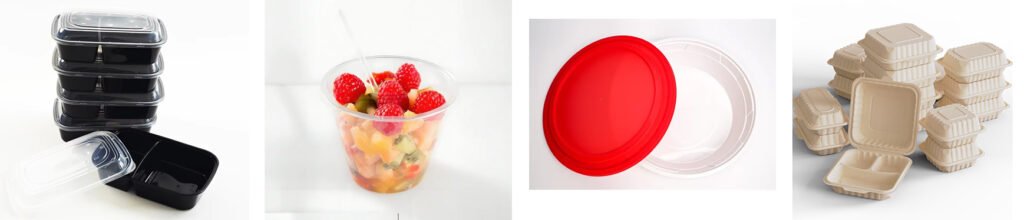
From Concept to Finished Product: A Complete Breakdown of the Custom Disposable Cutlery Production Process
- Product positioning and functional definition: Custom disposable cutlery always starts with a clear application scenario. Is the product designed for takeout meals, airline catering, large-scale events, or retail packaging? Different usage scenarios determine the required strength, heat resistance, thickness, and user experience. At this stage, brands usually define whether the cutlery should focus on durability, lightweight convenience, or enhanced aesthetics, which directly affects later material selection and structural design.
- Material selection and performance matching: Materials such as PET, PLA, PP, bio-based materials, and biodegradable compounds each have distinct characteristics in terms of heat resistance, toughness, transparency, and environmental performance. During customization, manufacturers evaluate material suitability based on food type, temperature range, storage conditions, and regulatory requirements of the target market, ensuring that the final disposable cutlery balances performance, safety, and sustainability.
- Mold development and structural optimization: Once the basic design is confirmed, mold development becomes the core technical step. Factors such as spoon depth, fork tooth angle, handle thickness, and edge smoothness are repeatedly adjusted and tested. Professional manufacturers rely on experience and simulation tools to optimize structure, ensuring the cutlery is comfortable to use while maintaining production stability and cost efficiency.
- Sampling, testing, and design refinement: Samples are produced after mold completion and undergo functional testing, including load-bearing strength, heat resistance, surface finish, and user handling experience. Feedback from testing is used to refine details before mass production, reducing the risk of large-scale defects and ensuring consistency with the original design intent.
- Mass production and packaging customization: After sample approval, production enters the scaling stage. At this point, packaging requirements such as bulk packing, individual wrapping, or branded retail packaging are finalized. Manufacturers coordinate production scheduling, packaging specifications, and quality checks to ensure that finished disposable cutlery meets order volume, delivery timelines, and branding requirements.
Materials and Design Choices That Shape Disposable Cutlery Performance
- How material properties affect user experience
The rigidity and flexibility of disposable cutlery are closely tied to material selection. For example, PP offers excellent heat resistance, making it suitable for hot meals, while PLA emphasizes bio-based content and environmental appeal. Selecting the right material ensures the cutlery performs reliably without bending, breaking, or transferring unwanted odors or flavors. - Structural design beyond appearance
A well-designed disposable fork or spoon is not just visually appealing. The curvature of the handle, balance of weight, and edge finishing all contribute to usability. Subtle structural adjustments can significantly improve comfort and perceived quality, especially for premium food service brands. - Balancing sustainability and practicality
Environmental considerations are increasingly important, but they must align with real-world usage. Bio-based and biodegradable materials are selected based on their degradation conditions and compliance standards, ensuring that sustainability claims are credible and verifiable rather than purely marketing-driven.
Certification and Compliance Requirements: Essential Market Entry Thresholds for Disposable Cutlery
- Food contact safety as a universal requirement
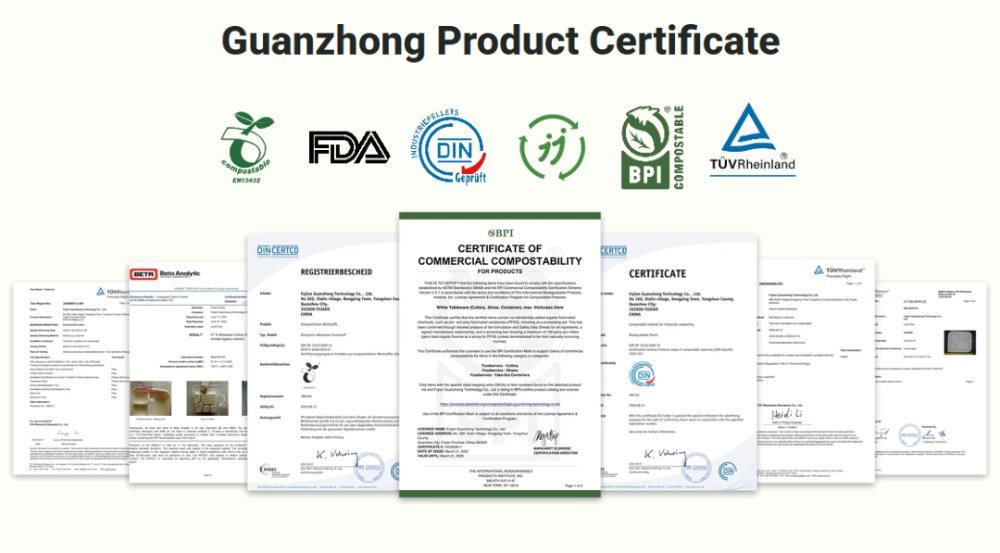
Disposable cutlery comes into direct contact with food, making safety compliance non-negotiable. Guanzhong consistently uses food-grade PET, PLA, PP, bio-based, and biodegradable materials (excluding paper and sugarcane) and applies food-contact safety controls from the raw material stage to minimize compliance risks during testing and market entry. - Meeting international standards for global distribution
Products intended for export must align with widely recognized international standards. Guanzhong’s disposable cutlery has passed multiple authoritative tests, including Chinese GB/T food contact standards and international evaluations such as ASTM and DIN EN related to food safety, bio-based content, and biodegradability, supporting access to North American and European markets. - Environmental compliance as a growing market requirement
As regulations on single-use plastics tighten worldwide, environmental performance has shifted from a value-added feature to a basic requirement. Guanzhong supports customized material solutions with verified bio-based or biodegradable properties and assists with relevant testing to align products with evolving policies and consumer expectations. - Third-party certifications that build trust
Certifications are not only used for customs clearance but also play a critical role in gaining trust from brands and distributors. Guanzhong assists clients by preparing test samples and technical documentation, helping disposable cutlery products move more efficiently through audits, channel onboarding, and cross-border trade processes.
Practical Advantages of Customizing Disposable Cutlery with Guanzhong
Scaled Manufacturing Foundation Focused on Disposable Cutlery
Guanzhong has built a mature and stable large-scale manufacturing system dedicated to disposable cutlery, providing solid support for the long-term execution and reliable delivery of custom projects.
From hardware scale to production organization, this manufacturing capability is the result of long-term investment and sustained specialization rather than short-term expansion.
- The company operates its own industrial park covering nearly 200,000 square meters, with total workshop space exceeding 100,000 square meters. This allows for centralized production and parallel scheduling of multiple projects, effectively reducing delivery risks caused by insufficient capacity.
- Based on the core process requirements of disposable cutlery, Guanzhong is equipped with key molding workshops such as injection molding and thermoforming. These facilities cover a wide range of products including plates, cutlery, and cups, ensuring that different product structures are matched with appropriate manufacturing methods.
- With an annual comprehensive production capacity of approximately 90,000 tons and around 180 production staff, the factory is well positioned to handle medium-to-large custom orders and long-term supply programs, making it suitable for stable cooperation with chain restaurants, distributors, and brand clients. As one of the experienced disposable cutlery manufacturers, this scale provides strong execution reliability.
Customization Capability Across Multiple Material Systems
Different application scenarios place varying demands on material performance. Guanzhong has extensive experience working with PET, PLA, PP, as well as bio-based and biodegradable composite materials, allowing flexible material configurations within the same project.
- For hot food, cold food, takeaway, or dine-in scenarios, materials are matched appropriately in terms of heat resistance, rigidity, and toughness, avoiding cost waste caused by overperformance or insufficient functionality.
- While meeting food-contact safety requirements and environmental trends, Guanzhong balances user experience and cost control by adjusting material thickness and structural design.
- Rather than applying a “one material fits all products” approach, materials and structures are optimized according to specific cutlery types, better aligning with real commercial applications and the expectations of wholesale disposable cutlery suppliers and brand buyers.
Comprehensive OEM / ODM Customization Support from Design to Mass Production
Guanzhong’s OEM / ODM strengths lie in the breadth of executable customization content, not just in manufacturing itself. Its customization support is built around the core elements of disposable cutlery, ensuring overall consistency in functionality, appearance, and market suitability.
- Customization is supported for structural and functional details such as plate depth, rim height, bottom reinforcement, as well as cutlery length ratios, tooth shapes, and handle thickness, enhancing load-bearing capacity and user comfort.
- Based on brand positioning and usage requirements, surface finishes such as glossy, matte, or anti-slip textured designs can be customized, improving both visual appeal and tactile recognition.
- Multiple size specifications and product combinations are supported, making it easier to form complete disposable cutlery solutions for different sales channels and usage scenarios.
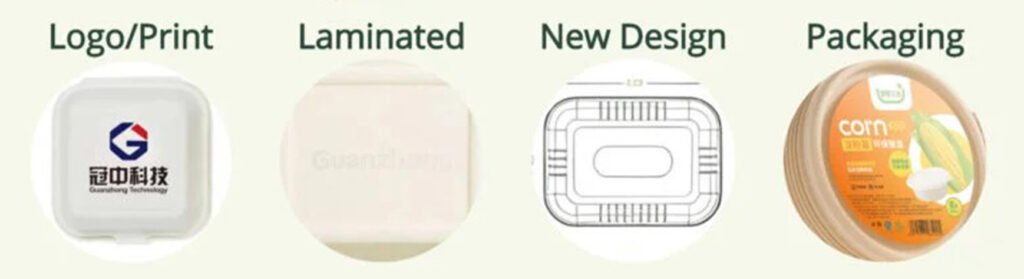
- Brand logos, patterns, or text elements can be customized and extended to packaging formats and delivery configurations, enhancing terminal presentation and brand exposure.
Clear and Executable Minimum Order and Delivery Conditions
For buyers, whether a customization project is truly feasible often depends on whether minimum order quantities and lead times are clearly defined and controllable. Guanzhong sets transparent customization parameters in the disposable cutlery field, enabling clients to evaluate project feasibility more effectively.
- The minimum order quantity for customized plates is approximately 30,000 pieces, while customized cutlery items such as forks and knives typically start at around 300,000 pieces. These thresholds are clearly defined and suitable for large-scale procurement and brand-driven projects.
- Mold development usually takes about 7–45 days, with standard production cycles of around 7–15 days, helping clients better plan timelines for new product launches and market promotions.
A Long-Term Cooperation Approach Guided by Compliance and Sustainability
In disposable cutlery customization, Guanzhong focuses not only on fulfilling current orders but also on long-term alignment with regulations, environmental requirements, and market trends.
- Food-contact safety and environmental considerations are integrated into material selection and design stages, reducing the risk of later adjustments due to regulatory changes.
- Through mature experience in certification coordination, Guanzhong helps clients complete compliance preparations more efficiently when entering different international markets.
- This long-term, stability-oriented customization philosophy is particularly suitable for brands and channel customers seeking to establish sustainable supply chain partnerships with reliable disposable cutlery manufacturers.
| Start Your Customization | WhatsApp: +86 13665956245 | Email: peters@quanzhong-bio.com |
Customizing disposable cutlery is a structured journey that transforms an initial idea into a market-ready product. From defining usage scenarios and selecting appropriate materials to meeting certification requirements and scaling production, each step plays a decisive role in the final outcome. By partnering with an experienced manufacturer like Guanzhong, brands and distributors can navigate customization with greater confidence, ensuring that their disposable cutlery aligns with performance expectations, regulatory standards, and evolving sustainability trends.