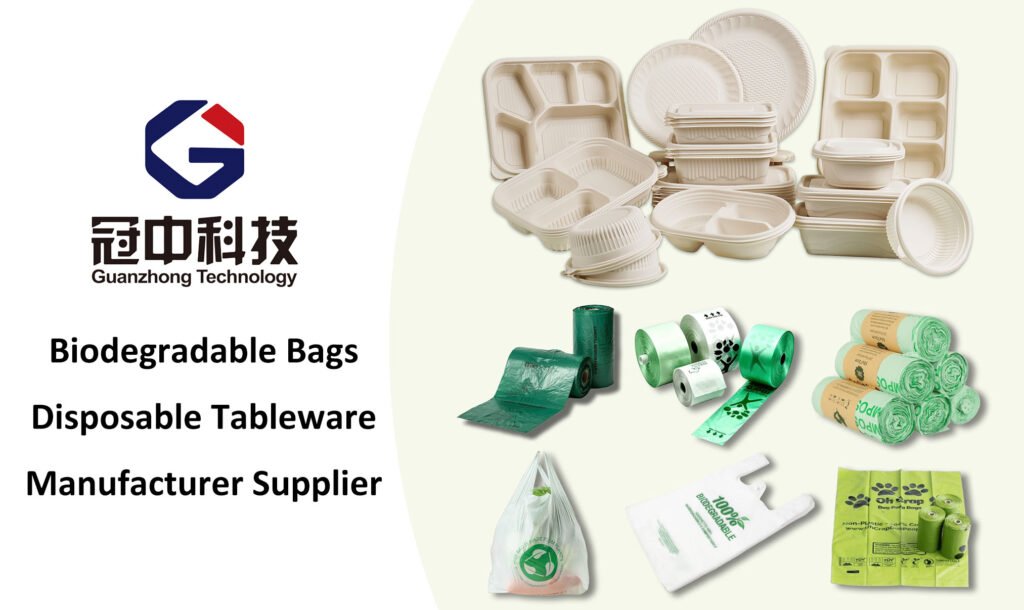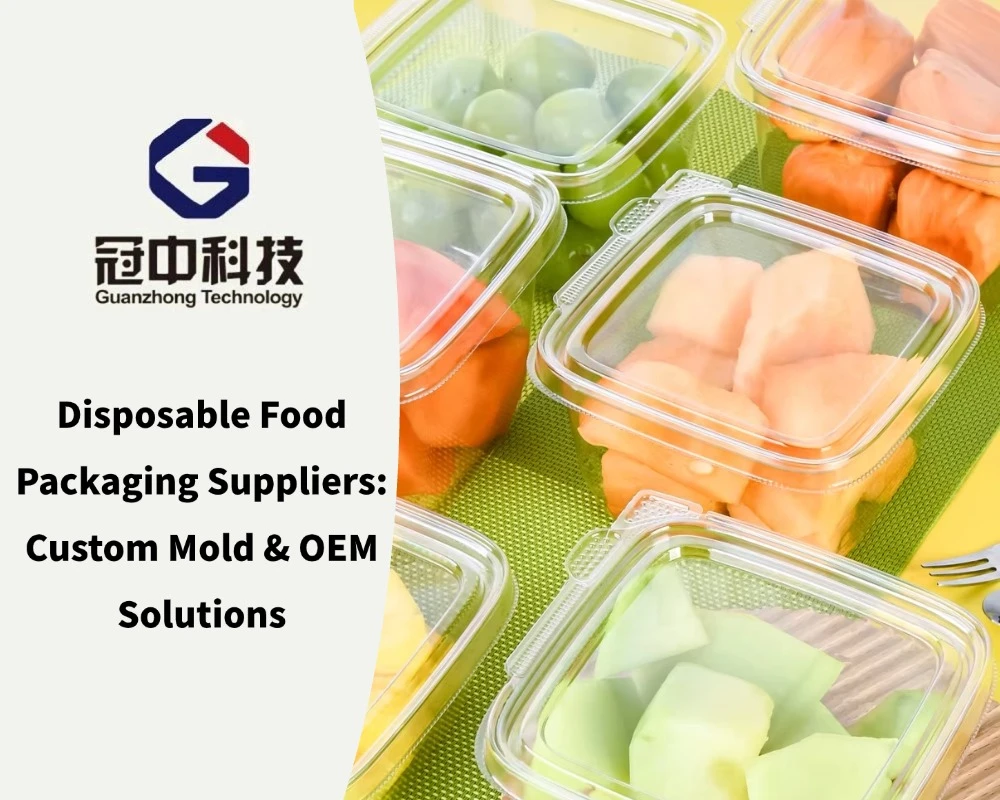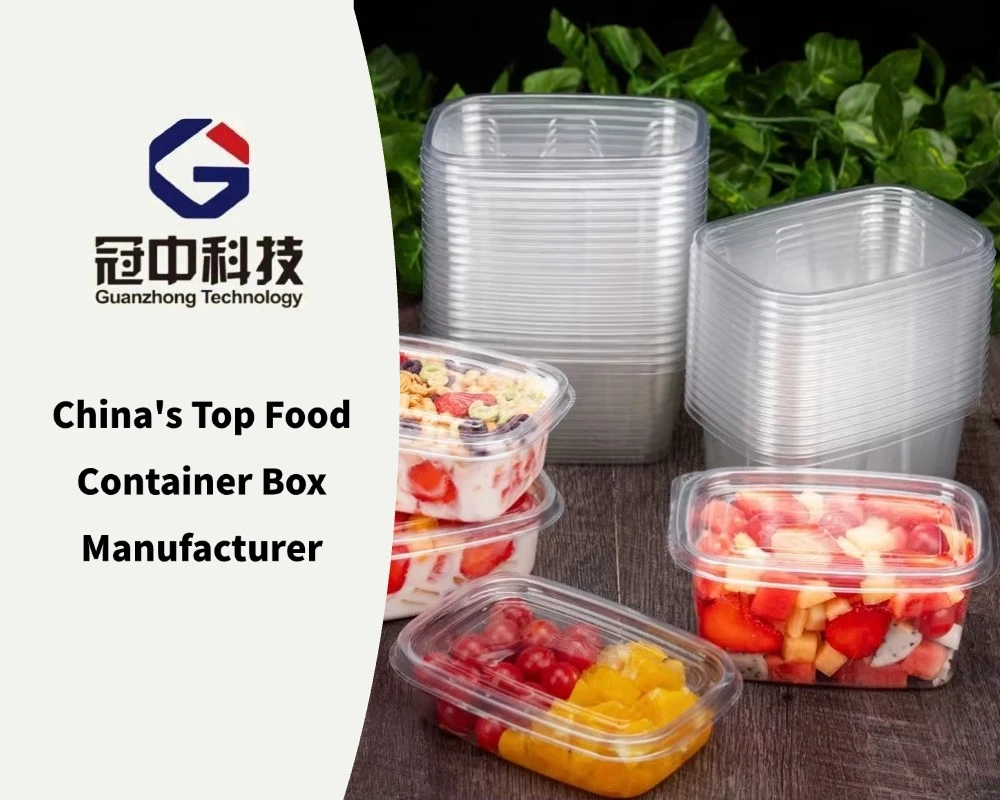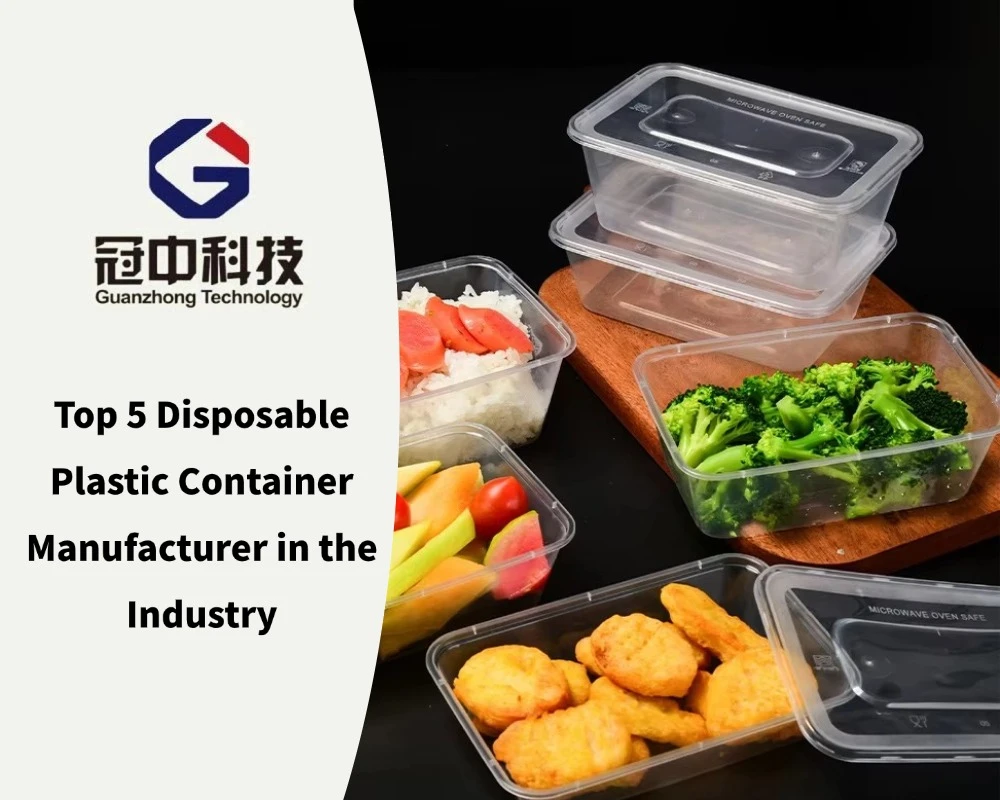
As global regulatory standards shift toward environmental compliance and food safety, sourcing reliable packaging from an established disposable plastic food container manufacturer has become a strategic priority for B2B buyers. Supply chain managers require partners that deliver uncompromised material integrity, massive volume scalability, and strict quality consistency. guanzhong stands at the forefront of the plastic packaging industry, operating a state-of-the-art facility engineered for global distribution. From high-barrier food storage solutions to sustainable takeaway containers, guanzhong provides high-performance plastic food containers wholesale designed to protect food freshness, fulfill corporate sustainability goals, and accelerate client business growth.
Key Takeaways
- Unmatched Scale: Operating a 200,000 m² industrial park with an annual production capacity of 90,000 tons.
- Advanced Manufacturing: Equipped with 50 fully automated injection molding lines (2,000 tons/month) and 8 thermoforming lines (800 tons/month).
- Eco-Friendly Innovation: Backed by 10+ patents, specializing in food-grade PET, PP, PLA, and bio-based modified materials (germination period: 7–45 days).
- Flexible Customization: Comprehensive OEM/ODM services with custom logo printing, flexible MOQ starting at 30,000 pieces, and a rapid turnaround of 7–15 days.
200,000㎡ industrial park: Guanzhong How to ensure stable supply
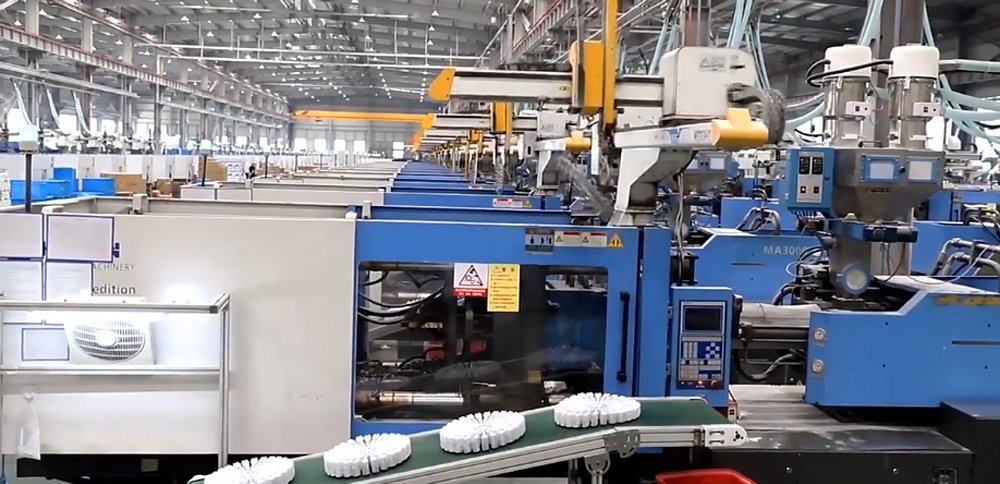
To guarantee uninterruptible supply chains for worldwide procurement partners, guanzhong has established an integrated 200,000 m² industrial park designed for enterprise-scale output:
- Centralized Manufacturing Base: Features 100,000 m² of standardized manufacturing plants alongside a dedicated 100,000 m² R&D center.
- Skilled Operational Force: Managed by 180 highly trained production specialists overseeing real-time operations.
- Massive Annual Output: Reaches an extraordinary 90,000 tons per year to easily absorb large-scale B2B orders.
- High-Capacity Multi-Line Production: Integrates 50 automated injection lines (~2,000 tons/month), 8 thermoforming lines (~800 tons/month), 50 blown film and 25 bag-making lines (~1,500 tons/month), 3 sheet extrusion and 5 modified masterbatch lines (~2,000 tons/month), and 5 automated straw extrusion lines (~250 tons/month).
- Supply Chain Resilience: Centralizes compounding, tooling, and mass production under one roof to eliminate third-party delays.
This integrated industrial ecosystem makes guanzhong a trusted plastic food container supplier for high-volume enterprise buyers. Whether fulfilling seasonal demand surges for retail chains or managing long-term wholesale distributions, our centralized operation guarantees consistent batch-to-batch quality, precise lead times, and total supply stability.
💡 Frequently Asked Questions
Q: What is the production capacity of guanzhong’s plastic food container factory?
A: guanzhong operates a 200,000 m² industrial park with an annual output of 90,000 tons, supported by 50 fully automated injection molding lines producing 2,000 tons monthly.
Injection Molding and Vacuum Forming Processes: How to Refine Product Quality
Precision engineering lies at the heart of guanzhong’s manufacturing excellence. By mastering advanced injection and thermoforming (blister) molding technologies, guanzhong meticulously refines container quality across every production run:
- High-Precision Injection Molding: Utilizes 50 automated injection lines (2,000 tons/month) for heavy-duty food containers, ensuring exact wall thickness, high impact resistance, and structural rigidity.
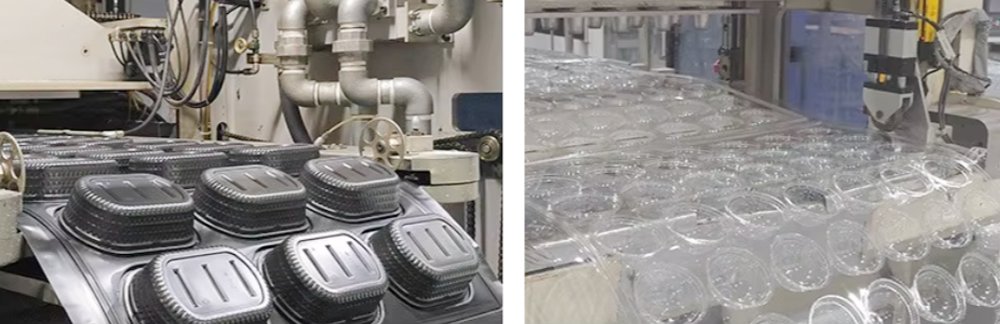
- Rapid Thermoforming Processing: Operates 8 automated thermoforming lines (800 tons/month) to craft lightweight, high-clarity blister containers with crisp contours and uniform material distribution.
- Leak-Proof Rim & Snap Locking: Precision mold designs guarantee air-tight sealing and secure snap-lock rims, preventing spills during hot food delivery and transport.
- Dimensional Consistency & Stackability: Microprocessor-controlled temperature and pressure settings prevent warping, providing perfect nesting and stackability for automated filling lines.
By eliminating structural defects and material variance through controlled molding processes, guanzhong supplies wholesale plastic food containers that meet strict international food-contact safety standards while drastically reducing operational damage rates.
💡 Frequently Asked Questions
Q: Which molding processes are used for wholesale plastic food containers?
A: Advanced automated injection molding (50 lines) and thermoforming (8 lines) are used to ensure high precision, leak-proof designs, and scalable production.
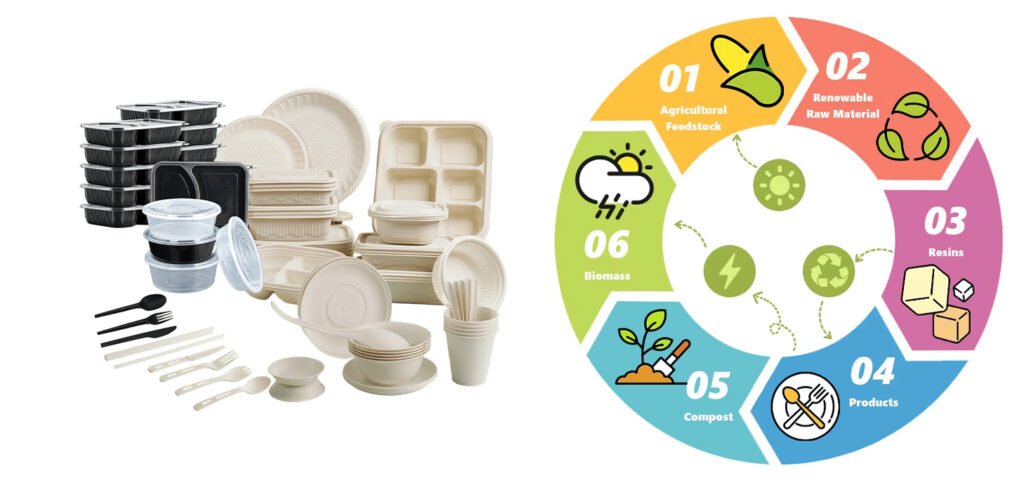
Bio-based and Degradable Materials: How Contribute to Green Transition
As global environmental mandates tighten, transitioning to eco-conscious packaging requires sophisticated polymer innovation. guanzhong leads the green evolution through advanced material processing:
- Extrusion & Modification Lines: Operates 3 biodegradable sheet extrusion lines and 5 bio-based modified masterbatch production lines (2,000 tons/month).
- Patented Material Science: Backed by 10+ technical patents for proprietary polymer formulations.
- Versatile Safe Materials: Works with virgin PET, polypropylene (PP), polylactic acid (PLA), and bio-based/biodegradable composite materials (excluding paper and sugarcane formulations).
- Certified Germination Time: Demonstrates rapid biodegradation capabilities with a germination period ranging from 7 to 45 days under standardized composting conditions.
These eco-friendly composite materials provide superior oil resistance, clarity, and thermal endurance without persistent residue, allowing enterprise buyers to effortlessly comply with regional plastic restrictions.
💡 Frequently Asked Questions
Q: What materials are used for eco-friendly disposable food containers?
A: Food-grade PET, PP, PLA, and bio-based modified materials with 7–45 days germination capability, providing sustainable packaging without compromising durability.
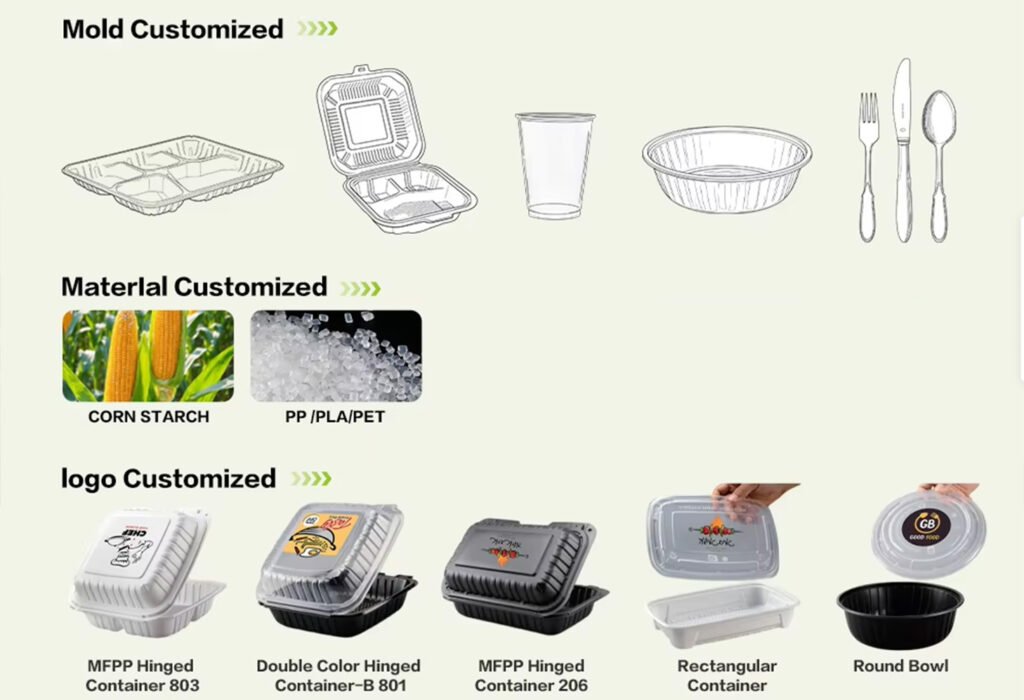
OEM/ODM Services: How Guanzhong Empowers Global Buyers
To help B2B clients differentiate their brands in competitive food service markets, guanzhong offers turnkey OEM/ODM engineering solutions tailored to specific commercial requirements:
- Comprehensive Tailoring Solutions:
- Custom Dimensions & Capacity: Tailoring precise length, width, depth, and volume specifications for exact food portion control.
- Structural Container Types: Engineering single or multi-compartment trays, hinged lid structures, leak-proof snap closures, and tamper-evident designs.
- Branding & Surface Finishing: Executing high-precision custom logo embossing, debossing, and multi-color surface printing.
- Accessible Low MOQ: Offers flexible minimum order quantities starting at 30,000 pieces for custom containers and tableware.
- Rapid Turnaround: Driven by automated tooling setups and optimized scheduling, our client execution framework delivers rapid production lead times of just 7–15 days.
- Market Agility: Enables distributors and QSR chains to minimize inventory carrying costs and rapidly adapt to evolving consumer trends.
As a flexible custom plastic container manufacturer, guanzhong simplifies private labeling and custom product development for global procurement teams.
💡 Frequently Asked Questions
Q: What is the MOQ and lead time for custom food container orders?
A: Minimum order quantity starts at 30,000 pieces for custom logos, sizes, and molds, with a rapid production turnaround of 7–15 days.
Why choose Guanzhong: Compared with other manufacturers
Choosing the right custom plastic container manufacturer directly impacts your operating margins, product safety compliance, and brand reputation. The comparison table below highlights why leading global buyers choose guanzhong over standard processing workshops and trading intermediaries:
| Performance Indicator | Standard Packaging Suppliers | Trading Intermediaries | guanzhong Industrial Advantage |
|---|---|---|---|
| Facility Scale | less than 10,000 m² small workshops | No direct factory floor | 200,000 m² integrated industrial park |
| Annual Production | 5,000 – 15,000 tons | Outsourced / Variable | 90,000 tons stable output |
| Material R&D & Patents | Standard resin sourcing | No internal material labs | 10+ Patents; 2,000 tons/mo bio-masterbatch capacity |
| Molding Capabilities | Small-batch manual/semi-auto | Subcontracted production | 50 auto injection lines + 8 thermoforming lines |
| Custom Delivery Time | 30 – 45 days | 25 – 40 days | 7 – 15 days rapid turnaround |
| Minimum Order Quantity | High MOQ or no custom support | High markups on small batches | Flexible MOQ starting at 30,000 pcs |
| Start Your Customization | WhatsApp: +86 13665956245 | Email: peters@quanzhong-bio.com |
As a global leader in high-volume plastic packaging, guanzhong seamlessly bridges industrial-scale manufacturing with sustainable material innovation. Our 200,000 m² facility, 90,000-ton annual capacity, automated molding lines, and advanced bio-based technologies provide enterprise buyers with an unshakeable competitive edge. Partner with guanzhong to streamline your supply chain, access premium eco-friendly materials, and bring custom container designs to market with speed and precision.
Ready to scale your packaging supply chain with guaranteed quality and short lead times?
Contact us today to request a free sample kit or obtain an instant quote!