Table of contents
What Are Biodegradable Food Containers?
1. Definition and Key Features
Biodegradable food containers refer to packaging products that can be broken down into harmless substances such as carbon dioxide, water, and biomass by microorganisms, humidity, temperature, and other natural factors under specific environmental conditions. Their key feature is the ability to reduce long-term environmental burden, contrasting sharply with the persistent presence of traditional plastics.
2. Difference Between Biodegradable and Compostable
- Biodegradable indicates that the material can be decomposed by microorganisms in natural environments, but the decomposition speed depends on environmental conditions.
- Compostable means the material must quickly break down in industrial composting conditions (e.g., 55–65°C, high humidity, and sufficient oxygen). Materials like PLA may not compost quickly in home environments but can degrade rapidly in industrial composting facilities.
3. Differences from Traditional Plastics and Common Misconceptions
Traditional single-use plastic food containers are widely used due to their durability and low cost, but they may take hundreds of years to decompose, causing severe environmental pollution. Biodegradable food containers aim to shorten decomposition time and reduce environmental impact.
However, it is important to note that some products labeled as “biodegradable” may only partially decompose or require special conditions to degrade effectively. Consumers should not assume that “biodegradable” means the packaging will disappear quickly in any environment. The best practice is to choose containers compatible with local recycling and composting infrastructure to achieve optimal environmental benefits.
Materials Used in Biodegradable Food Containers
1. PLA (Polylactic Acid)
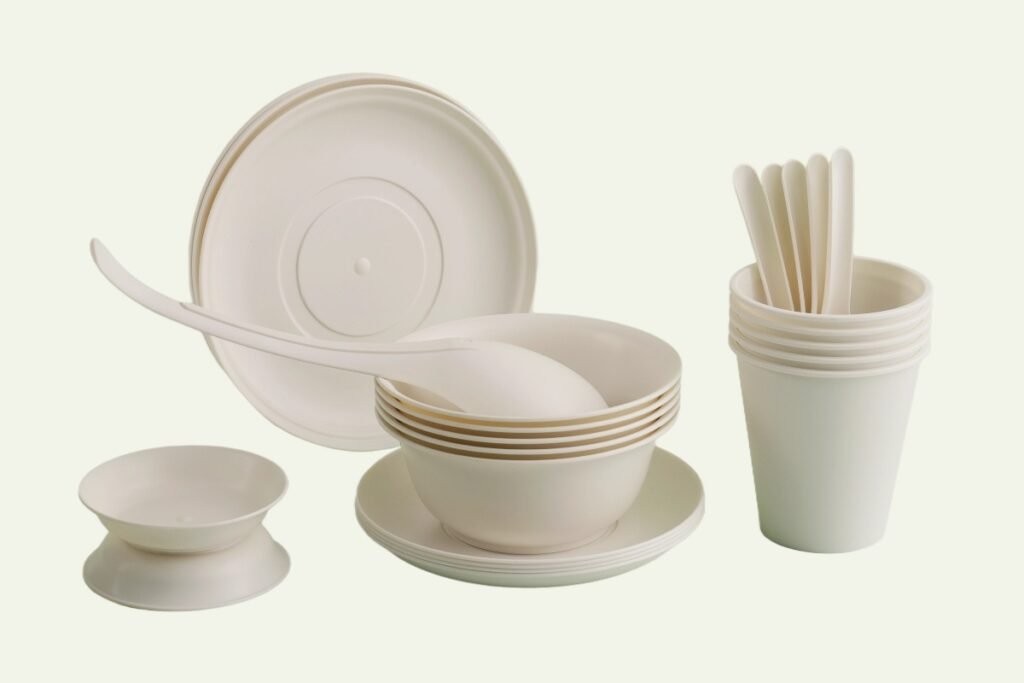
PLA is derived from renewable plant resources such as corn starch or cassava starch and can decompose quickly under industrial composting conditions. It is suitable for disposable plates, cups, utensils, and transparent food containers. PLA offers good transparency and rigidity, but its heat resistance is about 55–60°C, so hot food applications may require modified PLA or other materials.
2. Biodegradable Polyesters (PBAT, PBS)
PBAT and PBS are flexible biodegradable polyesters with excellent impact resistance. PBAT is mainly used for soft packaging, while PBS is suitable for high-strength food containers. These materials can fully degrade under industrial composting conditions and are ideal replacements for conventional PE films.
3. Modified PP (Biobased or Additive-Enhanced)
Some polypropylene (PP) is modified with biodegradable additives, allowing gradual degradation under specific conditions while maintaining the heat resistance and structural strength of PP. This is suitable for hot food containers, balancing durability with environmental friendliness.
4. Biobased PET
Biobased PET uses plant-derived monomers and can degrade in industrial composting environments while maintaining excellent transparency and tensile strength, making it suitable for beverage cups, takeaway lids, and other applications.
5. Material Comparison: Degradation Speed, Heat Resistance, and Safety
| Material | Degradation Speed | Heat Resistance | Safety |
|---|---|---|---|
| PLA | Rapid in industrial composting | 55–60°C | Non-toxic, food contact safe |
| PBAT/PBS | Fast in industrial composting | 60–90°C | Non-toxic, biodegradable |
| Modified PP | Conditional degradation | High heat 100–120°C | Food contact safe |
| Biobased PET | Industrial composting | High heat 90–100°C | Non-toxic, food safe |
Benefits of Biodegradable Food Containers
1. Reduce Plastic Pollution and Carbon Footprint
Biodegradable food containers gradually decompose into water, carbon dioxide, and biomass under specific conditions, avoiding the long-term persistence of traditional plastics in soil and water. Compared to petroleum-based plastics, biobased materials can reduce greenhouse gas emissions during production. According to the European Bioplastics Association, the carbon footprint can be reduced by 30–70%, alleviating global climate pressure from the source.
2. High Sustainability and Easy Composting
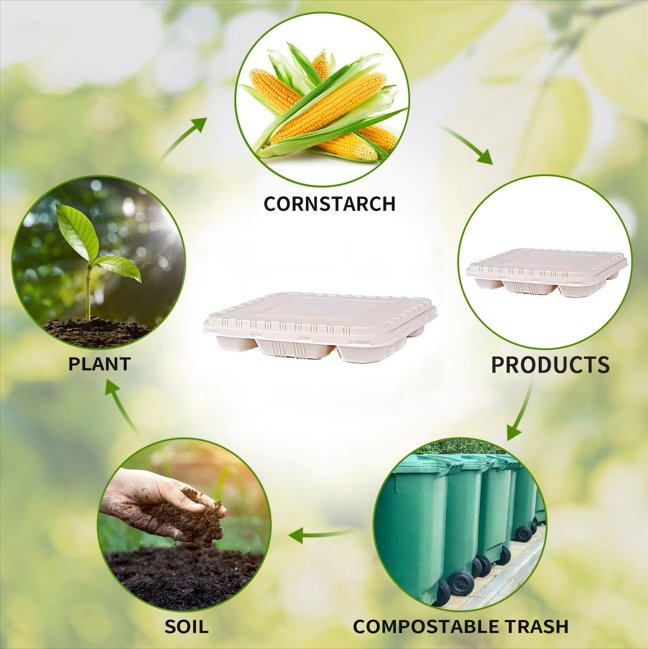
These containers are typically made from PLA, PBAT, PBS, or other biodegradable materials and can decompose in industrial or home composting environments, turning into organic fertilizer and returning to the natural cycle. For restaurants, takeaways, or large canteens, using biodegradable utensils can integrate with food waste systems, enabling resource recycling and promoting the circular economy.
3. Enhance Brand Eco-Image
Using biodegradable food containers communicates a company’s commitment to environmental protection and social responsibility. In markets with growing eco-awareness, green packaging can attract consumer approval, increase brand recognition, create differentiation, and enhance long-term corporate value.
4. Safe, Non-Toxic, and Food-Ready
High-quality biodegradable materials are naturally non-toxic and odorless, free from BPA and phthalate plasticizers, meeting international food contact safety standards (e.g., FDA, GB/T, ASTM). They are safe for both hot and cold foods, ensuring consumer health while complying with strict food safety regulations.
Common Applications of Biodegradable Food Containers in Various Industries
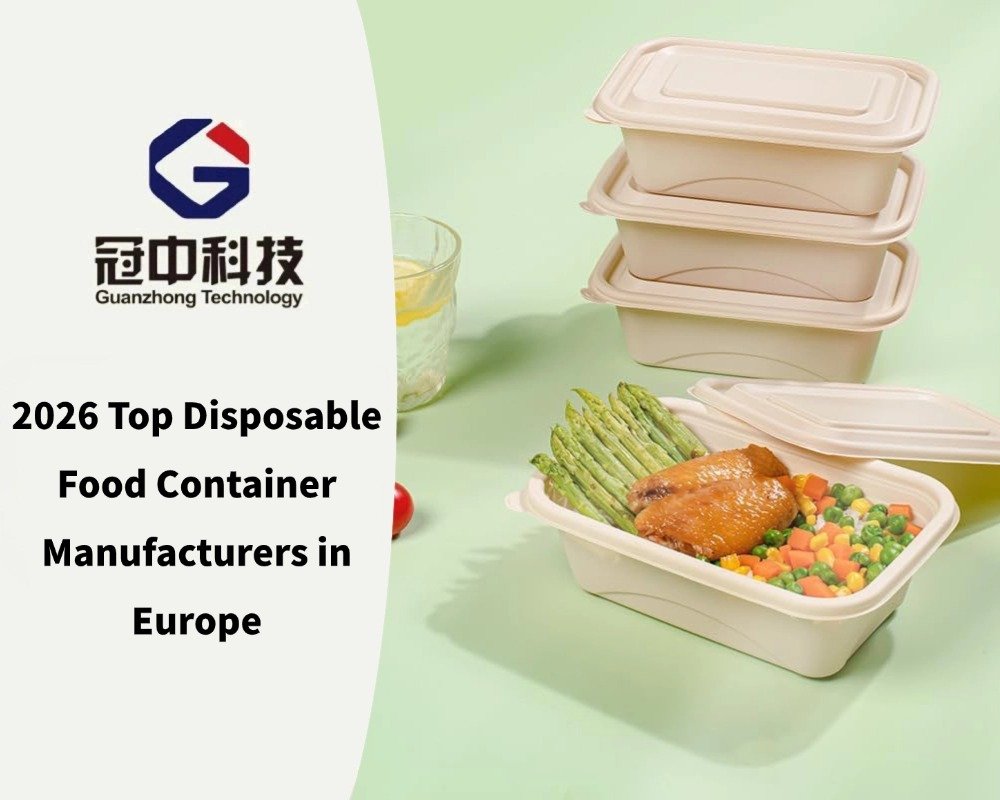
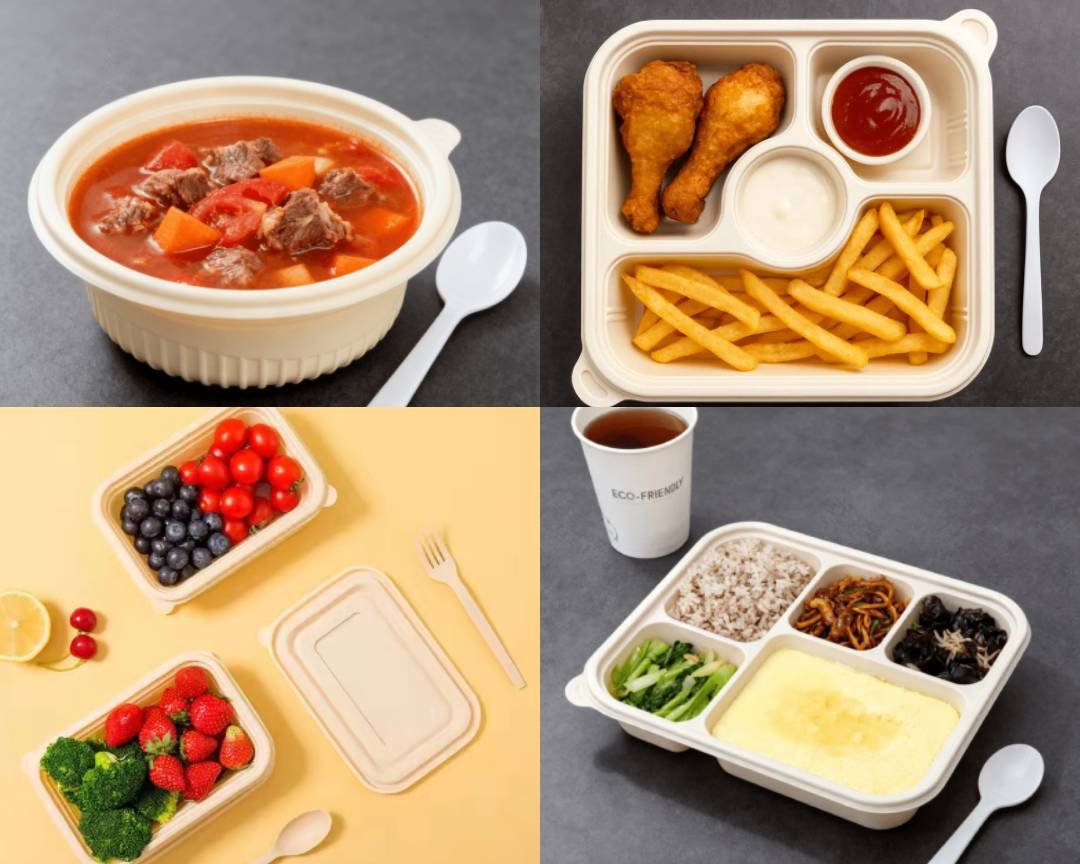
- Catering and Takeaway Industry: Disposable containers, utensils, beverage cups, and soup bowls can be made from PLA, PBS, or modified PP, ensuring hygiene while reducing packaging waste.
- Coffee and Beverage Industry: Coffee cups, milk tea cups, and cold drink cups can use PLA or biobased PET, meeting both hot and cold drink needs and allowing industrial composting degradation.
- Food Retail and Outer Packaging: Packaging for salads, prepared foods, fruits, and frozen products can use biodegradable materials to improve presentation and facilitate recycling or composting.
- Events and Pop-up Catering: At exhibitions, pop-up restaurants, or outdoor events, using biodegradable utensils reduces single-use plastic waste, offering eco-friendly solutions.
- Corporate and School Canteens: Corporate and school canteens can combine biodegradable utensils with composting systems to manage food waste efficiently, improving environmental management.
Guanzhong’s Core Advantages in Biodegradable Food Containers
- Extensive Production Experience and Expertise: Guanzhong specializes in the production of PET, PLA, PP, biobased, and biodegradable composite material tableware, plates, utensils, cups, and straws, with an annual output of 90,000 tons. With rich experience and professional technology, Guanzhong is a trusted biodegradable food containers manufacturer.
- Comprehensive Customization Services: Guanzhong provides end-to-end customization from client requirements, 3D modeling, mold production, to finished product delivery, offering logo, color, size, and thickness customization, making it a reliable disposable food container manufacturers.
- Strict Material and Product Standards: Products are made from safe biobased or biodegradable composite materials, complying with China GB/T standards and international certifications such as ASTM, DIN, BPI, and FDA food contact tests, ensuring the safety of plates, utensils, and containers.
- Efficient Production Capacity and Supply Assurance: Guanzhong owns complete production lines for injection molding, thermoforming, blow molding, and sheet extrusion, with monthly output ranging from small to large-scale production, ensuring stable supply for different seasons or promotional events.
- Environmental Commitment and Sustainability Advantage: Guanzhong emphasizes eco-friendly lifecycle design from raw material selection to end-of-life degradation, minimizing environmental impact. Choosing Guanzhong products enhances corporate environmental image and aligns with green consumer trends.
| Start Your Customization | WhatsApp: +86 13665956245 | Email: peters@quanzhong-bio.com |
Biodegradable food containers are not only a reflection of environmental responsibility but also a practical solution for the modern catering, retail, and household industries facing sustainability challenges. Selecting a high-quality biodegradable food containers manufacturer and disposable food container manufacturers, such as Guanzhong, ensures product safety, functionality, and customization while reducing environmental impact and enhancing brand image. Through thoughtful selection and management, both businesses and consumers can contribute to a greener future.