Table of contents
- PET (Polyethylene Terephthalate) Disposable Plates Performance
- PLA (Polylactic Acid) Disposable Plates Performance
- PP (Polypropylene) Disposable Plates Performance
- Biobased and Biodegradable Plates Performance
- Comparative Analysis of Heat Resistance and Streng th
- Guanzhong: Expert Custom Disposable Tableware Solutions
- Practical Guide to Choosing Disposable Plates
PET (Polyethylene Terephthalate) Disposable Plates Performance
- Material Properties and Production Process
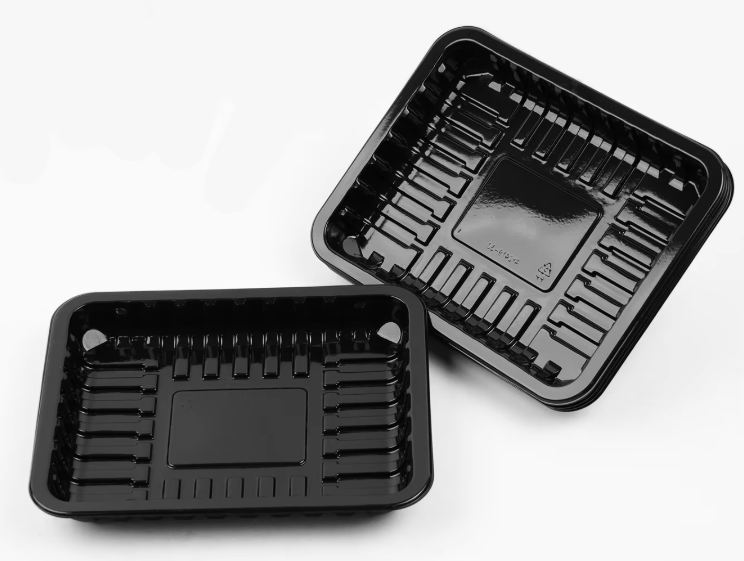
PET (Polyethylene Terephthalate) is a widely used thermoplastic polyester material in food packaging, valued for its transparency and toughness. PET disposable plates are usually made through injection molding or thermoforming, ensuring smooth surfaces and neat edges for easy food placement and transport. Its chemical properties are stable, providing good resistance to most acidic and alkaline foods. - Heat Resistance and Strength
PET plates typically withstand temperatures from -40℃ to 70℃, and can tolerate around 120℃ for short periods. Long-term exposure to high temperatures may cause softening and deformation. They have high compression resistance and are unlikely to break during handling, but caution is needed in microwaves or ovens at high heat. - Usage Scenarios and Temperature Range
PET plates are suitable for cold food, room-temperature meals, and briefly heated dishes, such as takeout containers or chilled food trays. They are not recommended for long-term cooking or high-temperature baking. - Advantages and Limitations
Advantages: Transparent, strong under compression, safe for food.
Limitations: Limited high-temperature resistance; recycling requires proper facilities. - Practical Tip
When using PET plates, avoid long-term heating or open flames. Short-term microwave heating is acceptable. For guidance, consult disposable food container manufacturers or disposable food containers suppliers for specific temperature tolerances.
PLA (Polylactic Acid) Disposable Plates Performance
- Material Source and Eco-Friendly Features
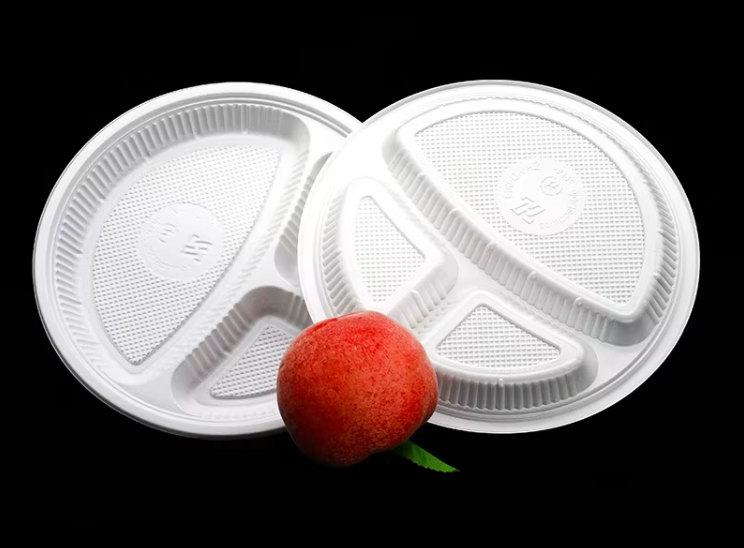
PLA (Polylactic Acid) is derived from renewable plant resources such as corn starch or sugarcane and is a biodegradable material. PLA plates can be industrially composted after use, aligning with modern environmental standards. - Heat Resistance and Mechanical Strength
PLA plates generally tolerate temperatures between -20℃ and 60℃, with higher temperatures causing softening and deformation. Mechanical strength is slightly lower than PET, making them prone to cracking under bending or heavy pressure. - High-Temperature Usage Limitations
PLA is unsuitable for long-term microwave or oven use, especially with fried or high-temperature foods. High heat may deform the plate, cause cracks, or release a small amount of lactic acid vapor, which is harmless overall. - Advantages and Limitations
Advantages: Biodegradable, eco-friendly, suitable for cold and room-temperature food.
Limitations: Limited high-temperature resistance, moderate mechanical strength. - Practical Tip
PLA plates are ideal for takeout salads, desserts, and cold meals. For safety, consult disposable food container manufacturers or disposable food containers suppliers for certified heat resistance data.
PP (Polypropylene) Disposable Plates Performance
- Material Properties and Production Benefits
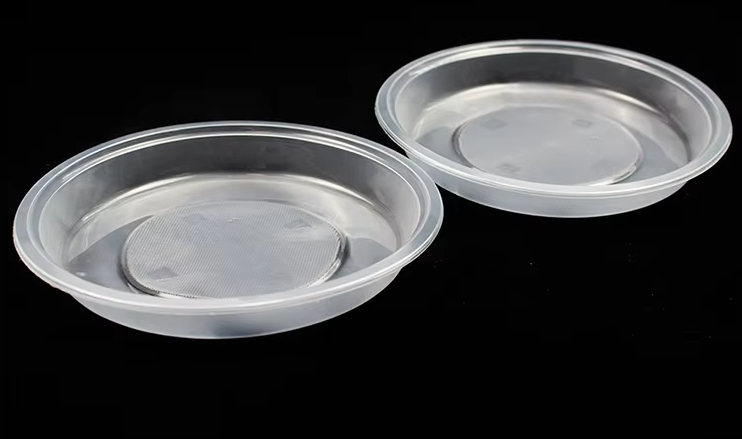
PP (Polypropylene) is a thermoplastic polymer known for being lightweight, strong, and chemically resistant. PP disposable plates are produced via injection molding, offering mature production processes and high efficiency. - Heat Resistance, Strength, and Microwave Suitability
PP plates withstand -20℃ to 120℃, with short-term tolerance around 130℃, making them suitable for microwave heating and hot food. They have excellent compression and bending resistance, reducing the risk of breakage during transport or stacking. - Usage Scenarios and Temperature Limits
PP plates are suitable for cold and hot food, as well as takeout meals, and can be used directly in microwaves. Avoid prolonged exposure to high heat or open flames. - Advantages and Limitations
Advantages: High-temperature resistance, microwave safe, strong, lightweight.
Limitations: Less transparent than PET; may slightly shrink under prolonged high heat. - Practical Tip
Do not exceed 120℃ when microwaving PP plates. They are ideal for short-term heating of hot meals, particularly in fast food and delivery services.
Biobased and Biodegradable Plates Performance
- Material Types and Biodegradability
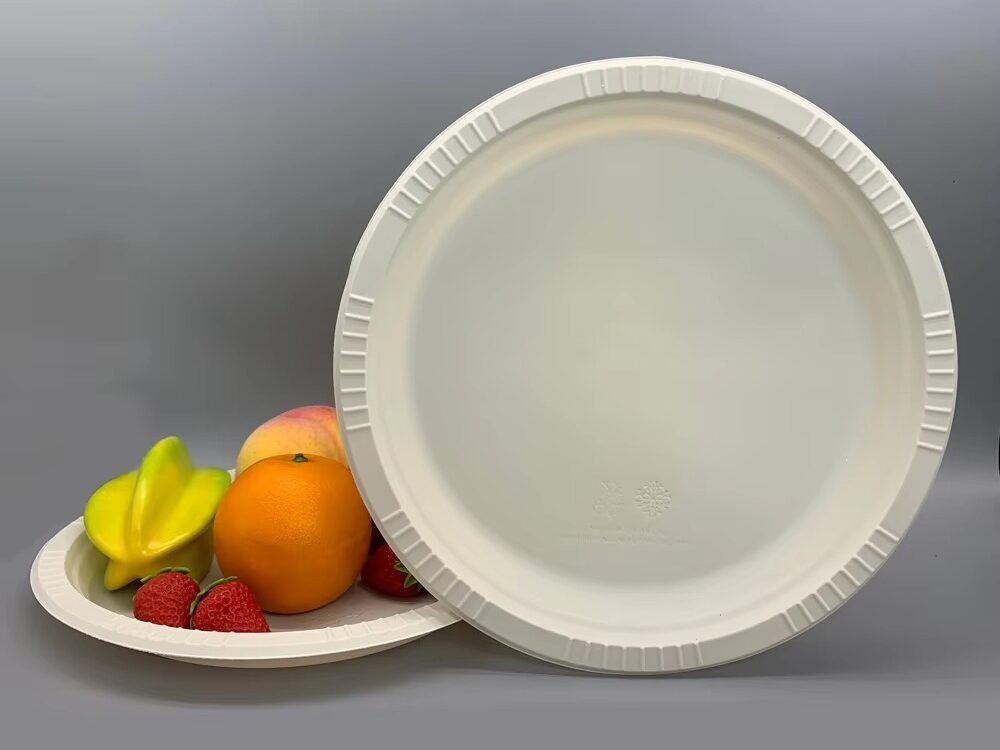
In addition to PLA, common biobased and biodegradable materials include PHA, PBS, and PBAT. These materials can degrade in industrial composting conditions, reducing environmental impact. - Heat Resistance and Mechanical Strength Comparison
Such plates generally tolerate -10℃ to 80℃, with short-term resistance around 100℃. Mechanical strength varies by formulation, usually between PLA and PP. - Usage Scenarios and Temperature Applicability
Biobased plates are suitable for cold food, room-temperature meals, and lightly heated dishes. High-temperature and prolonged use may cause deformation or cracking. - Advantages and Limitations
Advantages: Eco-friendly, biodegradable, aligned with sustainability goals.
Limitations: Limited high-temperature resistance; moderate mechanical strength; slightly higher cost. - Practical Tip
Biobased plates are recommended for businesses emphasizing eco-conscious practices. For heat tolerance and strength data, consult disposable food container manufacturers or disposable food containers suppliers.
Comparative Analysis of Heat Resistance and Strength
| Material | Heat Resistance | Compression | Bending Strength | Suitable Use | Advantages | Limitations |
|---|---|---|---|---|---|---|
| PET | -40℃–70℃ (short 120℃) | High | High | Cold food, short heating | Transparent, strong | Softens at high heat |
| PLA | -20℃–60℃ | Medium | Medium | Cold & room-temp food | Biodegradable | Low high-temp tolerance |
| PP | -20℃–120℃ (short 130℃) | High | High | Cold/hot food, microwave | High-temp resistant, strong | Less transparent |
| Biobased | -10℃–80℃ (short 100℃) | Medium | Medium | Cold, light heating | Biodegradable | Limited high-temp tolerance |
- Cold takeout meals: PET or PLA
- Microwave heating or hot food: PP
- Environmental focus: PLA or biobased materials
- High strength or stacking requirements: PP or PET
Guanzhong: Expert Custom Disposable Tableware Solutions
- Company Profile and Experience
Guanzhong, located in Yongchun County, Quanzhou, Fujian Province, covers nearly 200,000 m², with over 100,000 m² of production space. The company specializes in custom disposable tableware production using PET, PLA, PP, biobased, and biodegradable composite materials (excluding paper and sugarcane). Guanzhong has extensive experience in biobased and biodegradable tableware, focusing on material R&D, production processes, and performance optimization. - Production Capacity and Customization Services
Equipped with advanced injection molding, thermoforming, film blowing, and sheet extrusion lines, the company has an annual output of 90,000 tons, providing full OEM/ODM services. Custom disposable plates and tableware minimum orders are 30,000 and 300,000 pieces, respectively. Mold lead times range from 7–45 days, and production cycles are 7–15 days. Customers can customize size, thickness, logo, and design. - Product Advantages
- Biodegradable Materials: Made from biobased or biodegradable composite materials, non-toxic, tasteless, safe, and compostable under specific conditions.
- Exquisite Design: Leak-proof lids, embossed bottoms, durable, comfortable fit, suitable for hot and cold food.
- Versatile Customization: Supports logos, styles, sizes, and thickness customization for cutlery, straws, and plates.
- Certifications and Quality Assurance
Products pass China GB/T standards (GB/T 20197, GB/T 19277.1, GB/T 4806.7) for biodegradability and food contact, as well as US FDA food contact testing. They also have ASTM D6400, DIN EN 13432, BPI certifications, ensuring reliable heat resistance, strength, and environmental performance.
Practical Guide to Choosing Disposable Plates
- Consider Food Temperature: Food temperature is a primary factor in choosing disposable plates. PET or PLA is suitable for cold or room-temperature meals, while PP is ideal for hot food and microwave heating. Always check the heat resistance of the plate to prevent deformation or cracking.
- Evaluate Mechanical Strength and Compression: Depending on transportation, stacking, and food weight, select plates with appropriate strength. PET and PP have high compression and bending resistance for takeout and stacked transport. PLA and some biobased plates have moderate strength, suitable for light food or short-distance delivery. Request strength test reports from disposable food container manufacturers or disposable food containers suppliers if needed.
- Focus on Eco-Friendly and Biodegradable Features: For businesses prioritizing sustainability, PLA or biobased biodegradable plates can be composted industrially. Ensure products have certifications or meet international environmental standards.
- Consider Cost and Order Quantity: Large orders should balance material cost and production efficiency. PET and PP are cost-effective and fast to deliver; PLA and biobased plates are slightly more expensive but align with environmental goals. Choose based on order volume, use scenario, and budget.
- Customization Options: For specific needs such as size, thickness, printing, or branding, consult reliable disposable food container manufacturers or disposable food containers suppliers, like Guanzhong, to get tailored solutions and tested high-performance plates.
| Start Your Customization | WhatsApp: +86 13665956245 | Email: peters@quanzhong-bio.com |
The choice of disposable plate materials directly affects heat resistance, strength, and safety. PET plates are ideal for cold or briefly heated meals, offering transparency and good compression resistance. PLA and other biobased biodegradable materials are eco-friendly and compostable, though their high-temperature tolerance is limited. PP plates provide high heat resistance and strength, making them suitable for microwave heating and hot dishes. Businesses should select materials based on food type, temperature, transportation needs, and sustainability goals. To ensure high-performance and customizable disposable plates, it is recommended to work with trusted disposable food container manufacturers or disposable food containers suppliers, such as Guanzhong, which can provide professional customization services and tested, reliable tableware.