Table of contents
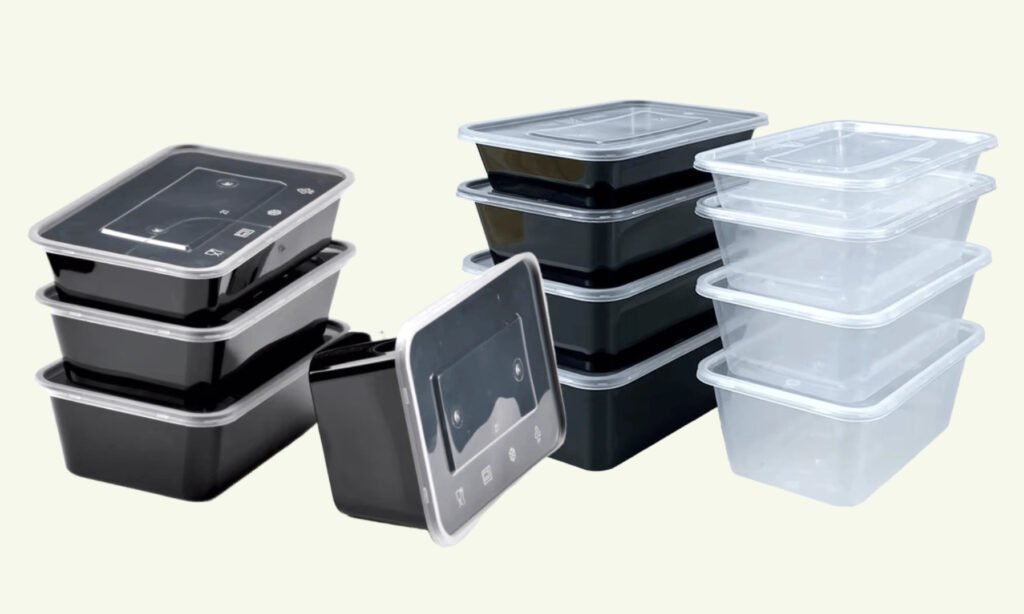
Understanding Traditional Plastic Tableware
Traditional plastic tableware is the most common form of disposable tableware in the modern foodservice industry. Its convenience and low cost make it widely used in fast food, takeout, parties, and large-scale events. Key characteristics include:
- Main Materials and Properties
- PET (Polyethylene Terephthalate): High transparency, oil and water resistant, suitable for cold foods and takeaway containers.
- PP (Polypropylene): Heat-resistant up to 120℃, good toughness, suitable for hot food containers and utensils.
- Other Thermoplastics: Such as PS (Polystyrene), lightweight and low-cost, but with lower heat resistance.
- Ease of Use
- Lightweight and portable
- Mature molding process with high production efficiency
- Low cost, suitable for large-scale disposable use
- Environmental Impact
- Long-term accumulation in nature, taking hundreds or even thousands of years to decompose
- Can form microplastics, potentially harming soil and water ecosystems
- Low recycling rate, with most plastic tableware ending up in landfills or incinerators
- Recycling Limitations
- Although some plastic tableware is theoretically recyclable, contamination, sorting difficulties, and high costs limit actual recycling
- Most discarded plastic tableware still contributes to environmental burdens
Overall, while traditional plastic tableware offers convenience and low cost, it has significant limitations in environmental sustainability, highlighting the need for green alternatives.
What Are Compostable and Biodegradable Tableware?
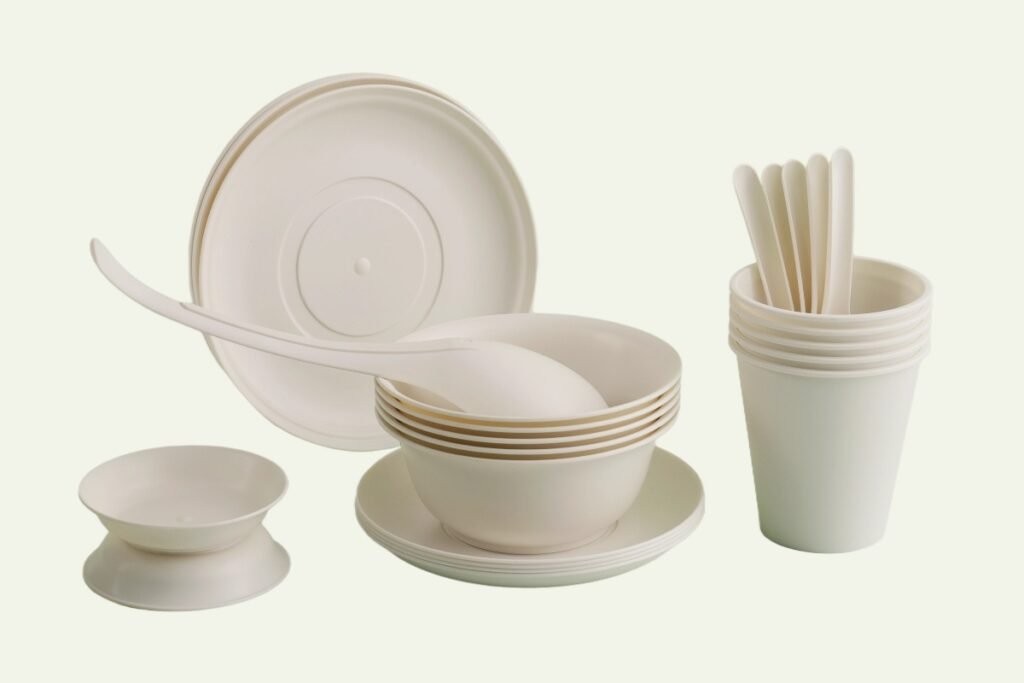
Compostable and biodegradable tableware are key innovations in eco-friendly tableware. Their core idea is to ensure the full lifecycle of tableware—from use to disposal—is degradable, reducing environmental burden. Compostable tableware refers to products that can fully break down into water, carbon dioxide, and organic matter under industrial or home composting conditions within a set period. Biodegradable tableware is broader, emphasizing microbial decomposition under natural or specific conditions, though decomposition may be slower than industrial compost standards.
Key materials include:
- CPLA (Crystallized Polylactic Acid): Heat-treated PLA, heat-resistant above 90℃, combines toughness and transparency.
- PLA (Polylactic Acid): Derived from corn, sugarcane, and other plant starches, high biobased content, suitable for cold or room-temperature foods.
- Modified Biodegradable PP: Contains degradation additives, biodegradable under specific conditions.
- Biobased Composites: Such as PBAT/PLA blends, balancing toughness and degradability for diverse dining scenarios.
Professional biodegradable plate manufacturer like Guanzhong can provide both small and large-scale customization, controlling material selection, heat resistance, appearance, and strength testing. Compared with traditional plastic tableware, these products are not only environmentally friendly but also maintain high performance and user experience.
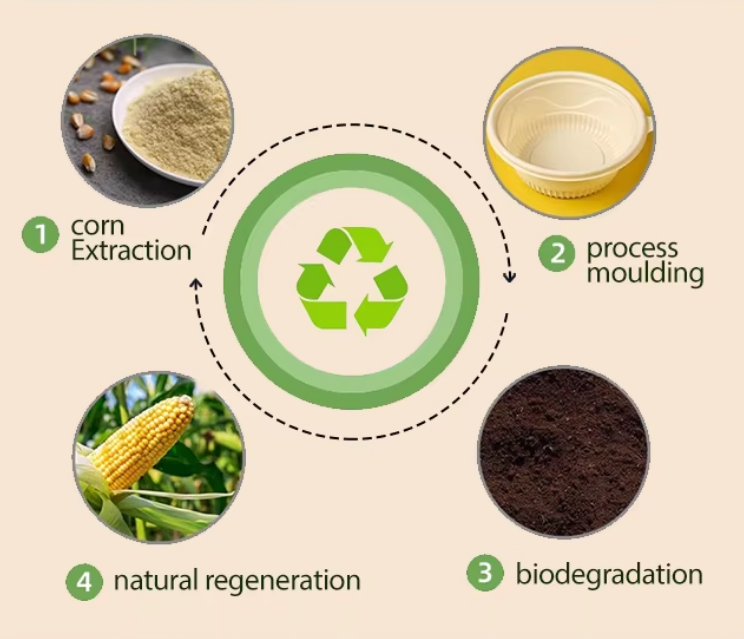
The degradation of compostable tableware mainly relies on microbial activity. Under suitable temperature, moisture, and oxygen conditions, microbes break down organic polymers in tableware into water, carbon dioxide, and organic matter usable for soil improvement. Under industrial compost conditions, CPLA or PLA tableware can fully degrade within 90 days, while conventional plastics may take centuries.
Environmental Impact Comparison
Comparing traditional plastic tableware with compostable tableware from an environmental perspective reveals significant differences in carbon footprint, ecosystem impact, and waste management:
Carbon Footprint Analysis
According to the Journal of Cleaner Production, the production and disposal of 1,000 PP disposable tableware items emit approximately 150–200 kg CO₂-equivalent. In contrast, the same quantity of CPLA compostable tableware emits about 90–120 kg CO₂-equivalent, reducing emissions by over 40%. This is mainly due to the biobased nature of PLA, which fixes some carbon during production.
Ecosystem Impact
Plastic tableware remains in the environment for a long time, potentially forming microplastics that are absorbed by soil, water, and living organisms, posing ecological risks. Compostable tableware, on the other hand, degrades into organic matter that can improve soil fertility, with minimal impact on water and ecosystems.
Waste Management Feasibility
Compostable tableware can be processed through industrial or home composting, reducing landfill and incineration demand, and lowering waste management pressure. Traditional plastic tableware has low recycling rates and often ends up in landfills or incinerators, producing environmental burdens and potentially harmful emissions.
In summary, compostable tableware reduces carbon emissions during production and offers natural advantages in disposal, playing a crucial role in a circular economy.
Performance and User Experience Comparison
In terms of performance and user experience, plastic tableware and compostable tableware each have unique advantages:
- Heat and Oil Resistance
- PP plastic tableware resists heat up to 120℃, suitable for hot food
- CPLA tableware resists heat up to 90℃, suitable for hot drinks or meals
- PLA tableware is better for cold or room-temperature foods
- Biobased composite tableware resists grease effectively
- Strength and Hand Feel
- Plastic tableware is tough but can feel rigid
- Compostable tableware balances load-bearing capacity with comfortable hand feel through thickness and material combination
- Versatility
- Plastic tableware is suitable for fast food and large events
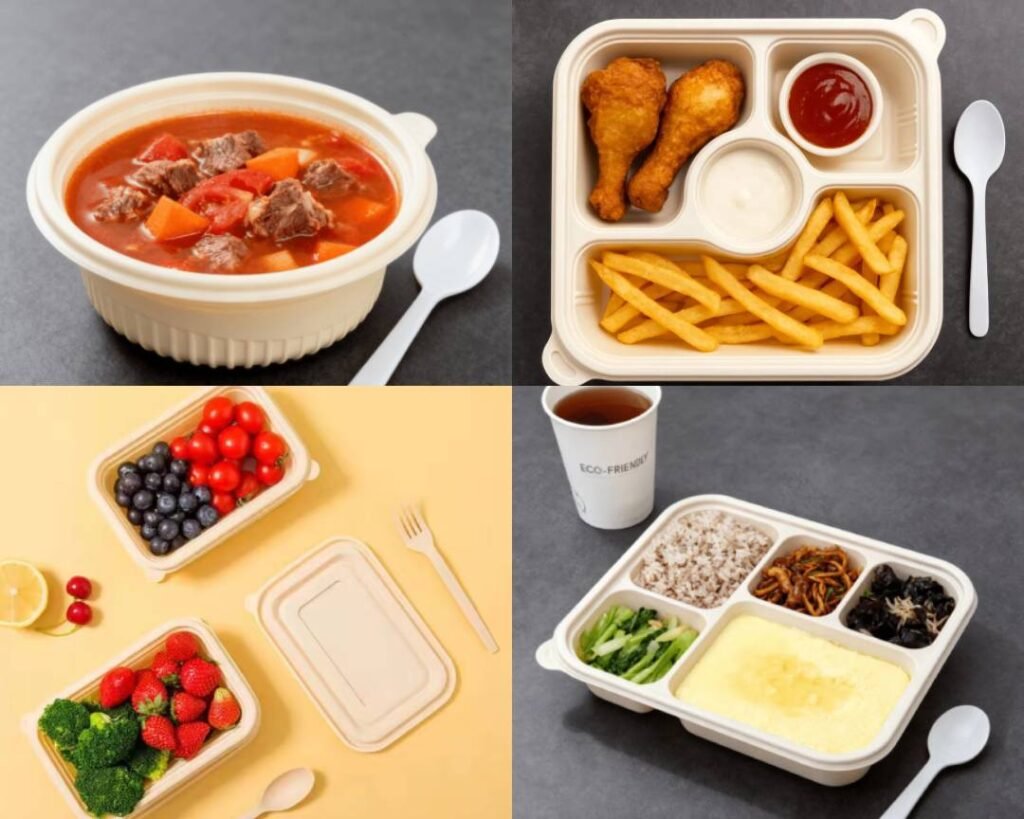
- Compostable tableware can be used in households, takeout, corporate events, and hotel banquets
- User Experience and Data
- CPLA tableware has stable load-bearing capacity and can withstand temperatures up to 90℃
- Users report compostable tableware offers similar experience to plastic tableware, with an added sense of environmental responsibility
Compostable tableware can now match plastic tableware in performance while adding environmental value.
Advantages of Working with Guanzhong for Compostable Tableware
Guanzhong, located in Yongchun County, Quanzhou City, Fujian Province, has an industrial park of nearly 200,000 m² and production facilities exceeding 100,000 m², including advanced R&D centers and standardized workshops. As a professional disposable cutlery manufacturer and biodegradable plate manufacturer, Guanzhong offers significant advantages in compostable tableware:
- Strong Production Capacity
- Injection molding: 50 fully automatic lines, 2,000 tons/month
- Blister molding: 8 fully automatic lines, 800 tons/month
- Film blowing and bag making: 50 biodegradable film lines + 25 bag-making lines, 1,500 tons/month
- Biobased modified materials: 3 sheet extrusion + 5 modified masterbatch lines, 2,000 tons/month
- Straw extrusion: 5 fully automatic lines, 250 tons/month
- Customization and Flexible Production
- Materials: PET, PLA, PP, biobased, and biodegradable composites (excluding paper and sugarcane)
- Minimum order: 30,000 pieces for plates and tableware; 300,000 pieces for forks/utensils
- Mold period: 7–45 days, production period: 7–15 days
- OEM/ODM services for both small and large-scale orders
- Strict Quality Control and Certification
- Products tested against China GB/T 20197, GB/T 19277.1, GB/T 4806.7 standards
- International certifications: ASTM D6866, ASTM D6400, DIN EN 13432, FDA food contact testing, BPI compostable certification
- Strict control of raw materials, production process, and finished products ensures compliance with food safety and environmental standards
- Combining Environmental and Performance Advantages
- Biodegradable, non-toxic, odorless, and safe materials
- Refined design: leak-proof lids, embossed bottom, thickened durability
- Multiple sizes, colors, thicknesses, and logos available
- Widely used in takeout, household meals, corporate events, and hotel banquets
Partnering with Guanzhong provides high-quality, eco-friendly compostable tableware with full customization, perfectly combining performance, sustainability, and commercial value.
| Start Your Customization | WhatsApp: +86 13665956245 | Email: peters@quanzhong-bio.com |
In conclusion, while traditional plastic tableware offers convenience and low cost, it has clear limitations regarding environmental protection and sustainability. It persists in natural environments for centuries, producing microplastics that can harm ecosystems and water quality. Compostable tableware, such as products made from CPLA, PLA, and biobased composites, provides comparable performance with sufficient heat resistance, oil resistance, and toughness. After use, these products can fully decompose under industrial or home composting conditions into water, carbon dioxide, and organic matter, causing minimal environmental impact. For businesses, collaborating with a professional disposable cutlery manufacturer and biodegradable plate manufacturer like Guanzhong ensures access to high-quality, customizable, eco-friendly tableware while enhancing brand image and social responsibility. As global attention on sustainability grows, compostable tableware is poised to play an increasingly important role in the foodservice industry, balancing economic and environmental benefits.