Table of contents
- Why FDA Approval Is Critical for Biodegradable Food Packaging
- What Does “FDA Approved” Really Mean for Biodegradable Food Containers?
- Common FDA-Compliant Materials Used in Biodegradable Food Containers
- Material Comparison: FDA-Compliant Performance Differences and Use Scenarios
- How Importers Can Verify Whether Food Packaging Truly Meets FDA Standards
- Guanzhong: A Manufacturer Focused on FDA-Compliant Biodegradable Food Containers
Why FDA Approval Is Critical for Biodegradable Food Packaging
In the U.S. market, “biodegradable” does not automatically mean “safe for food contact.” For food containers, FDA compliance is the decisive factor that determines whether a product can legally enter the market. This point is often underestimated by importers or brands entering the U.S. for the first time.
- FDA is the core authority governing food contact safety: The FDA regulates all materials that come into direct or indirect contact with food, including disposable food containers, plates, cups, and cutlery. Regardless of whether a material is bio-based or biodegradable, it must meet FDA food contact requirements if it is used for food.
- Environmental claims cannot replace food safety compliance: Many biodegradable materials perform well from a sustainability perspective, but if their formulations, additives, or processing methods are not FDA compliant, migration risks may still exist. This is why products that focus only on “biodegradability” often encounter problems during customs clearance or market inspections.
- FDA compliance directly affects customs clearance and market access: For U.S. importers, food packaging without proper compliance documentation may be detained at customs, rejected, or even required to be destroyed. In addition, large retailers and foodservice chains usually require FDA-related documentation during supplier audits.
- Compliance is the foundation of long-term brand operations: FDA compliance is not a one-time paperwork task. It is a systematic process that runs through material selection, product design, and mass production. Choosing an experienced biodegradable food containers manufacturer helps brands avoid costly compliance corrections later.
What Does “FDA Approved” Really Mean for Biodegradable Food Containers?
In practice, the term “FDA approved” is often misunderstood. The FDA does not issue a single approval certificate for finished products but evaluates compliance through a regulatory framework.
- Compliance with FDA food contact regulations, not a single certificate: FDA food contact compliance is based on material composition, intended use, and migration test results. Products are considered compliant when they meet the relevant regulatory requirements.
- Focus on migration safety rather than material origin: FDA evaluations focus on whether substances migrate into food during use. Whether a material is biodegradable or bio-based is not the primary criterion for safety.
- Highly dependent on use conditions: The same material may be compliant for cold foods but not for hot or oily foods. FDA compliance is closely linked to temperature, contact time, and food type.
- Test reports and documentation are key evidence: Importers and brands should rely on laboratory test reports and material disclosures, not marketing claims, to determine FDA compliance.
Common FDA-Compliant Materials Used in Biodegradable Food Containers
Currently, materials that balance food contact safety with practical performance mainly include the following categories.
- PLA (Polylactic Acid): Derived from plant starch through fermentation and polymerization, PLA is commonly used for cold or moderate-temperature food containers. It offers high bio-based content and low odor but requires careful design for high-heat applications.
- Bio-based composite materials: By modifying bio-based resins with functional components, these materials improve strength and durability while maintaining biodegradability, making them suitable for a wider range of food applications.
- PET and PP (food-contact grade): When properly formulated, PET and PP can be combined with bio-based or biodegradable systems to improve transparency, heat resistance, and structural stability for food containers.
- Material selection must align with FDA regulations: Different materials follow different FDA compliance pathways. Manufacturers must clearly define raw materials, additives, and intended use to ensure overall compliance.

Material Comparison: FDA-Compliant Performance Differences and Use Scenarios
| Material Type | Food Contact Safety | Heat Resistance | Typical Applications |
|---|---|---|---|
| PLA | Good (temperature-sensitive) | Low–Medium | Cold foods, salads, fruits |
| Bio-based composites | Excellent | Medium | Takeout containers, mixed meals |
| PET (food grade) | Stable | Medium–High | Transparent containers, ready-to-eat foods |
| PP (food grade) | Stable | High | Hot food containers, microwave use |
This comparison helps importers choose suitable materials based on actual food applications rather than relying solely on biodegradability claims.
How Importers Can Verify Whether Food Packaging Truly Meets FDA Standards
For U.S. buyers, verifying FDA compliance before placing large orders is a critical risk-control step.
- Request complete food contact test reports: Importers should require suppliers to provide FDA-related food contact testing documentation rather than relying on verbal assurances.
- Confirm laboratory qualifications: Reports should come from laboratories with internationally recognized credentials to ensure acceptance during customs clearance and audits.
- Review material composition and potential risk factors: Understanding whether restricted or high-risk substances are involved helps importers anticipate regulatory changes.
- Check migration test coverage: Reports should include different food simulants to confirm safety under various real-world conditions.
Following these steps helps importers reduce delays, avoid compliance disputes, and ensure smooth market entry.
Guanzhong: A Manufacturer Focused on FDA-Compliant Biodegradable Food Containers
In the biodegradable food container industry, few manufacturers combine FDA compliance expertise with large-scale manufacturing capabilities. Fujian Guanzhong Technology Co., Ltd. is one such example.
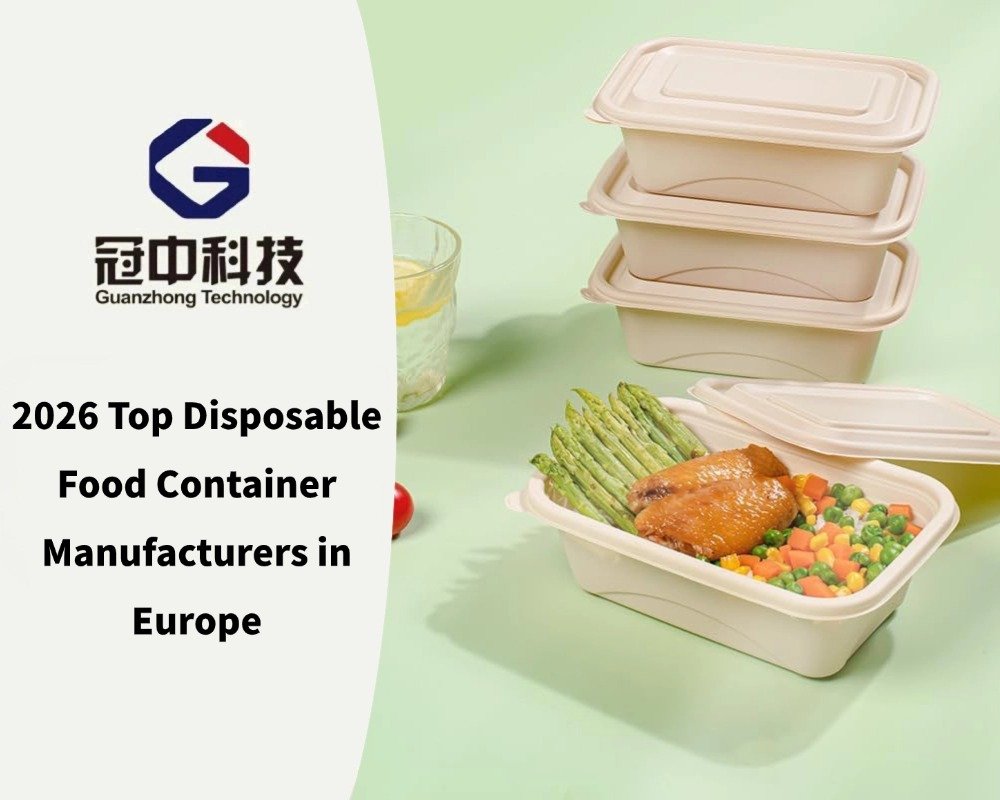
- Focus on food-contact-grade biodegradable materials: Guanzhong uses PET, PLA, PP, bio-based, and biodegradable composite materials (excluding paper and sugarcane) to develop disposable food containers, plates, and tableware, with food safety as the design foundation.
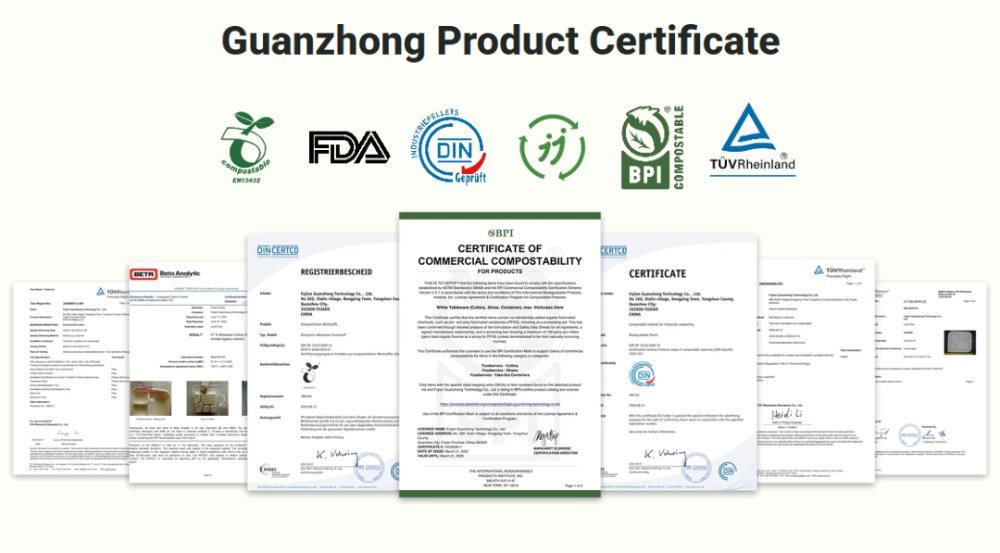
- Established FDA food contact compliance foundation: Guanzhong’s food container products have passed FDA food contact testing, along with multiple domestic and international biodegradation and bio-based standards, supporting entry into the U.S. market.
- Strong manufacturing and delivery capacity: The company operates an industrial park of nearly 200,000 square meters, with over 100,000 square meters dedicated to food container production and an annual capacity of approximately 90,000 tons.
- Mature OEM and ODM customization services: Guanzhong offers customized solutions covering structure design, dimensions, thickness, and branding, enabling importers and food brands to efficiently launch products.
- Designed for real-world performance: Products are engineered for leak resistance, durability, and suitability for both hot and cold foods, ensuring reliable performance in actual foodservice environments.
As an experienced food container box manufacturer, Guanzhong positions itself as a long-term manufacturing partner rather than a short-term supplier, supporting importers and brands with compliance-focused, scalable solutions.
| Start Your Customization | WhatsApp: +86 13665956245 | Email: peters@quanzhong-bio.com |
In the U.S. market, competition among biodegradable food containers has shifted from material concepts to regulatory compliance and supply chain stability. For importers and food brands, understanding FDA requirements and working with a proven biodegradable food containers manufacturer is essential for sustainable growth.