Table of contents
- The Era of Biodegradables: Why Choose Corn Starch Tableware
- Performance Comparison: Corn Starch vs. Other Materials
- From Hot Soups to Barbecues: Multi-Scenario Applications of Corn Starch Tableware
- How Guanzhong Provides Reliable Corn Starch Tableware
- Common Misconceptions and Proper Usage of Corn Starch Tableware
The Era of Biodegradables: Why Choose Corn Starch Tableware
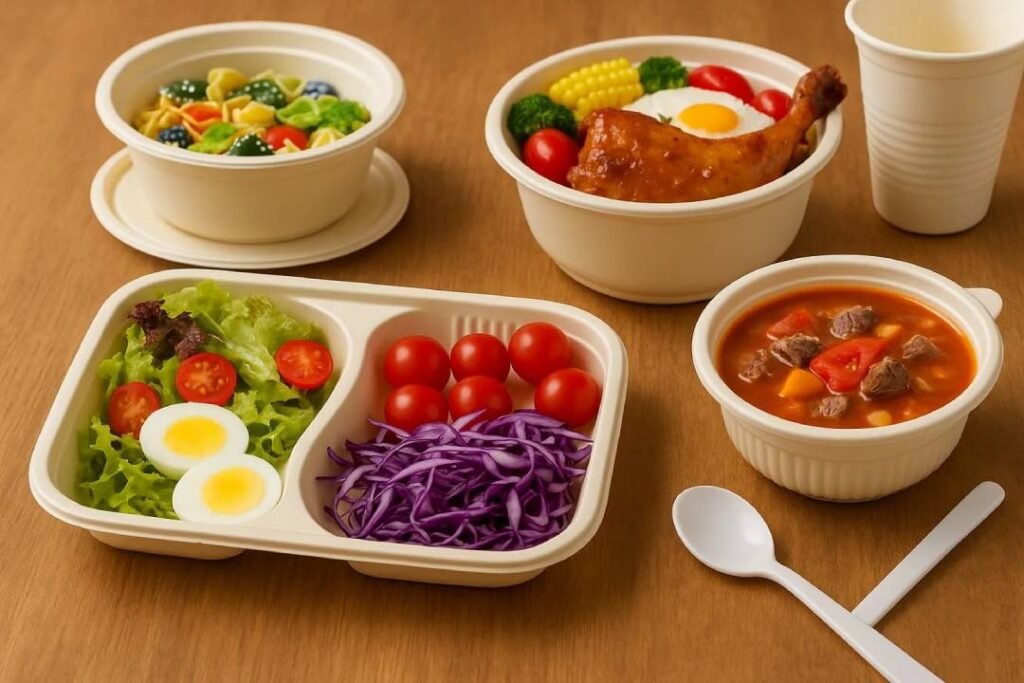
As single-use plastics are gradually being phased out, corn starch tableware has become synonymous with a sustainable lifestyle. Made from renewable crops—corn—these products undergo advanced fermentation and polymerization processes to convert starch into lactic acid, which is then polymerized into biodegradable thermoplastic materials. To enhance strength and heat resistance, a certain proportion of natural fibers or polylactic acid (PLA) is typically added during production, making the tableware both eco-friendly and durable in practical use.
In terms of scientific performance, corn starch tableware demonstrates notable environmental and physical advantages:
- Excellent biodegradability: Under industrial composting conditions (approx. 58°C, 50–60% humidity), corn starch products generally decompose completely within 90–180 days. In ambient home composting environments, decomposition takes 12–24 months. Compared to traditional plastics, which take hundreds of years to degrade, their eco-performance is exceptional.
- Significantly reduced carbon footprint: According to the European Bioplastics Association, producing 1 ton of corn starch-based bioplastics emits only about 0.5–0.8 tons of CO₂ equivalent, while the same amount of polystyrene emits 2.0–2.5 tons.
- Durability and safety: Corn starch tableware can hold 1.5–2 kg without deformation, and bowls can withstand hot liquids up to 80–90°C without softening or leaking, suitable for soups, coffee, or oily foods.
Additionally, corn starch tableware features a smooth surface and natural, soft color, free of harmful additives and plastic odor. Compared with other natural materials such as bagasse and bamboo fiber, it provides a more modern look and better user experience.
Performance Comparison: Corn Starch vs. Other Materials
To help businesses and consumers select the right tableware, we compared corn starch tableware with common alternatives:
| Performance Metric | Corn Starch | Bagasse | PLA | Polystyrene Foam |
|---|---|---|---|---|
| Heat Resistance | 80–90°C, suitable for hot soups | 60–70°C | 70–80°C | 50–60°C |
| Load Capacity | 1.5–2 kg | 1–1.5 kg | 1.2–1.8 kg | 1 kg |
| Decomposition Cycle | Industrial compost 90–180 days | Industrial compost 120–200 days | Industrial compost 100–180 days | Hundreds of years |
| Surface Smoothness | High | Medium | High | Low |
| Eco-friendliness | High, biobased materials | High, natural fibers | High, partially biodegradable | Low, fossil-fuel based |
Analysis: Corn starch excels in heat resistance, load capacity, eco-friendliness, and visual appeal, while remaining compostable—making it an ideal choice for restaurants and food delivery services.
From Hot Soups to Barbecues: Multi-Scenario Applications of Corn Starch Tableware
Best Use Case 1: Hot Soups and Stews
Soups and stews present significant packaging challenges, requiring high heat resistance and leak prevention.
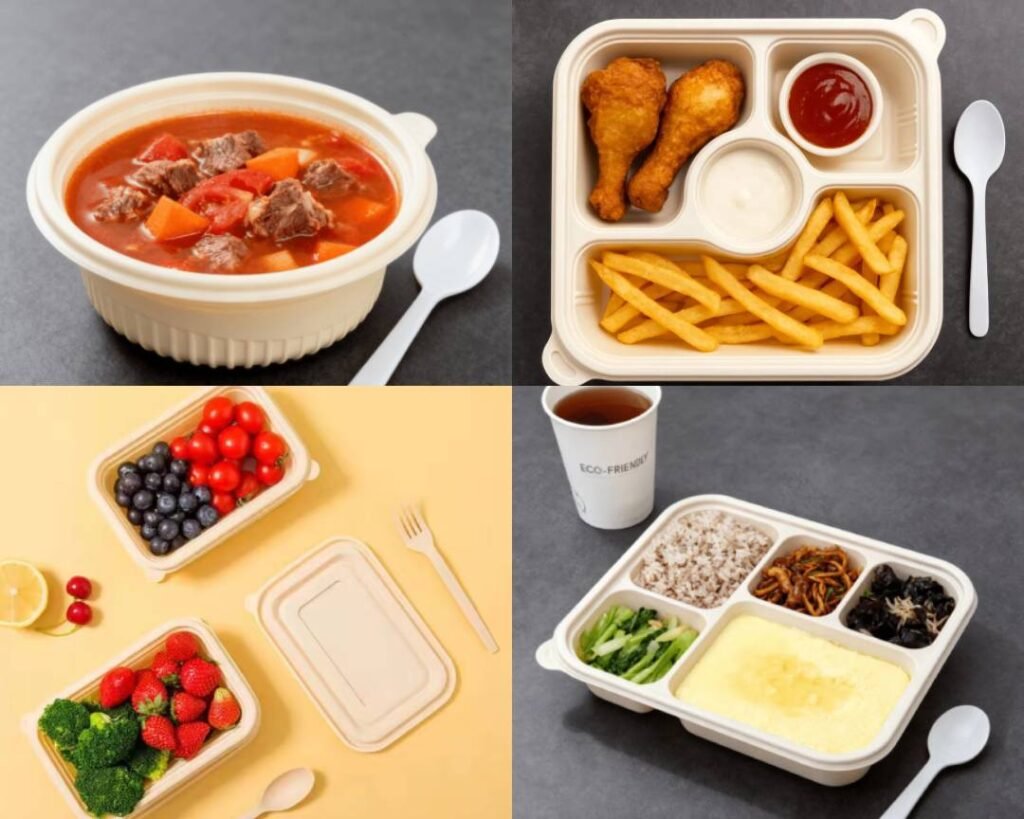
- Product Example: Corn starch bowl with lid
- Performance Data:
- Structure stable at 80°C for up to 30 minutes
- Water absorption <10% after 1 hour, better than uncoated paper bowls
- Leak tests show liquid retention for over 3 hours
- Applicable Scenarios: Ramen shops, Vietnamese pho stalls, hot soup takeout services
Best Use Case 2: Fried and Oily Foods
Fried and oily foods can penetrate packaging, and corn starch trays provide reliable protection.
- Product Example: Corn starch compartment tray with lid
- Performance Data:
- Maintains shape at 60°C for 2 hours, oil resistance 98%
- Applicable Scenarios: Fried chicken shops, curry restaurants, fast food chains
- Advantages: Smooth surface, premium feel, biodegradable alternative to restricted plastic trays
Best Use Case 3: Outdoor Barbecues and Festivals
Outdoor events require lightweight, durable tableware.
- Product Example: Disposable corn starch tableware set
- Performance Data:
- Withstands 15–20 N before bending
- Remains structurally intact up to 85°C
- Applicable Scenarios: Outdoor barbecues, festivals, public events
- Advantages: Meets regulations, enhances user comfort
Best Use Case 4: Takeout and Delivery Packaging
With global food delivery demand rising, corn starch packaging is ideal.
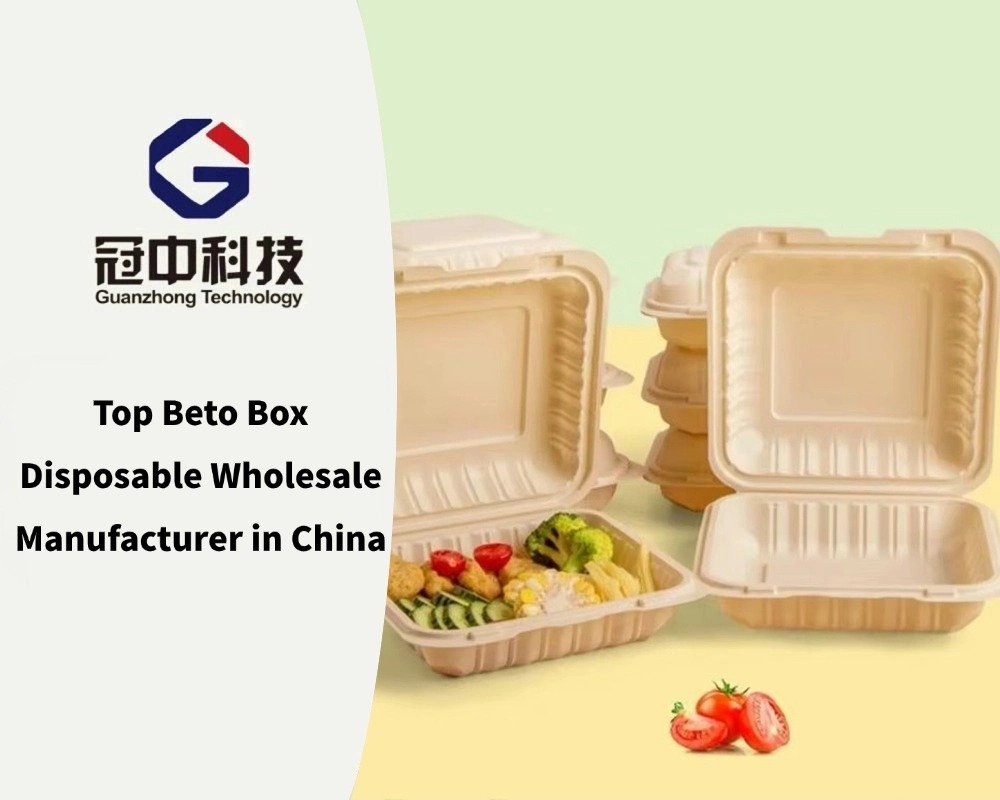
- Product Example: Compostable corn starch clamshells and compartment trays
- Performance Data:
- Sturdy, resistant to transport damage
- Applicable Scenarios: Restaurants, takeout, food e-commerce
How Guanzhong Provides Reliable Corn Starch Tableware
Choosing a reliable supplier is critical for restaurants and eco-friendly projects. Fujian Guanzhong Technology Co., Ltd. (Guanzhong) leverages advanced facilities, extensive experience, and comprehensive certifications to ensure every piece of corn starch tableware is safe, durable, and environmentally friendly.
- Advanced Production and R&D Facilities: Guanzhong operates a 200,000 m² plant with 100,000 m² of standardized production workshops, equipped with injection molding, thermoforming, and film-blowing lines, ensuring stable production and high-quality delivery as a disposable cutlery manufacturer and biodegradable plate manufacturer.
- Strict Raw Material Management: All tableware uses biobased biodegradable composite materials, non-toxic and odorless. Starch is extracted from carefully selected grains, fermented into lactic acid, and polymerized into PLA, fully traceable to ensure consistent quality.
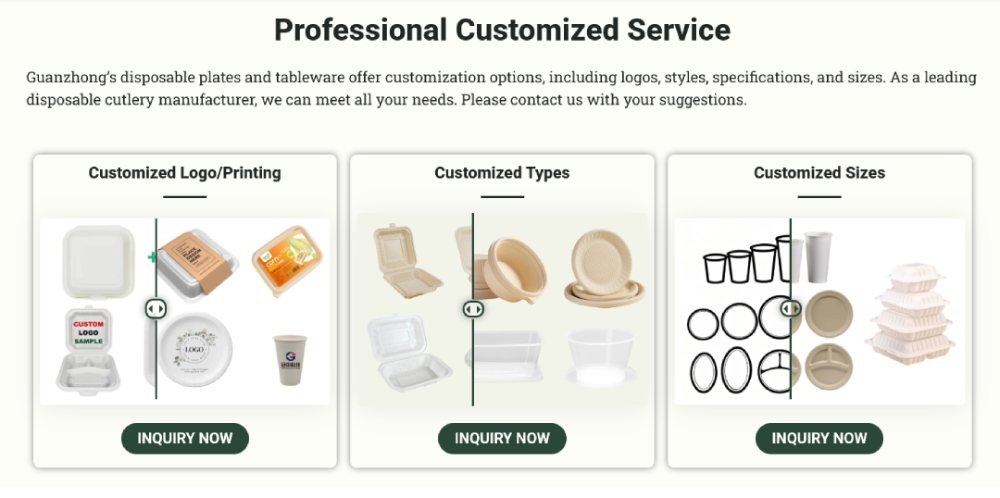
- Customization and Professional Services: Offers logo printing, dimensions, thickness, styles, colors, and laminated packaging customization. Streamlined workflow: Customer request → 3D modeling → Mold production → Finished product. Mold lead time: 7–45 days, production: 7–15 days, supporting small to large-scale orders.
- Strict Quality and Certification: Products comply with GB/T, ASTM, DIN standards, pass FDA food contact tests, and hold industrial composting and BPI certifications, ensuring performance, safety, and environmental compliance.
- Efficient Supply and Production Capacity: With nearly 200 skilled staff and an annual output of 90,000 tons, Guanzhong can meet diverse needs for restaurants, fast-food chains, delivery services, and large-scale events.
Through these strengths, Guanzhong delivers high-quality, customizable, and reliable corn starch tableware, making it a trusted disposable cutlery manufacturer and biodegradable plate manufacturer in the industry.
Common Misconceptions and Proper Usage of Corn Starch Tableware
- Misconception: Suitable for all temperatures
Proper Use: Can withstand 80–90°C; avoid prolonged microwaving at very high temperatures. - Misconception: Can store oily foods long-term
Proper Use: Suitable for short-term storage; refrigerate or use promptly for long-term storage. - Misconception: Can be disposed of with regular trash
Proper Use: Dispose in industrial or home composting systems to ensure biodegradability. - Misconception: Forks and knives have unlimited load capacity
Proper Use: Use within weight limits to avoid bending or breakage.
Following these practices ensures maximum environmental, durability, and safety benefits.
| Start Your Customization | WhatsApp: +86 13665956245 | Email: peters@quanzhong-bio.com |
Choosing corn starch tableware is not only responsible for the environment but also enhances life quality. With superior heat resistance, oil resistance, and biodegradability, it suits multiple scenarios—from hot soups and fried foods to outdoor barbecues. Partnering with a reliable supplier like Guanzhong ensures access to high-quality, customizable, eco-friendly tableware, enabling a perfect balance of delicious food and sustainability. Each use promotes greener, more circular consumption, easing the planet’s burden and leaving more possibilities for the future.