Table of contents
Comparison of Different Materials: PLA, Cornstarch, and Traditional Plastics
1. PLA (Polylactic Acid)
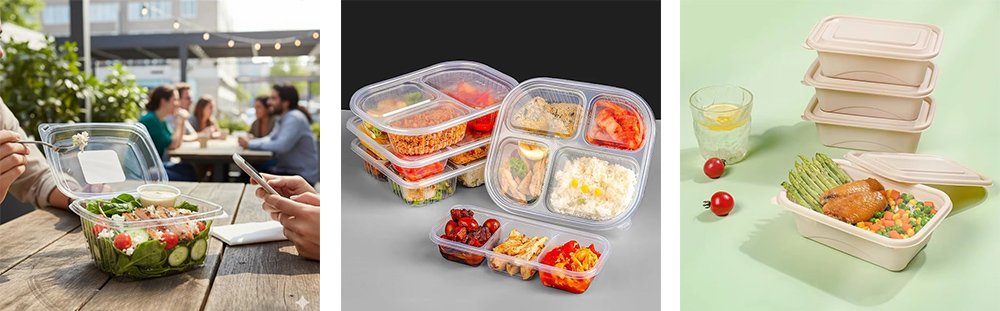
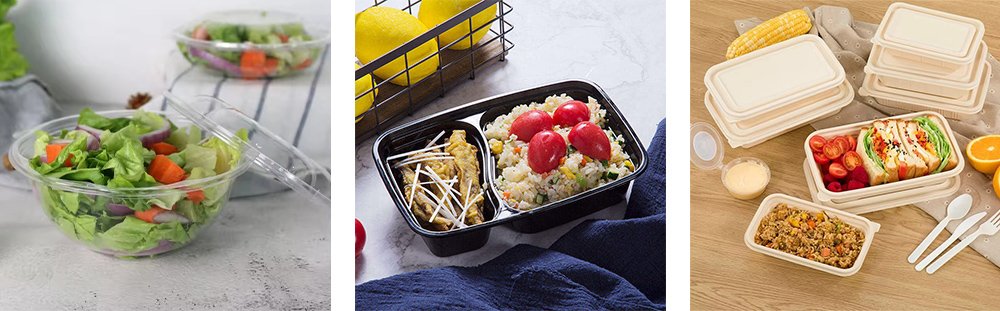
PLA is derived from renewable resources such as corn. It has high transparency and an appearance similar to traditional plastics, making it suitable for products like salad boxes and cold drink cups. Its main advantage is strong compostability, meeting European and American environmental standards.
2. Cornstarch Material
After modification, cornstarch material has strong heat resistance (above 90°C), making it suitable for hot food applications such as takeaway containers. It also performs well in oil resistance, water resistance, and structural strength. It is currently one of the fastest-growing materials in the food containers wholesale market.
3. Traditional Plastics (PP/PS)
Traditional plastics are low-cost and stable in performance, but they are not biodegradable and are increasingly restricted by global policies.
| Comparison Dimension | PLA | Cornstarch | Traditional Plastics (PP/PS) |
|---|---|---|---|
| Heat Resistance | Low (50–60°C) | High (90°C+) | Very High |
| Environmental Property | Compostable | Biodegradable | Non-biodegradable |
| Cost | Medium to High | Medium | Low |
| Application Scenario | Cold food, display packaging | Takeaway, hot food | Traditional catering |
| Policy Trend | Supported | Supported | Restricted |

Top 5 Global Leading Biodegradable Food Container Manufacturers
Globally, there are not many companies that truly have large-scale production, material R&D capabilities, and international certification systems. The following five companies are representative players in the industry in terms of capacity, technology, and market coverage.
1. Guanzhong (China)
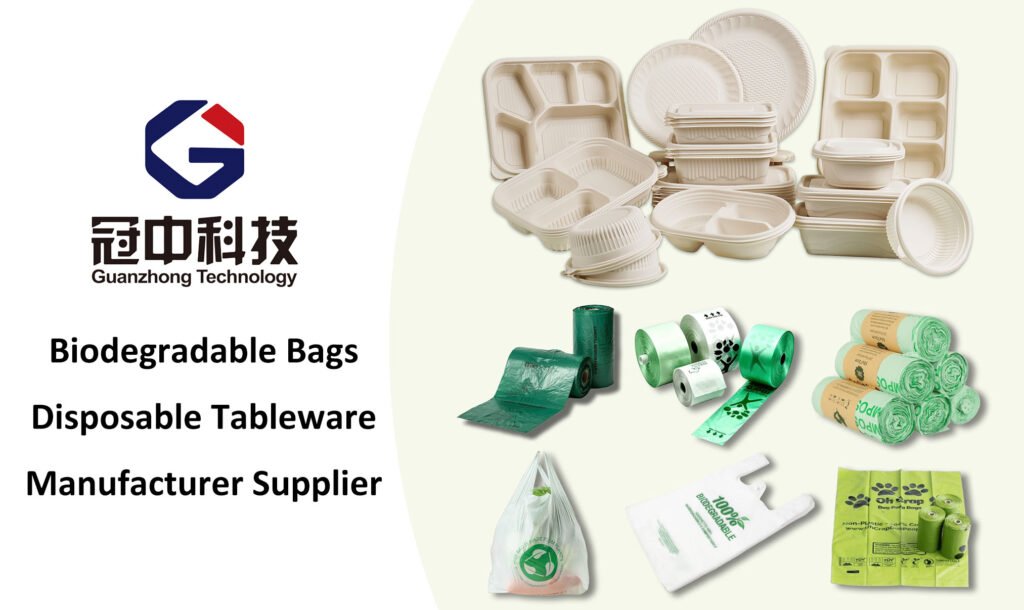
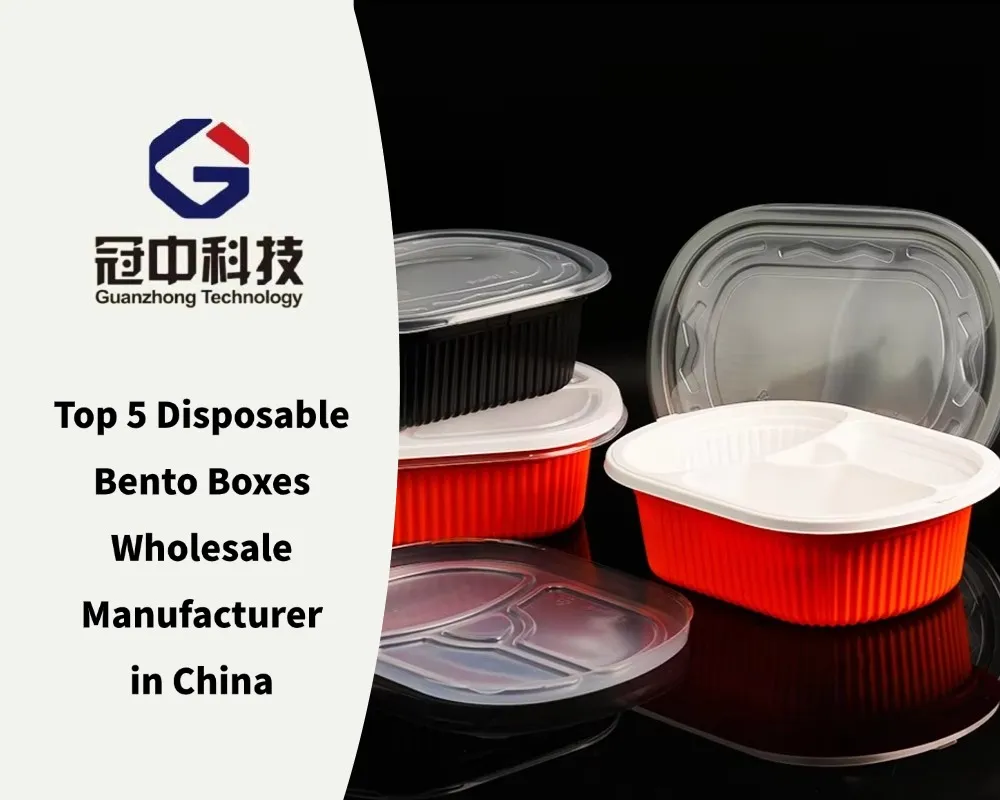
As a rapidly rising biodegradable food containers manufacturer, Guanzhong has established a mature and stable supply system in the global eco-friendly food packaging industry. The company focuses on large-scale production of PLA, cornstarch, and bio-based food containers, without involving sugarcane or pulp materials. With high cost-effectiveness and stable delivery capabilities, it serves the global food containers wholesale market and is widely used in takeaway, chain catering, and food retail industries.
Product Range:
- PLA food containers (salad boxes, transparent containers, cold food packaging)
- Cornstarch meal boxes (takeaway containers, hot food containers)
- Disposable food containers (bowls, boxes, trays, etc.)
- Bio-based food packaging solutions (for catering and retail scenarios)
Factory Data & Capacity:
- Industrial park area: nearly 200,000 square meters
- Production workshop area: over 100,000 square meters
- Injection molding lines: 50 fully automated lines (monthly capacity about 2,000 tons)
- Thermoforming lines: 8 fully automated lines (monthly capacity about 800 tons)
- Film blowing and bag-making system: 50 film blowing lines + 25 bag-making lines (monthly capacity about 1,500 tons)
- Bio-based material production lines: multiple modification and masterbatch lines (monthly capacity about 2,000 tons)
- Annual total capacity: about 90,000 tons
Certifications:
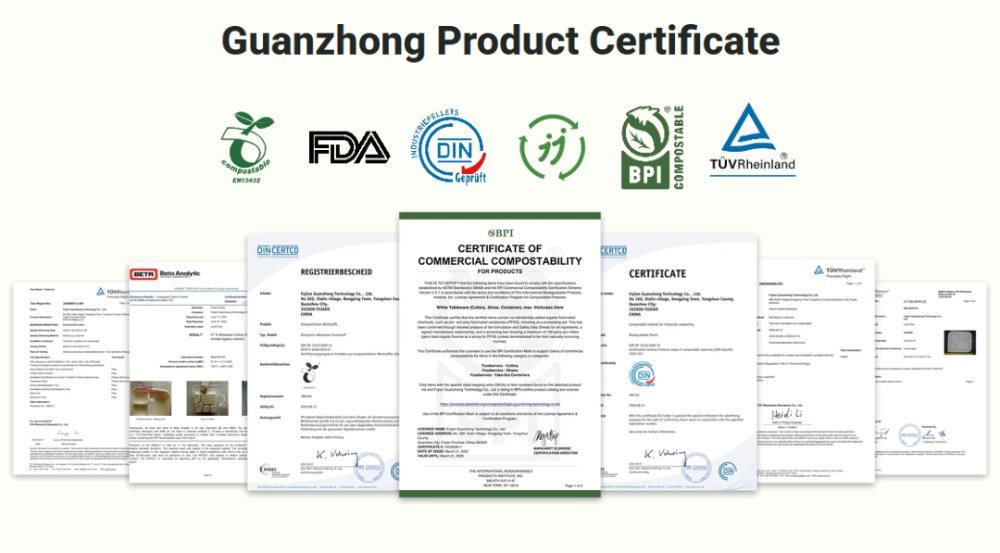
- ISO 9001 (Quality Management System),FDA (Food Contact Safety Standard),EN13432 / ASTM D6400 (Biodegradable & Compostable Certification),BPI, LFGB and other international certifications
Advantages:
- Strong factory-direct pricing advantage: self-owned production system without intermediaries helps reduce procurement costs
- Strong large-scale production capacity: multiple automated production lines ensure stable long-term supply
- Outstanding customization capability: supports OEM/ODM such as size, structure, logo, and packaging
- High delivery stability: mature production process and supply chain system ensure controllable lead time
- Rich export experience: familiar with European and American regulations and certification requirements
2. Huhtamaki (Finland)
Huhtamaki is one of the world’s leading food packaging solution providers, headquartered in Finland, with operations in over 100 countries. The company has deep technical expertise in sustainable packaging, and its products are widely used in chain catering, FMCG brands, and the food industry.
Features:
- Well-established global layout: production bases in Europe, Asia, and the Americas
- Mature product system: covers paper-based, biodegradable, and composite materials
- Strong R&D capability: continuous investment in eco-friendly materials and packaging design
- Stable customer base: serves large multinational brands
- High compliance capability: meets multiple international food safety and environmental standards
3. Vegware (UK)
Vegware is a UK-based brand specializing in compostable food packaging, with strong recognition in the European eco-packaging market. It focuses on 100% plant-based materials and provides a full lifecycle environmental solution.
Features:
- Focus on compostable materials: compliant with EN13432 standards
- Clear eco-brand positioning: targets high-end sustainable markets
- Diverse product design: suitable for cold food, hot food, and beverages
- Strong market presence: widely used in European catering industry
- Higher overall cost: suitable for premium brands
4. Genpak (USA)
Genpak is a well-known food packaging manufacturer in North America, with strong distribution networks. Its product range is extensive, covering both traditional plastics and eco-friendly materials, and it is transitioning toward sustainable packaging.
Features:
- Strong North American market presence: localized supply chain and fast delivery
- Wide product range: various materials and specifications available
- Strong channel resources: close cooperation with catering and retail sectors
- Transitioning to eco-friendly products: increasing biodegradable product lines
- Higher cost: less competitive compared to Asian manufacturers
5. BioPak (Australia)
BioPak is an eco-focused packaging company based in Australia, with strong influence in the Asia-Pacific region. It is committed to sustainable development and compostable packaging solutions.
Features:
- Strong sustainability focus: emphasizes carbon reduction and eco-supply chains
- Compostable product focus: uses PLA and plant-based materials
- Comprehensive certification system: meets international standards
- Strong APAC presence: high market share in Australia and Southeast Asia
- Premium pricing: suitable for environmentally conscious brands
How to Choose the Right Food Containers Wholesale Supplier
When selecting a supplier, it is recommended to evaluate from the perspectives of demand, capability, and risk, rather than focusing only on price. This helps identify a reliable biodegradable food containers manufacturer.
- Define Procurement Needs: Determine application scenarios (cold or hot food), specifications, customization needs, and budget to improve selection efficiency.
- Initial Supplier Screening: Use B2B platforms or trade shows to shortlist suppliers. Prioritize manufacturers and ensure their materials match your needs.
- Certification Verification: Check ISO9001, FDA or LFGB, and EN13432 certifications to ensure compliance with target markets.
- Sample Testing: Test heat resistance, oil resistance, and structural strength under real usage conditions.
- Small Batch Trial Orders: Use trial orders to evaluate delivery capability and product consistency.
- Long-term Cooperation Evaluation: Focus on capacity, delivery time, and price stability for sustainable partnerships.
FAQ
1. What materials are biodegradable food containers made from?
Common materials include PLA, cornstarch, and other bio-based materials derived from renewable resources. Manufacturers like Guanzhong focus on PLA and cornstarch systems to balance performance and sustainability.
2. How long do biodegradable or compostable containers take to decompose?
Under industrial composting conditions, most products decompose within 60–90 days. In natural or home composting environments, it may take longer depending on conditions.
3. Can biodegradable containers be used for hot food?
Yes, but it depends on the material. Cornstarch containers are more heat-resistant and suitable for hot food, while PLA is better for cold or room-temperature use.
4. Is customization available for biodegradable food packaging?
Yes, most manufacturers offer OEM/ODM services, including size, structure, logo printing, and packaging design.
5. What are the advantages over traditional plastics?
They are made from renewable resources, biodegradable, environmentally friendly, and free from harmful substances like BPA, aligning with regulations and consumer trends.
| Start Your Customization | WhatsApp: +86 13665956245 | Email: peters@quanzhong-bio.com |
With the continuous advancement of global environmental trends, biodegradable food containers have become a key direction in the food packaging industry. For businesses, choosing a reliable biodegradable food containers manufacturer is not only about compliance but also about enhancing brand competitiveness.
From material selection to supplier evaluation and long-term cooperation, each step requires professional judgment and real-world testing. In the food containers wholesale process, stability is often more important than short-term pricing advantages.
If you are planning to adopt or upgrade eco-friendly packaging, it is recommended to start with small batch testing and collaborate with manufacturers that have strong capacity and technical capabilities. This will give you a competitive edge in the future market.