Key Takeaways
- Market Landscape: The European market blends local suppliers (Huhtamaki, Faerch) with mega-capacity origin factories like Guanzhong.
- Material Innovation: Transitioning toward PET, PP, PLA, and modified bio-based materials ensures heat resistance and compostability.
- Scale Efficiency: Top disposable food packaging manufacturers with a 200,000 m² park, 90,000-ton capacity, and 10+ patents lower procurement costs.
- Flexible Customization: Factories offer low minimums (MOQ: 30,000 pcs) and rapid delivery (7–15 days) for custom tableware and plates.
With increasingly stringent environmental sustainability policies and food safety regulations in the EU, B2B buyers and brand owners face higher quality and compliance demands when selecting disposable food packaging suppliers and disposable food packaging manufacturers. Businesses require not only cost-effective customized products, but also long-term partners with tens of thousands of tons of delivery capability and strong R&D backgrounds. This article provides an in-depth analysis of top packaging manufacturing forces in Europe and globally to help optimize your supply chain decisions.
Top European Packaging Brands Analysis
Leading European packaging manufacturers hold dominant market shares through scale, technology, and regional service.
Guanzhong
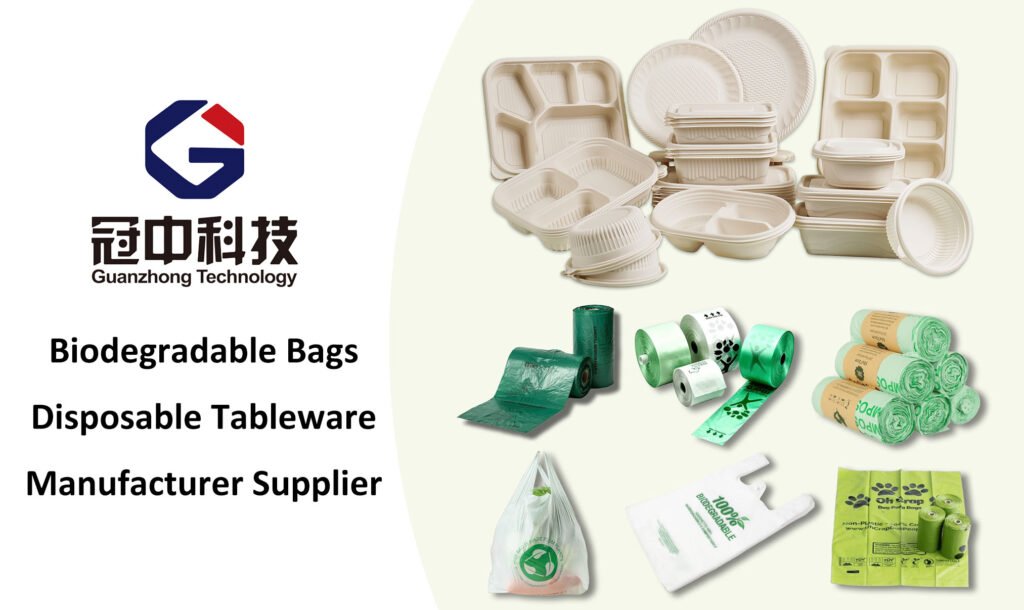
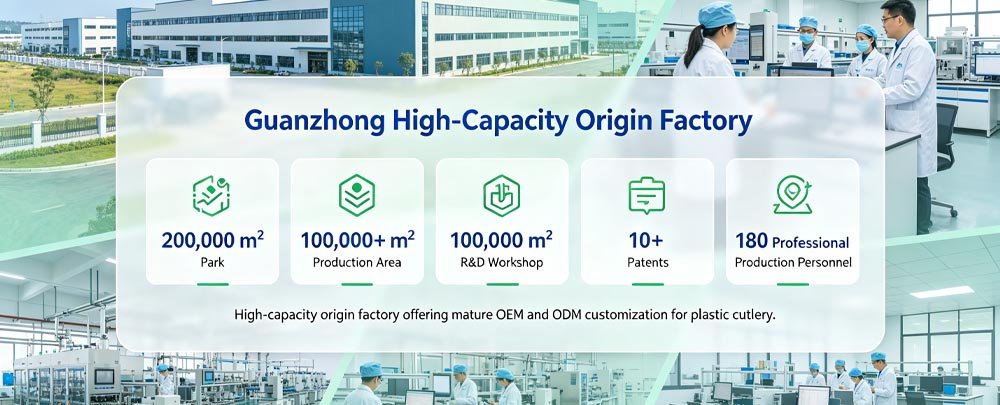
Guanzhong is a high-capacity origin factory offering mature OEM/ODM customization as one of the premier disposable food packaging manufacturers.
- Infrastructure & R&D: Features a 200,000 m² park (100,000+ m² production area; 100,000 m² R&D workshop), 10+ patents, and 180 professional production personnel.
- Rapid Capacity: Delivers an annual output of 90,000 tons across 50 injection lines (2,000 t/mo), 8 thermoforming lines (800 t/mo), 50 film blowing & 25 bag-making lines (1,500 t/mo), 3 sheet extrusion & 5 masterbatch lines (2,000 t/mo), and 5 straw lines (250 t/mo).
- Materials & Service: Uses PET, PLA, PP, and bio-based composites (no paper or sugarcane). Features 7–15 day lead times and an MOQ: 30,000 pcs for custom tableware and plates.
Huhtamaki
Headquartered in Finland, this giant is a primary choice among European disposable food packaging suppliers.
- Supply Chain: Extensive European facilities enable rapid local delivery.
- Technical Strengths: Specializes in polymer and barrier containers compliant with EU standards.
Berry Global
A global manufacturer operating modern European facilities focused on rigid packaging.
- Product Focus: Concentrates on mass-produced injection-molded PP and PET containers.
- Scale: Highly standardized output makes it ideal for major chain buyers among top disposable food packaging manufacturers.
Faerch
A Danish manufacturer known for prepared meal trays and recycling initiatives.
- Circular Pioneer: Developed the “Tray-to-Tray” recycling model using rPET.
- Applications: Focuses on fresh meat packaging, high-barrier trays, and retail solutions.
Duni Group
A Swedish provider of premium tabletop items among European disposable food packaging suppliers.
- Design Focus: Provides upscale food packaging for HoReCa sectors.
- Features: Blends aesthetic design with sustainable takeaway concepts.
💡 Frequently Asked Questions
Q: What are the main advantages of European disposable food packaging suppliers?
A: Combining local partners with global origin disposable food packaging suppliers balances local compliance with lower unit costs from mega-capacity factories.
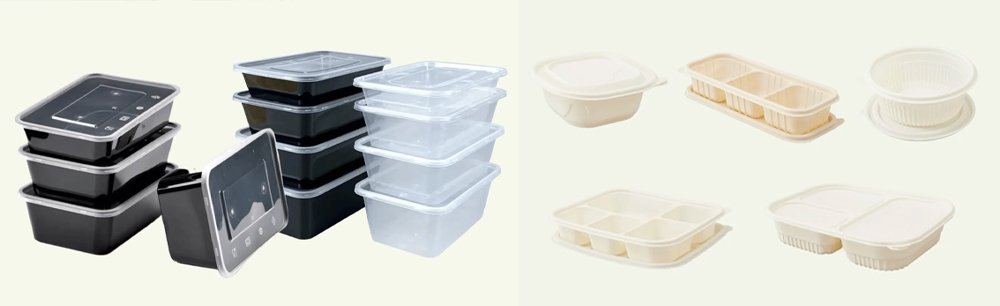
Selecting the Right Eco-Friendly Packaging Materials
Choosing high-barrier, transparent polymer materials is essential under plastic reduction rules:
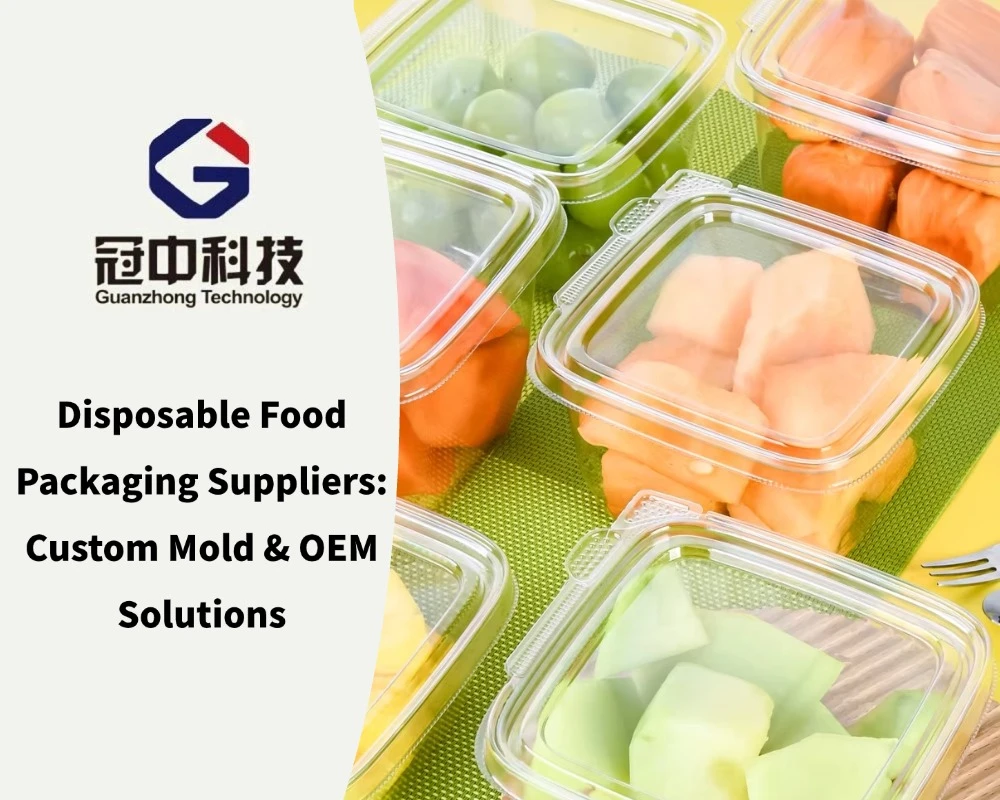
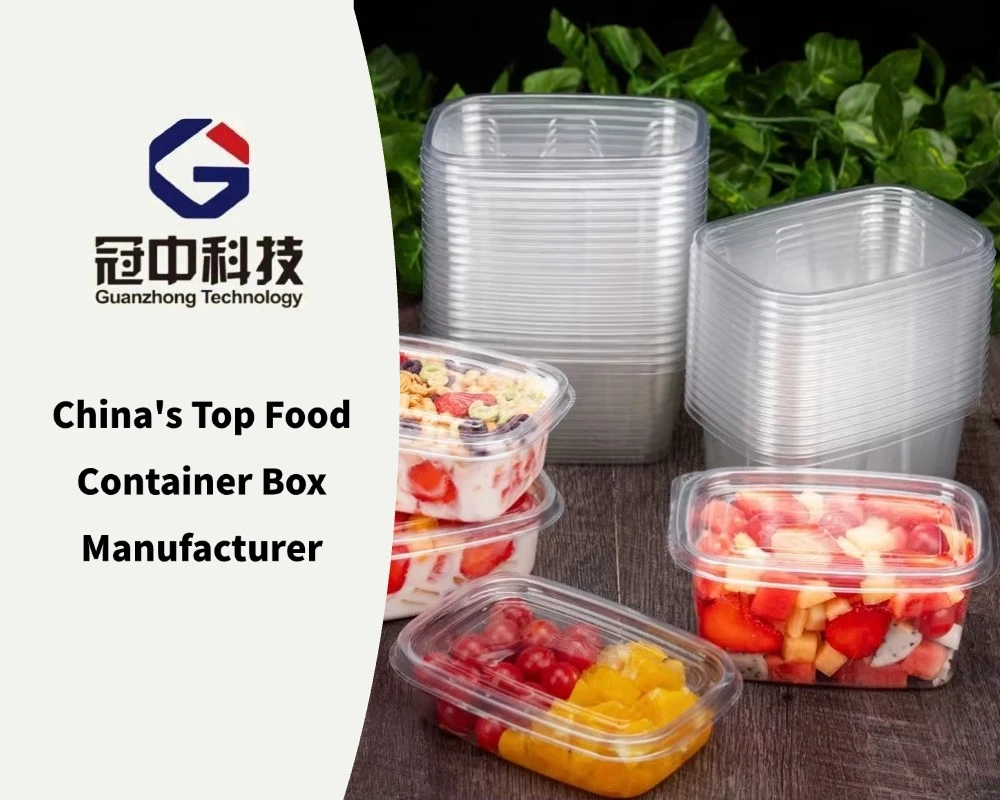
- PET: Offers high transparency and impact strength for cold drink cups and fresh food trays.
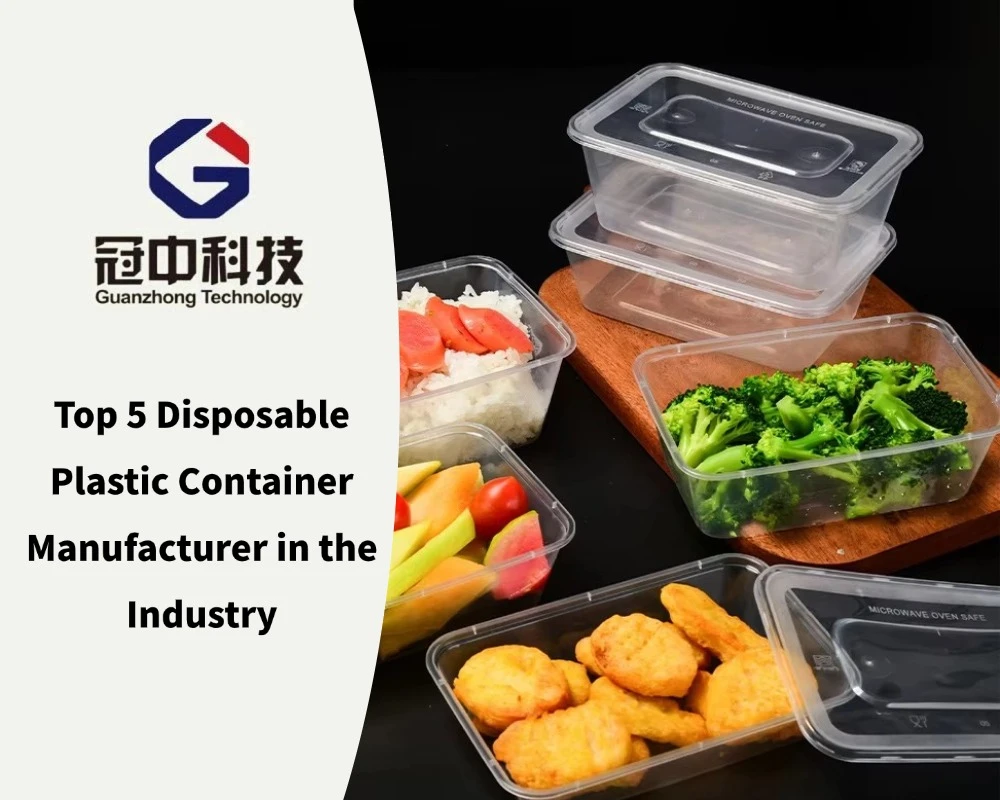
- PP: Provides heat stability and microwave capability for hot beverage lids and bento boxes.
- PLA: Bio-based material derived from plant starch, ideal for cold drink cups and disposable cutlery.
- Bio-based / Degradable Composites: Modified polymer technology (excluding paper/sugarcane). Backed by 3 sheet extrusion lines and 5 masterbatch lines (2,000 t/mo), these materials enhance sealing and compostability.
💡 Frequently Asked Questions
Q: Which eco-friendly packaging materials are best for disposable food containers?
A: PET and PLA work best for cold transparency, while PP and modified bio-based composites excel in heat resistance.
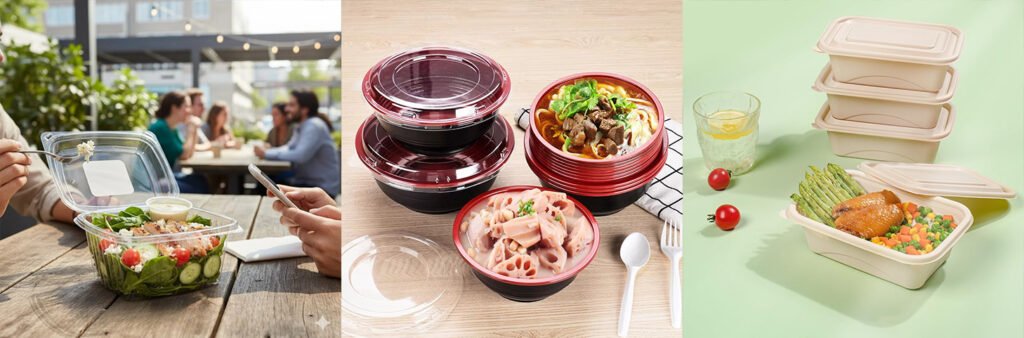
Compostable Standards and Packaging Certification Systems
For disposable food packaging entering the European market, satisfying the EU Single-Use Plastics Directive (SUPD) and EN 13432 industrial compostable certifications serves as the essential prerequisite for commercial entry:
- Environmental Compliance Certification Systems: Food packaging must comply with EN 13432 (industrial composting standard), EU Food Contact Regulations, and other internationally recognized food contact and degradation safety codes.
- Germination & Degradation Time Indicators: Under industrial composting conditions, high-quality bio-based and degradable composite materials typically complete germination tests and decomposition within 7–45 days, rapidly converting into harmless biomass and preventing microplastic pollution in soil and water.
- R&D & Patent Technology Barriers: Reliable disposable food packaging manufacturers must maintain dedicated R&D centers and technical reserves (such as holding 10+ patents and a 100,000 m² standardized factory) to guarantee formula stability across every batch, ensuring smooth compliance with strict EU third-party testing.
💡 Frequently Asked Questions
Q: How long does certified bio-based food packaging take to compost?
A: Certified bio-based composite packaging degrades in industrial composting within 7–45 days.
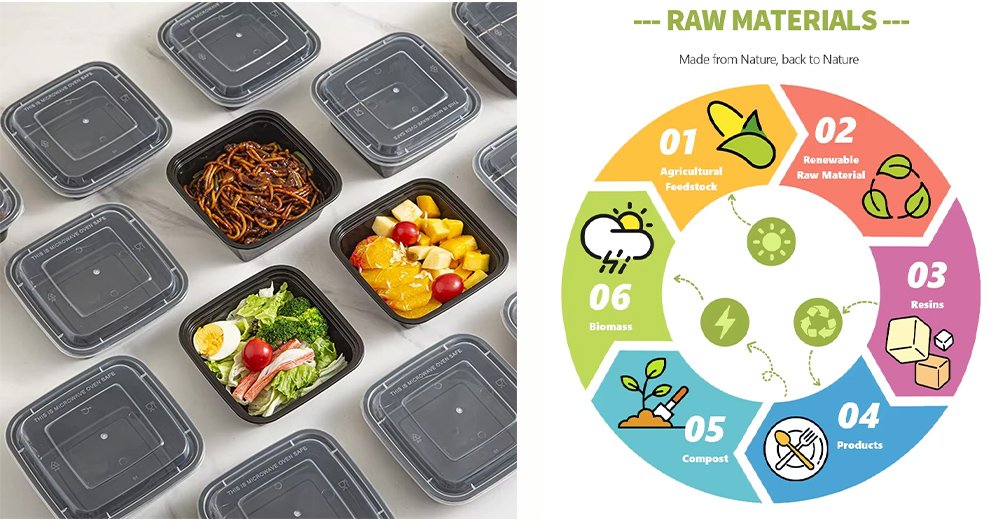
Key Factors in Choosing Long-Term Packaging Partners
Evaluating top disposable food packaging manufacturers requires analyzing four dimensions:
- Scale & Infrastructure: Verify whether factory land and facilities can seamlessly handle large wholesale orders.Guanzhong’s 200,000 m² park (100,000+ m² production facility; 100,000 m² R&D center) ensures physical capacity for large wholesale orders.
- Automated Capacity: Assess whether fully automated equipment matrixes effectively ensure batch stability and cost advantages.Guanzhong operates 50 injection lines (2,000 t/mo), 8 thermoforming lines (800 t/mo), 50 film/25 bag lines (1,500 t/mo), and 5 straw lines (250 t/mo), reaching 90,000 tons annually.
- R&D & Patents: Confirm whether the factory possesses independent R&D capabilities to adapt to frequently updated environmental regulations.Guanzhong holds 10+ patents to continuously upgrade PET, PLA, PP, and bio-based materials for evolving EU regulations.
- Quality Assurance: Review whether professional technical staff maintain extremely low defect rates during high-frequency shipments. Guanzhong 180 professional production personnel oversee strict quality checks to ensure consistent sealing and strength across large batches.
💡 Frequently Asked Questions
Q: Why is automated production capacity crucial for disposable food packaging buyers?
A: Multi-thousand-ton automated capacity lowers unit costs and guarantees consistent batch quality, preventing supply chain disruptions.
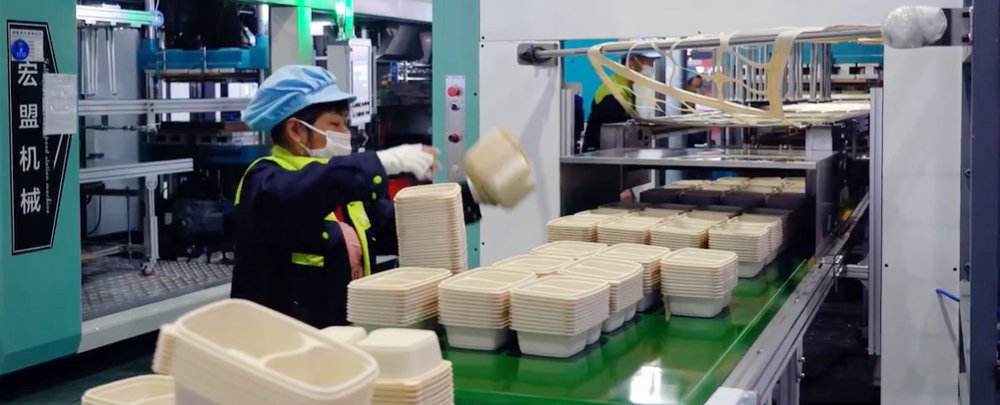
Ready to Elevate Your Packaging Supply Chain? Contact Guanzhong today for expert OEM/ODM solutions, full compliance support, and quick direct factory quotes. Request your free sample now!
| Start Your Customization | WhatsApp: +86 13665956245 | Email: peters@quanzhong-bio.com |
Partnering with high-capacity disposable food packaging manufacturers builds a strong competitive edge. Connecting European market needs with Guanzhong’s 90,000-ton capacity and 200,000 m² park provides competitive pricing and compliant eco-friendly packaging (7–45 day degradation) for sustainable growth.