Table of contents
Guanzhong: Expert Custom Disposable Tableware Solutions
- Company Profile and Experience
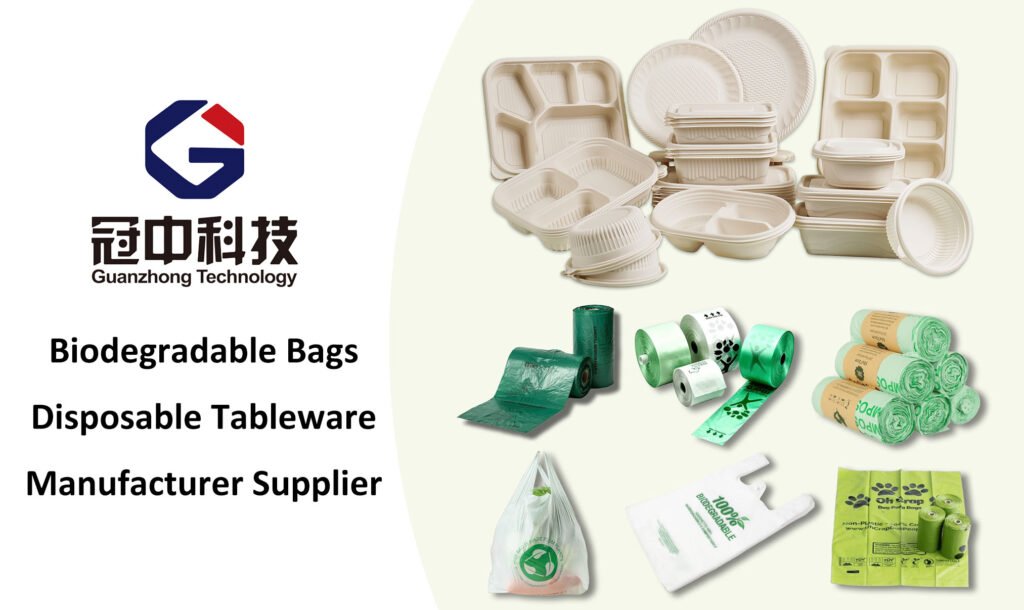
Guanzhong, located in Yongchun County, Quanzhou, Fujian Province, covers nearly 200,000 m², with over 100,000 m² of production space. The company specializes in custom disposable tableware production using PET, PLA, PP, biobased, and biodegradable composite materials (excluding paper and sugarcane). Guanzhong has extensive experience in biobased and biodegradable tableware, focusing on material R&D, production processes, and performance optimization. - Production Capacity and Customization Services
Equipped with advanced injection molding, thermoforming, film blowing, and sheet extrusion lines, the company has an annual output of 90,000 tons, providing full OEM/ODM services. Custom disposable plates and tableware minimum orders are 30,000 and 300,000 pieces, respectively. Mold lead times range from 7–45 days, and production cycles are 7–15 days. Customers can customize size, thickness, logo, and design. - Product Advantages
- Biodegradable Materials: Made from biobased or biodegradable composite materials, non-toxic, tasteless, safe, and compostable under specific conditions.
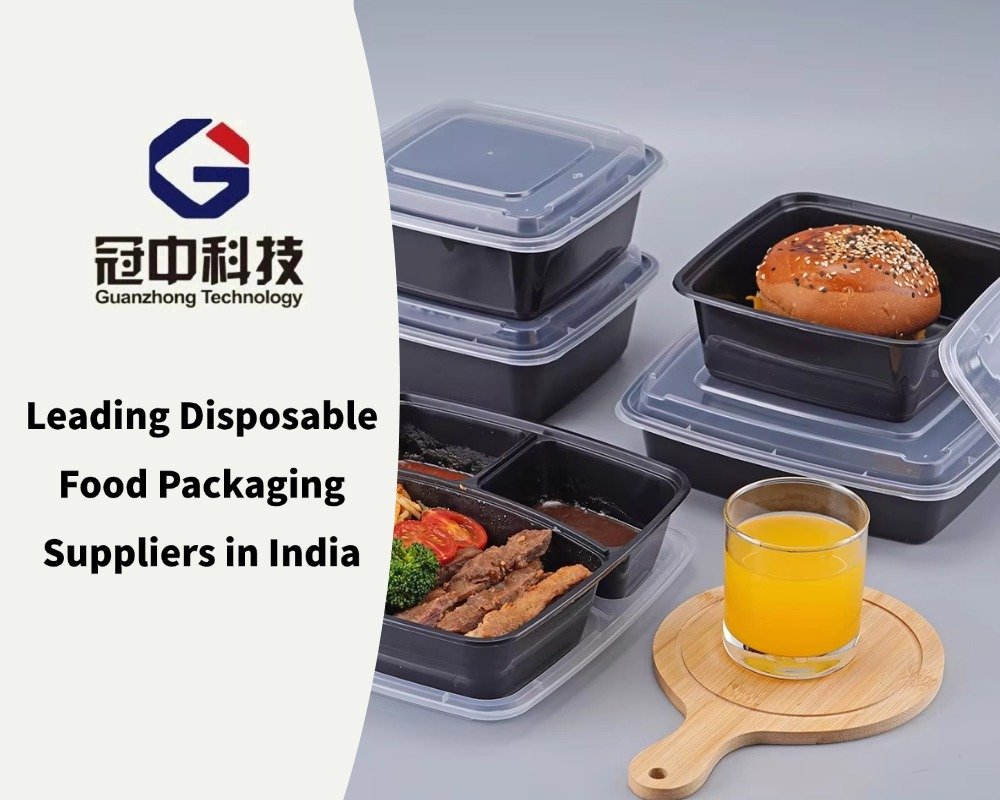
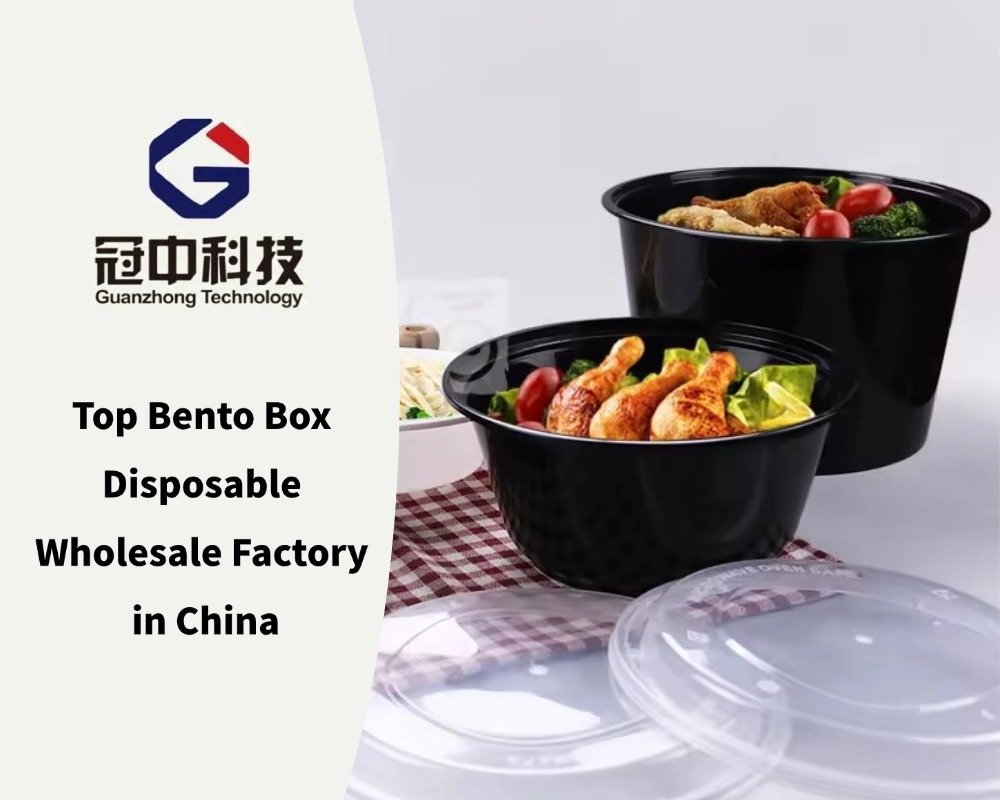
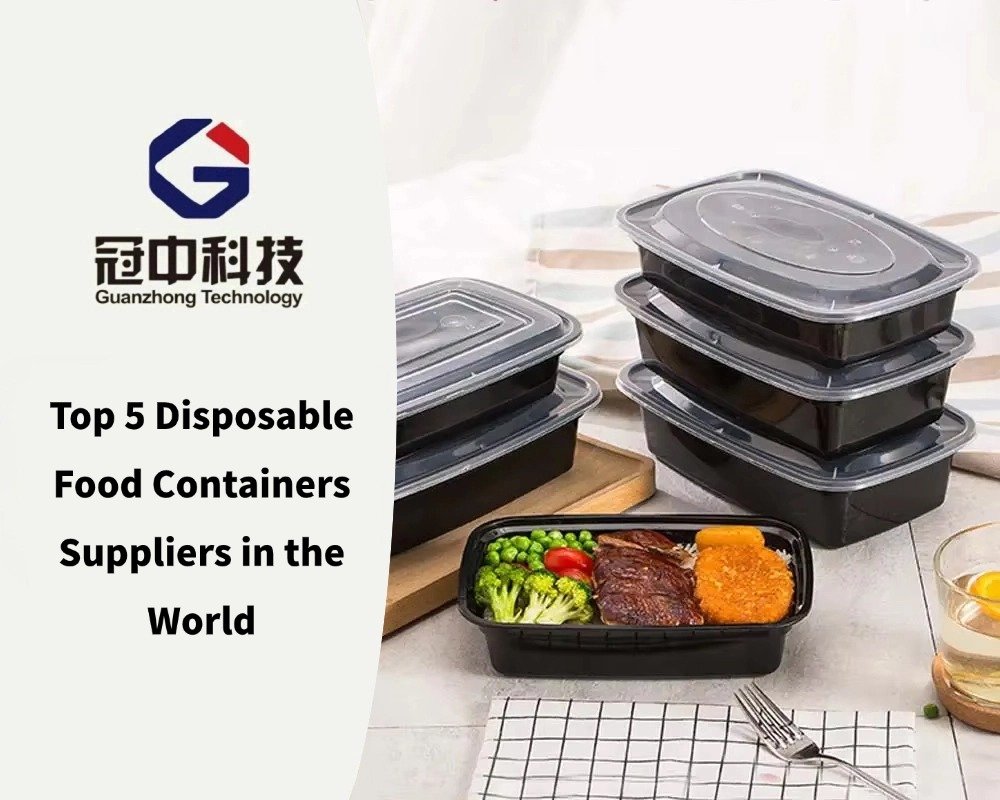
- Exquisite Design: Leak-proof lids, embossed bottoms, durable, comfortable fit, suitable for hot and cold food.
- Versatile Customization: Supports logos, styles, sizes, and thickness customization for cutlery, straws, and plates.
- Certifications and Quality Assurance
Products pass China GB/T standards (GB/T 20197, GB/T 19277.1, GB/T 4806.7) for biodegradability and food contact, as well as US FDA food contact testing. They also have ASTM D6400, DIN EN 13432, BPI certifications, ensuring reliable heat resistance, strength, and environmental performance.
Comparative Analysis of Heat Resistance and Strength
| Material | Heat Resistance | Compression | Bending Strength | Suitable Use | Advantages | Limitations |
|---|---|---|---|---|---|---|
| PET | -40℃–70℃ (short 120℃) | High | High | Cold food, short heating | Transparent, strong | Softens at high heat |
| PLA | -20℃–60℃ | Medium | Medium | Cold & room-temp food | Biodegradable | Low high-temp tolerance |
| PP | -20℃–120℃ (short 130℃) | High | High | Cold/hot food, microwave | High-temp resistant, strong | Less transparent |
| Biobased | -10℃–80℃ (short 100℃) | Medium | Medium | Cold, light heating | Biodegradable | Limited high-temp tolerance |
- Cold takeout meals: PET or PLA
- Microwave heating or hot food: PP
- Environmental focus: PLA or biobased materials
- High strength or stacking requirements: PP or PET
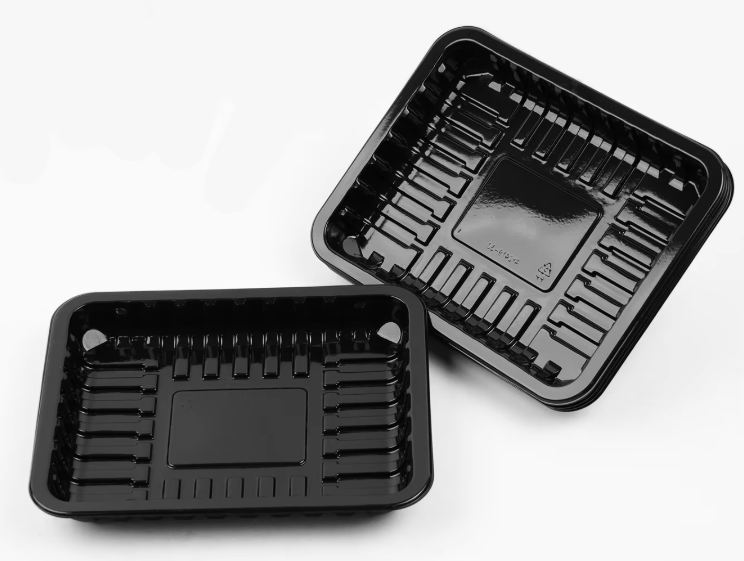
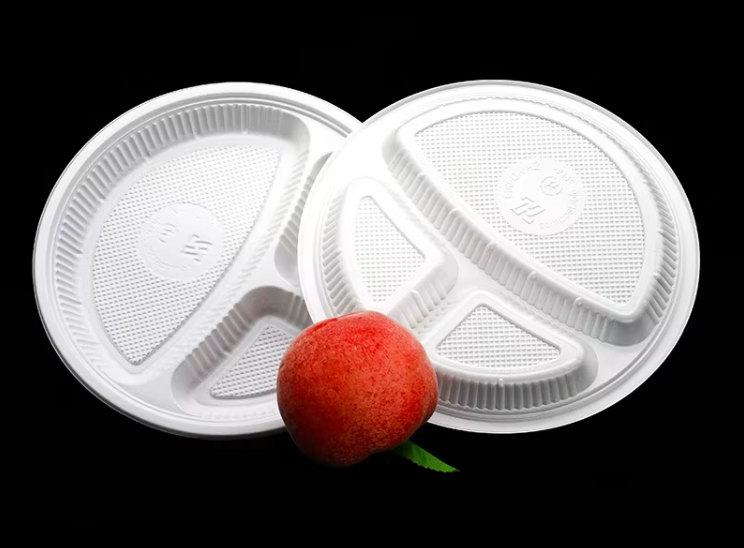
Customized Services Explained – Meeting Individual Needs
Guanzhong offers a complete OEM/ODM service system, covering the entire process from design to mass production.
Customizable Items
- Logo Printing (screen printing or environmentally friendly ink printing)
- Custom Pattern Design
- Color Customization (Pantone color matching supported)
- Size Customization (adjusted according to capacity and food form)
- Thickness Adjustment (optimized according to load-bearing requirements)
Thickness customization is particularly important. Higher load-bearing requirements or high-temperature foods require higher material density. Our professional factory will recommend grammage and structural design based on the actual usage scenario.
MOQ Explanation: The Reasonableness of 1 Ton of Raw Materials
The MOQ for customization is 1 ton of raw materials, which is a common minimum order standard in the industry.
Reasons include:
- Raw material start-up costs
- Mold adjustment costs
- Printing plate production costs
- Color matching costs
For buyers, costs can be optimized through the following methods:
- Consolidating multiple SKUs into the same raw material batch
- Using a unified color scheme to reduce line changeover costs
- Planning quarterly demand in advance to reduce staggered start-ups
This planning capability often determines long-term cooperation costs.
Complete OEM/ODM Process
Provide requirement documents (size, capacity, application)
- Factory provides structural suggestions and quotation
- Sample confirmation (usually 7–15 days)
- Contract signing
- Mass production
- Pre-shipment quality inspection and photo confirmation
Purchasing advice: During the sampling stage, temperature resistance testing and actual food packaging testing should be conducted, not just confirming the appearance.
Sustainability and International Compliance Requirements—Risks Buyers Must Pay Attention To
Many countries worldwide have implemented restrictions on single-use plastic products. For example, the EU Single Use Plastics Directive (SUPD) has explicitly restricted the sale of certain plastic products. The US FDA has clear safety requirements for food contact materials.
Therefore, choosing manufacturers with biodegradability and compliance capabilities is a prerequisite for entering the European and American markets.
Common Certification Types
- EN13432 (EU Compostable Standard)
- BPI (North American Compostable Certification)
- FDA Food Contact Testing
Buyers should request the complete test report, not just the certificate name.

Core Strengths of Disposable Food Container Manufacturers
When choosing a disposable food container manufacturers, the first step is not comparing prices, but verifying their genuine source production capabilities.
Factory Size and Capacity are Fundamental Judgment Criteria
Guanzhong boasts a 100,000-square-meter factory, meaning it has independent production workshops, raw material storage areas, finished product storage areas, and quality inspection areas. A large-scale factory not only reflects capital and equipment investment but also directly relates to the standardization of production processes and the stability of delivery.
An annual production capacity of 90,000 tons is a significant indicator of large-scale continuous production capacity. For chain restaurant brands or large importers, sufficient capacity means that peak season orders will not be delayed and long-term framework agreements can be supported.
180 production employees represent a complete production organization structure, including equipment operation, quality inspection, mold maintenance, and technical support. A stable workforce ensures consistent processes, rather than relying on temporary workers or outsourced production.
Raw Materials and Biodegradability Verification
Common materials for biodegradable food containers include PLA, bio-based modified materials, and sugarcane pulp molding materials. Different materials are suitable for different temperatures and usage scenarios. Specialized manufacturers typically recommend material solutions based on application, rather than simply selling individual products.
Recommended requirements for buyers:
- Provide material testing reports
- Provide food contact safety testing documentation
- Provide biodegradability certification (e.g., EN13432 or BPI)
Verification method: Verify the authenticity and validity of certificate numbers through the certification body’s official website, rather than relying solely on scanned copies.
Quality Control System and Production Process
Established factories should have standardized processes, including:
- Raw material inspection upon arrival
- Sampling inspection during production
- Sampling inspection of finished products
- Batch number traceability
Buyers can inquire about sampling ratios and testing items, such as temperature resistance testing, load-bearing capacity testing, and sealing performance testing.
These quantifiable processes are far more credible than promotional claims.
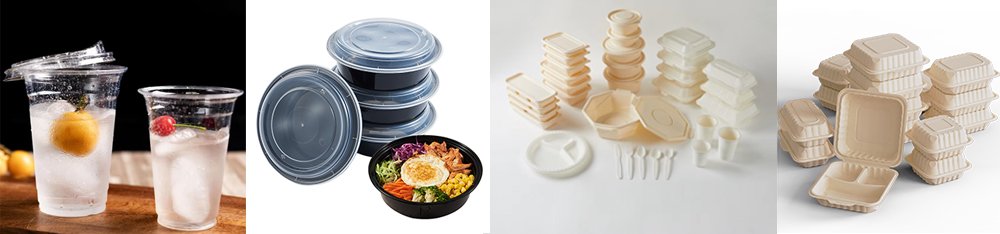
| Start Your Customization | WhatsApp: +86 13665956245 | Email: peters@quanzhong-bio.com |
With a 100,000-square-meter factory, an annual production capacity of 90,000 tons, 180 professional production staff, and a mature OEM/ODM system, Guanzhong disposable food containers suppliers can provide stable, compliant, and sustainable solutions for global buyers.
If you are planning your packaging procurement for the next quarter or year, now is the perfect time to partner with a true manufacturing powerhouse.
Choosing the right manufacturer means lower risk, more stable costs, and a more sustainable brand future.