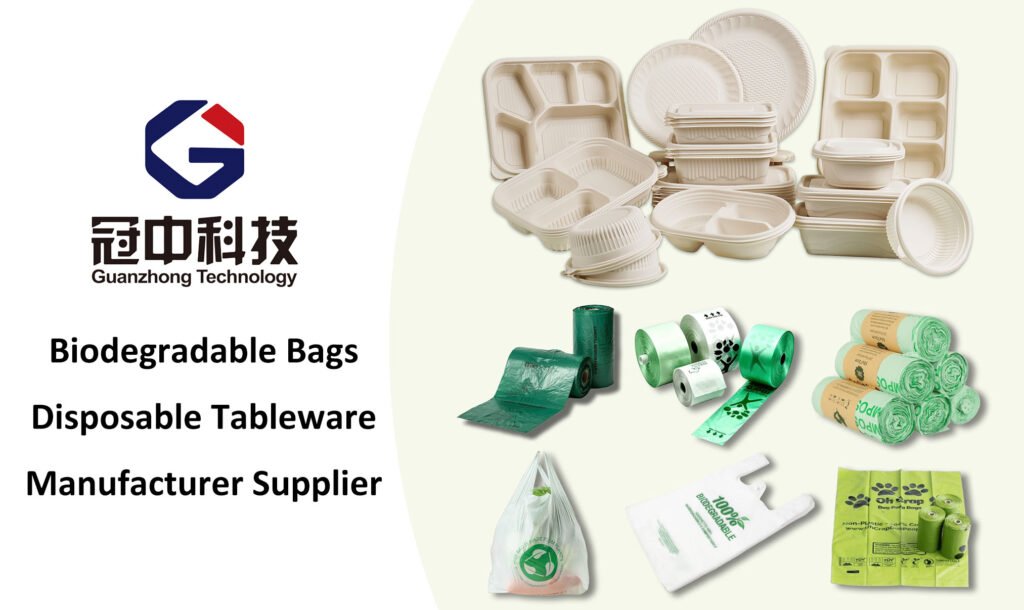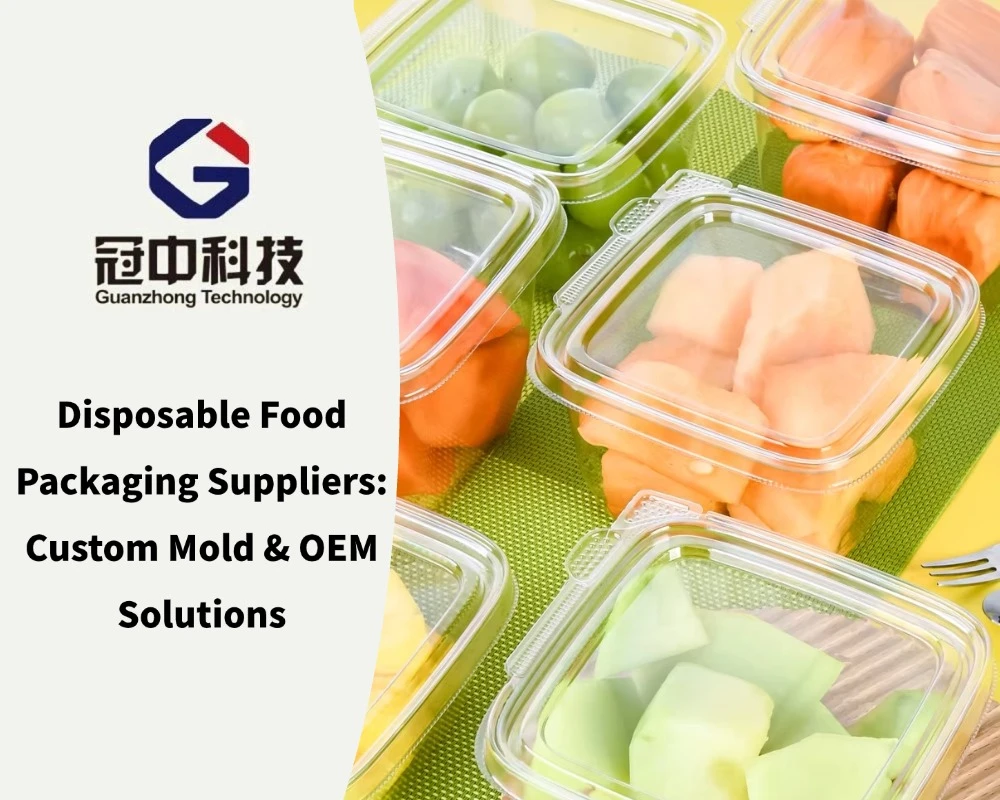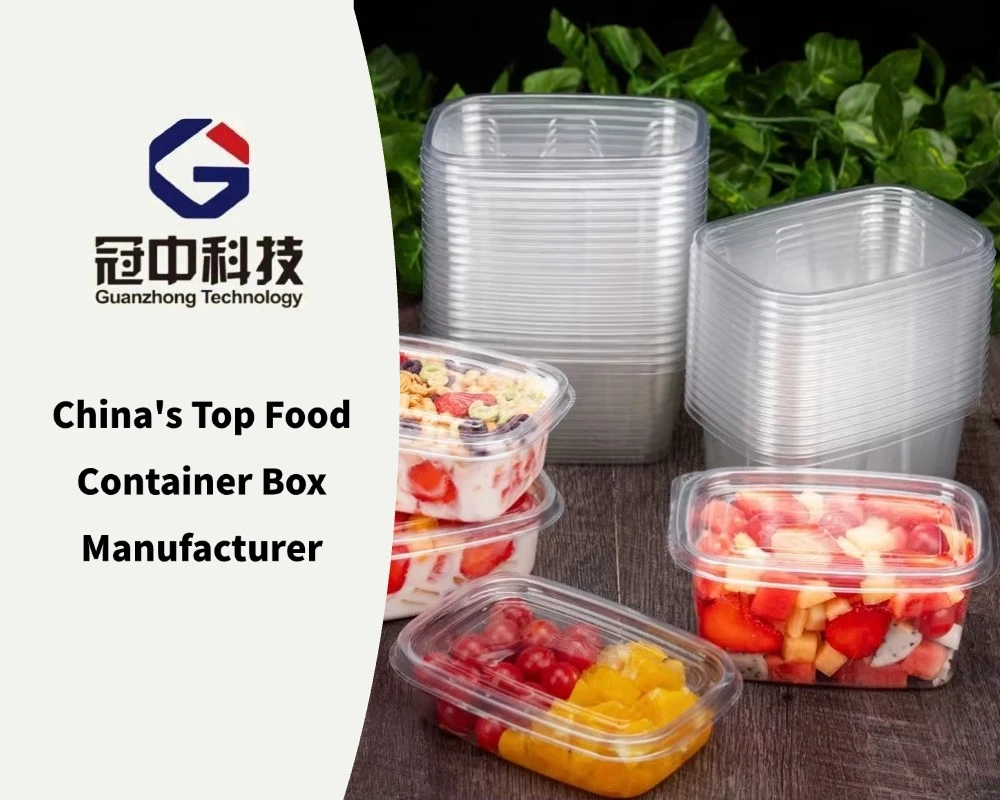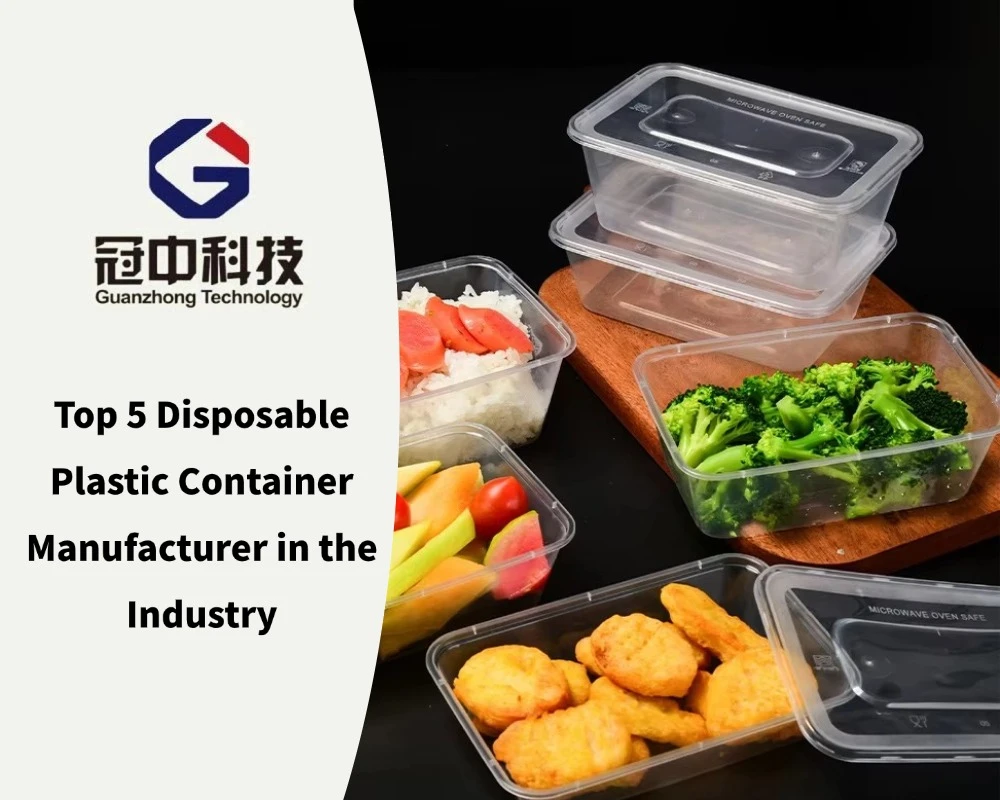
Guanzhong is China’s leading food container box manufacturer, delivering premium, high-capacity packaging solutions that empower global food service brands, sourcing agencies, and distributors. Operating a massive 200,000 square meter industrial park with 50 fully automated injection molding lines, our facility provides top-tier food containers wholesale with an annual output of 90,000 tons. By manufacturing our own bio-based modified masterbatches, we control material purity and eliminate supply chain price spikes. We specialize in rapid 7-to-15-day production cycles for custom PP, PET, and 100% biodegradable PLA food boxes. When your business buys direct from Guanzhong, you secure factory-direct pricing, strict ISO food-safety compliance, and flexible OEM/ODM services that keep your business ahead of international plastic regulations.
Table of contents
- Why Guanzhong is Your Best Food Container Box Manufacturer
- Factory Strength: Large-Scale Production and Wholesale Capacity Analysis
- Custom Solutions: Professional OEM/ODM and Tailored for You
- Material Selection: Matching Your Exact Usage Scenarios
- Manufacturing Technology: Advanced Injection and High-Speed Blister Processing
Why Guanzhong is Your Best Food Container Box Manufacturer
Finding a reliable food container box manufacturer in China involves more than comparing prices. For global food packaging distributors, sourcing agencies, and commercial catering suppliers, long-term success depends on a partner who delivers massive production capacity, strict food-safety compliance, and flexible customization.
Guanzhong stands at the forefront of this industry, providing premium, eco-friendly disposable food containers designed to support your business growth. Our professional competitive advantages and verified factory strengths include:
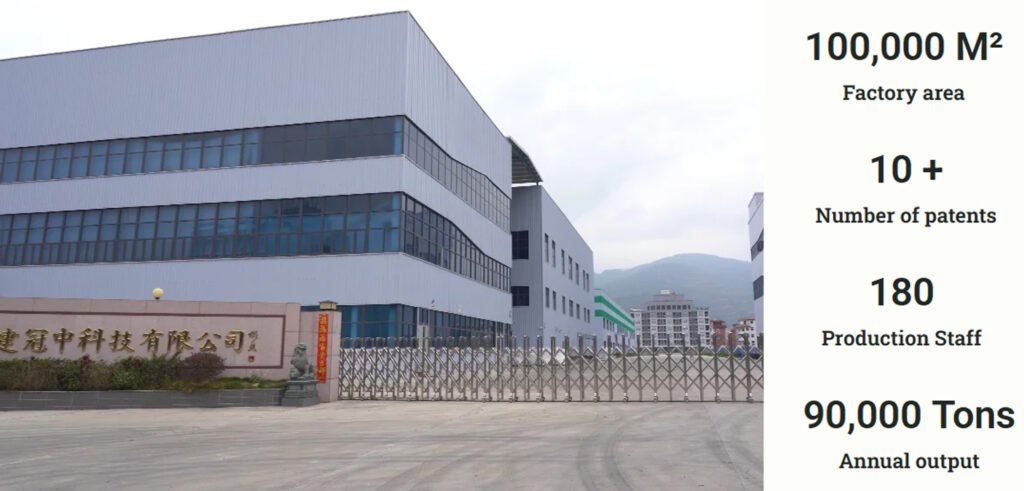
- Massive Infrastructure: We operate a 200,000 square meter industrial park, featuring over 100,000 square meters of advanced manufacturing facilities and a 100,000 square meter standardized plant and R&D center.
- Unmatched Production Output: Supported by 180 skilled production specialists, our state-of-the-art facility achieves an extraordinary annual output of 90,000 tons of premium food-grade packaging.
- Direct Material Control: We control the entire supply chain by managing 3 sheet extrusion lines and 5 bio-based modified masterbatch lines, guaranteeing stable wholesale pricing and material purity.
- Strict Quality Certificates: Our products meet international food-grade standards and hold top certifications including ISO9001, ISO14001, and SGS test reports, ensuring 100% safety for hot and cold foods.
- Global Export and Logistics Experience: We have years of successful partnerships with major global supermarkets, fast-food chains, and wholesale distributors across North America, Europe, and Southeast Asia. We know local customs rules and shipping requirements well.
By eliminating procurement bottlenecks and maintaining absolute control over the raw material modification process, we guarantee stable pricing and uncompromised structural integrity for every bulk order.
💡 Q&A on Core Knowledge
Question: How do I choose a reliable food container box manufacturer in China?
Answer: Look for a manufacturer with a certified large-scale facility (such as Guanzhong’s 200,000㎡ industrial park), automated production lines (like our 50 injection molding lines) to eliminate human error, direct raw material modification capabilities, and clear international eco-compliance certifications.
Factory Strength: Large-Scale Production and Wholesale Capacity Analysis
When sourcing food containers wholesale, production scale is the ultimate safeguard against inventory shortages and fluctuating market demands. Driven by our massive factory footprint, Guanzhong provides global distributors with an unyielding competitive edge by keeping lead times remarkably short.
To give you a precise understanding of how we achieve these massive wholesale numbers, here is a breakdown of our monthly manufacturing capacities across our specialized production sectors:
| Production Line Type | Machinery and Technology Infrastructure | Monthly Manufacturing Capacity |
| Injection Molding Line | 50 units of fully automated heavy-duty injection molding machines | Approx. 2,000 tons |
| Blister/Thermoforming Line | 8 units of high-speed fully automatic blister forming systems | Approx. 800 tons |
| Biodegradable Film Blowing | 50 automated blowing & printing lines + 25 bag-making lines | Approx. 1,500 tons |
| Bio-Based Modified Materials | 3 sheet extrusion lines + 5 bio-based modified masterbatch lines | Approx. 2,000 tons |
By managing the entire manufacturing ecosystem—from the initial modification of bio-based masterbatches to the final high-speed packaging line—we reduce material waste and control costs. This comprehensive integration translates directly into stable wholesale pricing and reliable bulk fulfillment for your brand.
Custom Solutions: Professional OEM/ODM and Tailored for You
In a crowded food service market, generic off-the-shelf packaging fails to build customer loyalty or reflect premium brand values. Guanzhong provides full-tier, professional OEM and ODM services, ensuring that your disposable containers are precisely tailored for you and your specific commercial requirements.
Our advanced production lines are fully optimized to handle diverse customized demands, allowing you to build a unique product line through our comprehensive customization menu:
- Custom Dimensions and Sizes: We manufacture precise structural depths, custom lengths, and exact widths to perfectly fit specific food portions, from shallow salad trays to deep multi-compartment bento boxes.
- Custom Shapes and Structural Types: Our engineering team can create round, rectangular, square, or completely bespoke geometric shapes featuring specialized structural stiffeners and stackable rim designs.
- Custom Branding and Logo Printing: We offer high-fidelity embossing, debossing, and multi-color food-safe ink printing on the container body or lids to maximize your brand visibility.
- Custom Practical Features: We tailor everyday helpful features including easy-open corners, tight snap-on lids to stop oil leaks, stable stacking rims, and clear transparent windows.
To maintain the efficiency and precision of our automated machinery, we have established a clear customization framework: an accessible minimum order quantity (MOQ) of 30,000 pieces per design, a rapid 7 to 15 days bulk production cycle, and comprehensive environmental testing protocols spanning 7 to 45 days for eco-friendly variants.
💡 Q&A on Core Knowledge
Question: What is the actual lead time for custom disposable food containers from China?
Answer: For standard wholesale custom orders at Guanzhong, the core production cycle takes between 7 and 15 days. If your target market requires international environmental sprouting or specialized degradation certification tests, the material validation phase takes between 7 and 45 days.
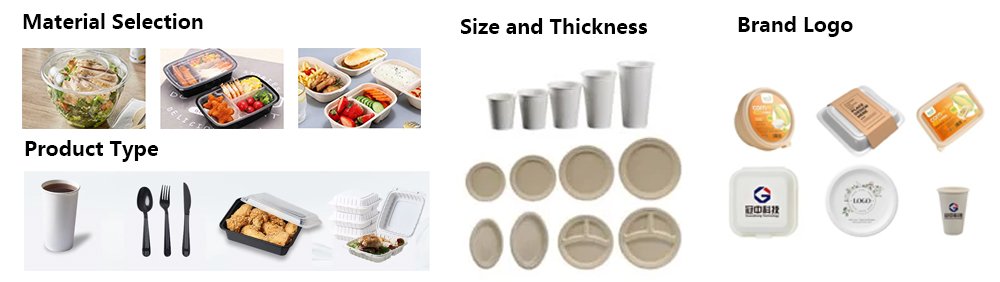
Material Selection: Matching Your Exact Usage Scenarios
Selecting the wrong material for your food packaging can lead to structural collapse, customer complaints, and severe compliance penalties at local customs. At Guanzhong, we utilize our advanced material science expertise to help you match the ideal polymer or bio-composite with your exact usage scenarios.
We maintain strict quality control over our material streams, focusing entirely on high-performance polymers and advanced biodegradable compounds. We purposefully exclude low-grade fillers, paper options, or sugarcane alternatives to guarantee that our containers possess superior structural rigidity and stacking strength.
Depending on your target market and food application, you can select from our three primary material categories:
- PP (Polypropylene) Food Boxes: The industry standard for hot meal delivery and meal prep applications. PP possesses exceptional heat resistance, making it perfectly safe for microwave reheating and dishwasher exposure. It features an excellent moisture barrier, prevents oil leakage, and remains highly cost-effective for everyday high-volume catering wholesale.
- PET (Polyethylene Temporate) Containers: The premier choice for cold-chain food distribution, fresh salads, cut fruits, and high-end deli displays. PET delivers crystal-clear transparency, maximizing the visual appeal of the food inside. It offers exceptional impact resistance and maintains structural stiffness when stacked in commercial refrigeration units.
- PLA (Polylactic Acid) & Bio-Based Modified Composites: Designed specifically for eco-conscious markets facing strict plastics legislation. These 100% biodegradable materials provide a pristine, premium look and feel. They perform beautifully in ambient and cold food settings while allowing your brand to remain fully compliant with global environmental regulations.
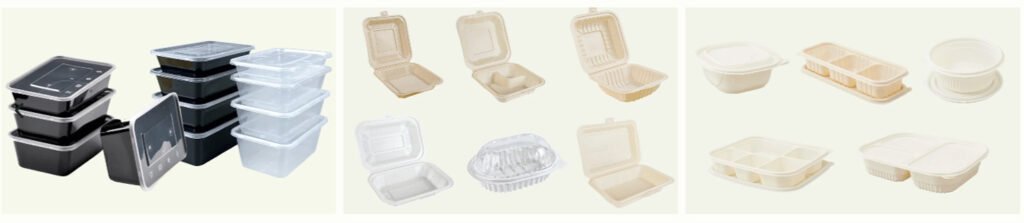
Manufacturing Technology: Advanced Injection and High-Speed Blister Processing
The structural integrity of a disposable food container—its lid snap-fit reliability, its resistance to side-wall crushing, and its wall-thickness uniformity—is determined entirely by factory technology. Guanzhong utilizes advanced injection molding and high-speed blister thermoforming technologies to eliminate the defects common to low-tech manufacturing operations.
Our manufacturing excellence is built upon precise processing methodologies across our core industrial lines:
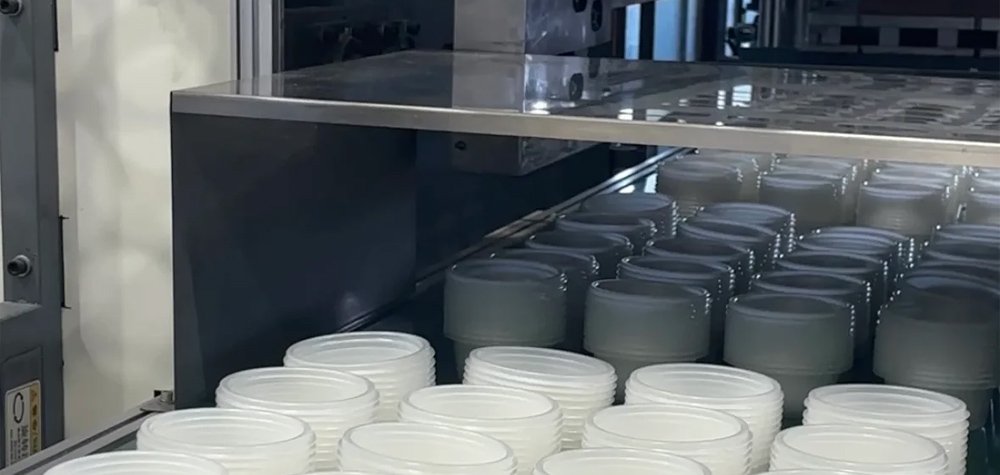
- Automated High-Pressure Injection: Our 50 fully automatic injection molding lines utilize heavy-duty hydraulic clamping forces and custom-engineered steel molds. This technique creates complex, rigid container structures with tight-tolerance interlocking lid mechanisms that prevent liquids from leaking during transit.
- High-Speed Continuous Thermoforming: For high-volume, lightweight food packaging lines, our 8 high-speed blister forming systems deliver rapid, continuous output. This process pulls heated polymer or bio-based sheets over precision molds with exact vacuum pressure, creating uniform wall thickness even at the deepest corners of the container tray.
- Precision Mold Temperature Control: We use advanced cooling and heating systems inside our molds. By keeping temperatures completely stable during production, we prevent plastic parts from warping, shrinking, or losing their clean shape, ensuring every single lid fits tightly.
💡 Q&A on Core Knowledge
Question: How does automated factory machinery improve the overall quality of wholesale food containers?
Answer: Fully automated injection and blister molding lines remove human variance from the cycle. This ensures that every single batch of food containers exhibits identical dimensional precision, flawless lid-sealing performance, uniform side-wall thickness, and zero sharp edge defects across an order of millions.
| Start Your Customization | WhatsApp: +86 13665956245 | Email: peters@quanzhong-bio.com |
Securing a stable, high-capacity supply chain is the single most effective way to grow your wholesale distribution business. Guanzhong combines the raw power of a 200,000㎡ industrial footprint with the refined precision of 50 automated injection lines, flexible OEM/ODM customization, and cutting-edge eco-friendly material options. Don’t let production delays or quality inconsistencies slow down your business expansion. Contact our team of enterprise specialists today to discuss your technical specifications, request a competitive quote, or arrange for a batch of free samples delivered straight to your office.