Key Takeaways
- First choice for hot oily food is PP material: Polypropylene (PP) features excellent high temperature resistance (100℃-120℃) and a non-polar molecular structure, offering the best anti-swelling and leakproof performance in hot oil filling and microwave heating scenarios.
- First choice for cold storage is PET material: Polyethylene terephthalate (PET) has high crystallinity and extremely low gas/oil transmission rates, providing excellent leakproof and high-transparency display effects in room temperature and low-temperature cold storage environments.
- First choice for eco-friendly degradation is modified PLA: Pure polylactic acid (PLA) has lower temperature resistance and toughness, and needs to be enhanced in molecular chain arrangement through bio-based modified masterbatches and toughening technology, so as to achieve efficient leak resistance while maintaining eco-friendly degradation characteristics.
- Guanzhong One-Stop Empowerment: Relying on a 200,000-square-meter industrial park, 90,000 tons of annual output, and 10+ patent technologies, Guanzhong provides customized oil and leak-resistant solutions ranging from masterbatch R&D to high-precision injection/blister molding.
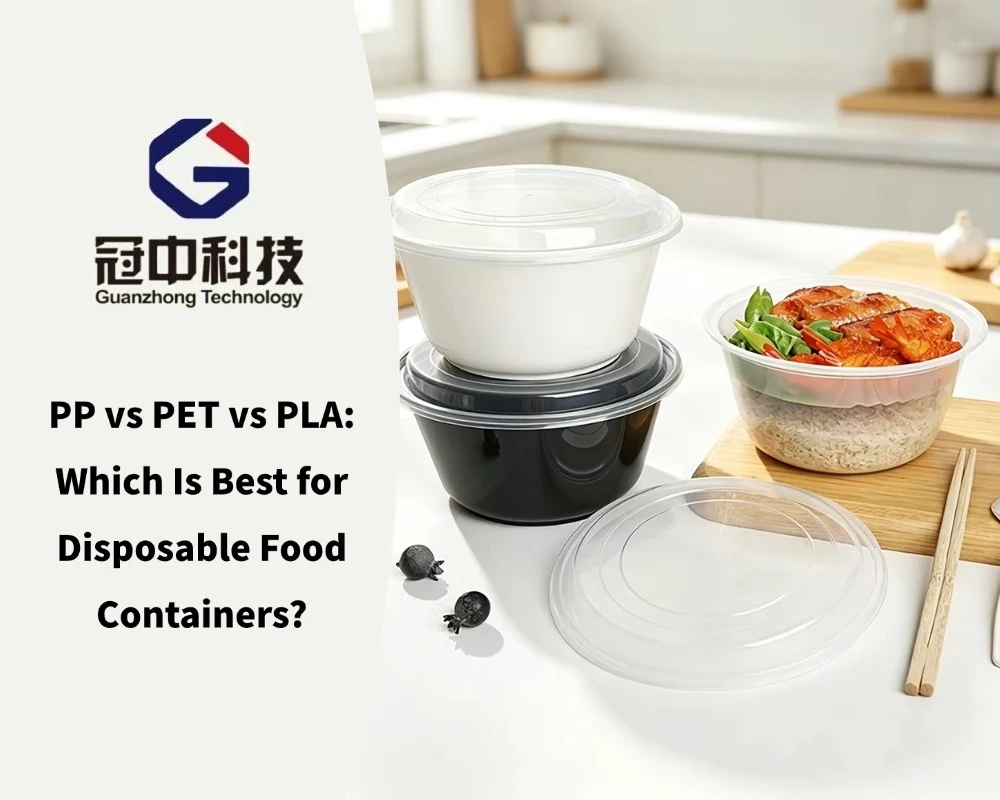
For catering brands, takeout chain enterprises, and food packaging containers wholesale international buyers, the leakproof performance of food containers when holding high-fat, high-temperature food directly determines the end consumer’s dining experience and brand reputation. In current food containers wholesale market offerings, PP has the highest oil and leak resistance index in high-temperature oil environments of 100℃-120℃, showing excellent anti-swelling and thermal stability; PET has the best oil and gas barrier properties under room temperature and cold storage conditions; while PLA, as a biodegradable material, requires bio-based modification and composite toughening technology to enhance its molecular chain density, thereby achieving strict oil leak resistance standards. As a professional manufacturing factory, Guanzhong is committed to providing reliable leakproof disposable tableware solutions for global buyers.
Material Molecular Structure Determines Barrier Performance
High-molecular materials’ ability to resist oil and leaks fundamentally depends on their chemical molecular structure, crystallinity, surface free energy, and resistance to swelling by oil components. When evaluating food packaging containers wholesale material options, oils are mainly composed of non-polar long-chain fatty acid triglycerides. According to the physical and chemical principle of “like dissolves like”, if the molecular chain segments of a polymer material have large intervals or a surface tension similar to oil, oil molecules will gradually penetrate and diffuse through the container wall.
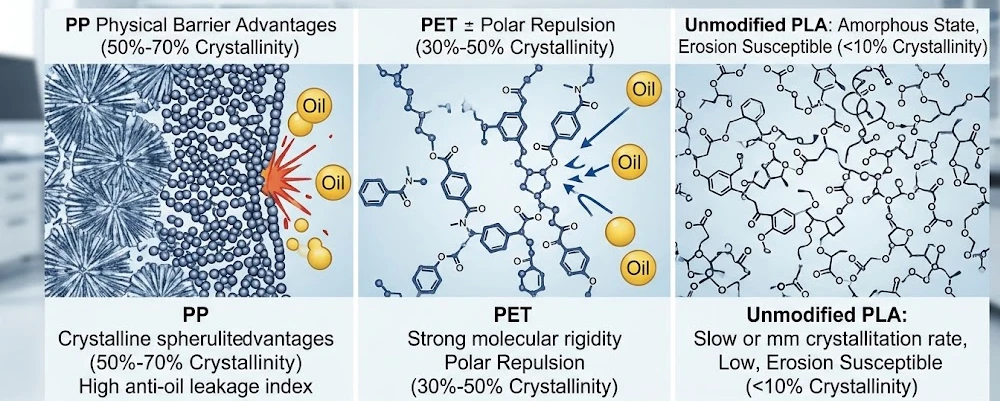
- PP physical barrier advantages: PP is a semi-crystalline non-polar thermoplastic plastic with a crystallinity usually between 50% and 70%. The closely packed molecular chains in the crystalline region form a natural physical barrier. When holding 100℃-120℃ hot oil or undergoing microwave heating, the molecular chains are not prone to relaxation, maintaining an extremely high anti-oil leakage index.
- PET polar repulsion: PET possesses extremely high macromolecular chain rigidity and a crystallinity of up to 30%-50%. The presence of polar ester groups gives it a natural physical repulsion to non-polar oils. Under room temperature (25℃) or cold storage (4℃) conditions, its oil transmission rate is extremely low, but it is prone to thermal deformation when the temperature exceeds 65℃-70℃.
- PLA modification and toughening demand: Pure PLA has a slow crystallization rate, crystallinity usually below 10%, and is easily eroded by hot oil and water vapor due to numerous ester bonds in the amorphous state. Under unmodified conditions, it easily softens and penetrates oil when encountering hot oil above 50℃, and must be regulated by bio-based modified masterbatches and nucleating agents to improve crystallinity and mechanical strength.
| Physical & Chemical Performance & Barrier Indicators | PP | PET | PLA |
| Recommended Applicable Temperature Range | -20℃ to 120℃ | -40℃ to 65℃ | -10℃ to 75℃ (after modification) |
| Room Temperature Oil Penetration Index | 4.5 / 5.0 | 4.9 / 5.0 | 4.2 / 5.0 |
| High Temperature (>80℃) Oil Resistance Index | 4.9 / 5.0 | 1.2 / 5.0 (failure) | 3.8 / 5.0 |
| Typical Material Crystallinity | 50% – 70% | 30% – 50% | 10% – 45% (depending on modification degree) |
| Microwave Heating Performance | Excellent (Microwave safe) | Not microwave safe | Limited support (requires heat-resistant modification) |
| Main Application Scenarios | Hot soup, takeout hot food, microwave meal boxes | Cold salads, fruit boxes, cold drink cups | Eco-friendly takeaway boxes, export degradable tableware |
Through comprehensive comparison of the physical and chemical properties of the three, it can be seen that the micro-crystalline stacking morphology and molecular polarity of the material jointly determine the physical upper limit of leak resistance. When selecting products, buyers need to closely combine the actual filling temperature and oil type of the end-use scenario, so as to match the best barrier material.
💡 Frequently Asked Questions
Q: When holding high-fat hot food (such as noodle soup, fried chicken), which type of wholesale container has the best barrier effect?
A: When holding high-fat hot food, PP (polypropylene) material has the best barrier effect. PP features a temperature resistance limit of up to 120℃ and a high crystallinity physical structure, which will not swell or soften in high-temperature oil environments, effectively blocking oil penetration and supporting microwave heating.
High-Temperature Oil Leakage Mechanism and Testing Standards
Food container oil leakage mainly occurs through two pathways: first, Bulk Permeation, where oil molecules dissolve and diffuse through the container wall under thermal stress; second, Capillary Leakage, where oil overflows along micro-scale gaps at the container closure joints under capillary effects.
- International barrier testing standards: The core standard for evaluating the oil resistance performance of food containers wholesale products is ASTM F119 (Standard Test Method for Grease and Fat Penetration) and ISO 16532 oil resistance testing, where test oils are heated to 60℃, 85℃, or 100℃, recording the time it takes for oil molecules to penetrate the test sample.
- Fat-Induced Swelling mechanism: Data shows that when the hot oil temperature rises from 25℃ to 85℃, the oil diffusion coefficient of most amorphous polymers increases exponentially. Hot oil triggers local relaxation of molecular chain segments, a phenomenon known as “Fat-Induced Swelling”. If the molecular chain spacing of the container material increases, oil molecules will accelerate migration along the gaps of molecular chain segments.
- Synergistic erosion of free fatty acids: Repeatedly used high-temperature frying oils contain higher concentrations of free fatty acids, whose penetration power is significantly stronger than ordinary vegetable oils. Inferior or unmodified containers under such oil erosion are prone to wall rigidity reduction and closure cracking.
Understanding the penetration mechanism of oil under different temperatures and acid values is the premise for precisely controlling product quality. In actual B2B procurement processes, buyers must select professional containers with standard barrier test certification based on the extreme environment of specific catering scenarios.
💡 Frequently Asked Questions
Q: Why are pure PLA biodegradable containers prone to leakage when holding heavy-fat hot food?
A: Pure PLA has a slow crystallization rate, low crystallinity, and a glass transition temperature of only about 55℃-60℃. When contacting heavy-fat hot food, heat causes rapid relaxation of molecular chain segments, triggering material softening and swelling, allowing oil molecules to quickly penetrate along the polymer gaps.
Physical Structural Design as a Supplement to Leak Prevention
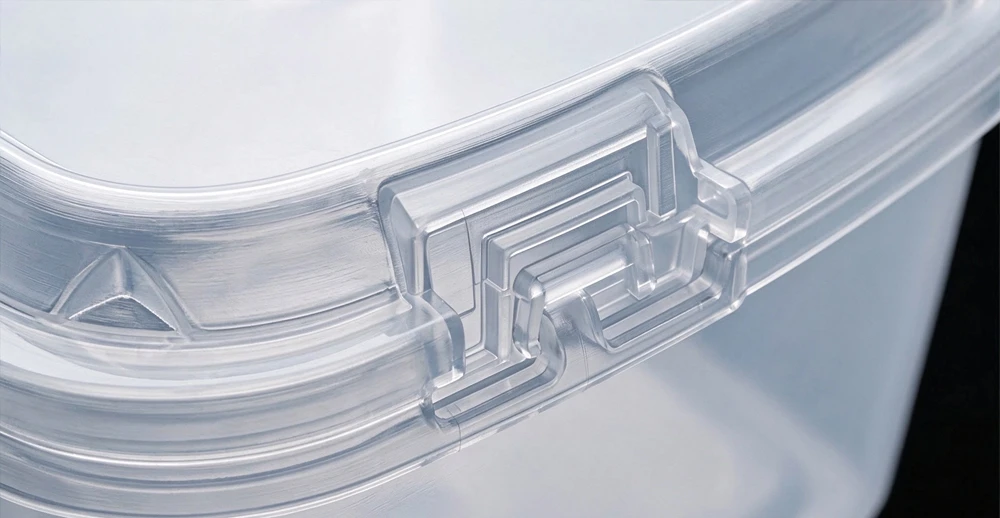
High-quality leakproof food containers rely not only on the physical and chemical barriers of the material itself, but also on precise industrial physical structural design. Even if PP material with excellent oil resistance is used, if the container wall thickness is uneven or mold snap-fit precision is insufficient, leakage will still occur during transportation and squeezing.
- Wall thickness uniformity and runner control: During the molding process, if the mold runner design is unreasonable, the corners and bottom edges of the container are prone to wall thickness thinning, causing wall thickness tolerances to exceed the ±0.02mm range, which easily forms local weak penetration points when impacted by hot oil in food packaging containers wholesale applications.
- Double Lock System: Form two continuous physical mechanical interceptions through snaps and chamfers, effectively extending and blocking the flow path of oil overflow.
- Anti-spill return channel and reinforcing ribs: Design inclined return guide rails at the edge of the container so that splashing oil flows back by gravity, while combining geometric reinforcing ribs on the side walls to enhance the compressive stiffness of the container during holding and stacking, preventing deformation and cracking under pressure.
Reasonable structural design can make up for the mechanical shortcomings of materials in extreme physical environments. By integrating precision molding processes with mechanical anti-seepage structures, the anti-overflow and leakproof stability of containers during complex takeout delivery can be significantly improved.
💡 Frequently Asked Questions
Q: When takeout containers experience edge seam oil leakage, is it mainly determined by the material or mold precision?
A: Edge seam oil leakage is mainly determined by mold precision and snap-fit structural design. If the box lid snap-fit tolerance is too large or lacks an anti-overflow lock, even if high-quality oil-resistant material is used, liquid will overflow from the gap under capillary effects and external pressure.
Guide for Buyers on Selecting Leak-Proof Containers by Scenario
In the actual procurement decisions of food packaging containers wholesale, there is no absolute “best” material, only selection options that “best match the application scenario”. Professional buyers need to comprehensively consider food temperature, fat content, storage time, heating requirements, and regional environmental regulations to establish a scientific selection decision tree.
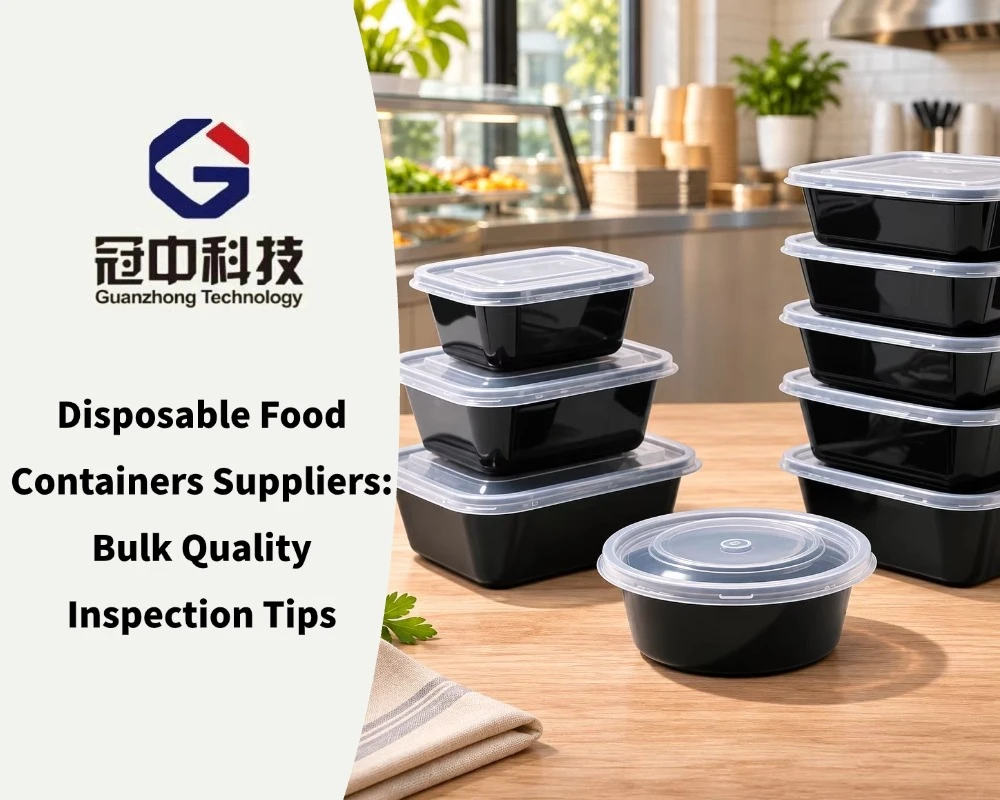
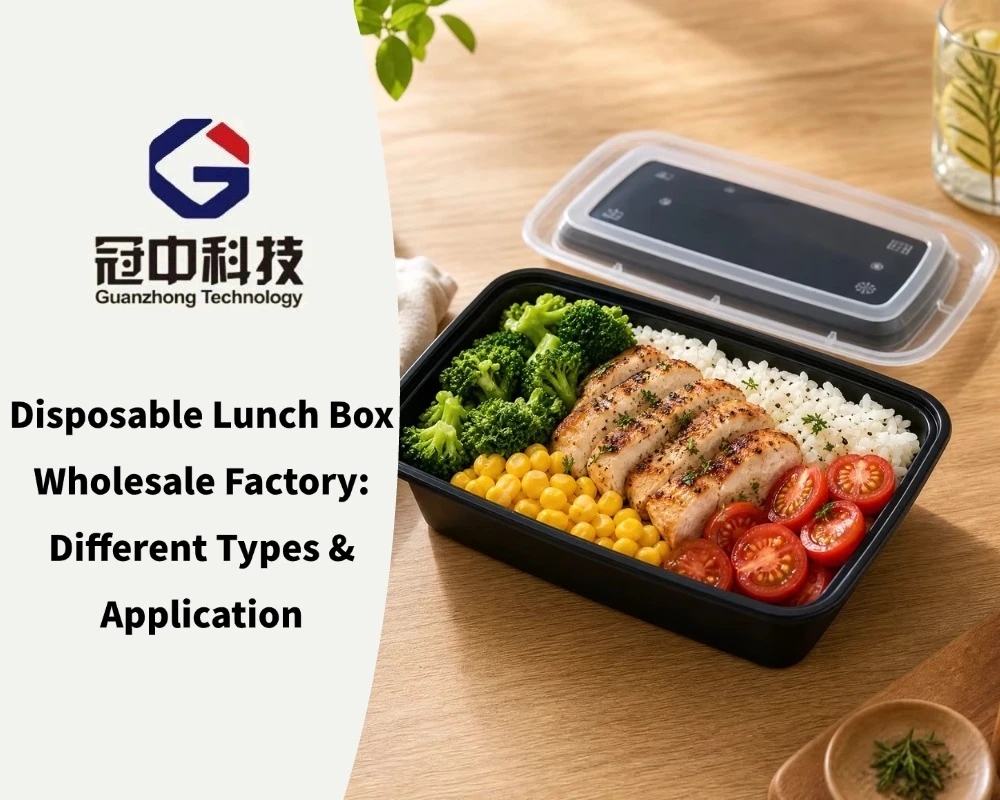
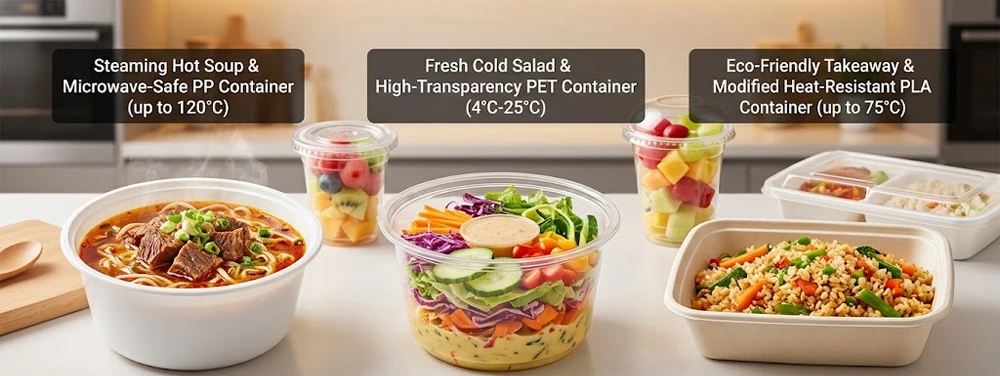
- Chinese catering, heavy-oil stir-fries, and noodle soup scenarios: PP material containers are the absolute primary choice. Since Chinese dishes often have a cooking temperature higher than 90℃ and contain more animal or vegetable oil, the high temperature resistance and oil-swelling resistance of PP material ensure that the container does not soften, leak, or deform during transportation and microwave secondary heating. It is recommended to choose injection-molded meal boxes with a bottom thickness of 0.6mm-0.8mm or above and double lock designs.
- Cold-fresh salads, light meals, cut fruits, sushi, and cold drink scenarios: PET material containers have the best comprehensive benefits. PET has a glass-like high transparency, which can perfectly present the fresh color of ingredients, and its extremely low oil and oxygen transmission rate can effectively delay food oxidation and prevent high-fat salad dressings (such as Thousand Island dressing, olive oil) from penetrating the container wall.
- Environmental compliance and export procurement scenarios: Bio-based and modified PLA containers are the ideal choice. With the advancement of the European SUP Directive (Single-Use Plastics Directive) and global plastic restriction policies, traditional plastics are restricted in some markets. Buyers should choose barrier-modified PLA or biodegradable composite material containers, which can not only meet the industrial composting germination or degradation standards of 7-45 days, but also achieve excellent physical oil-proof performance through modification and toughening technology.
Formulating procurement strategies based on the differentiated needs of catering scenarios can achieve the best balance between ensuring use performance and controlling procurement costs. Buyers can also quickly verify the leak-proof quality of selected products through simple on-site testing.
💡 Frequently Asked Questions
Q: How to quickly judge whether the purchased food containers are oil-resistant and leak-proof through on-site experiments?
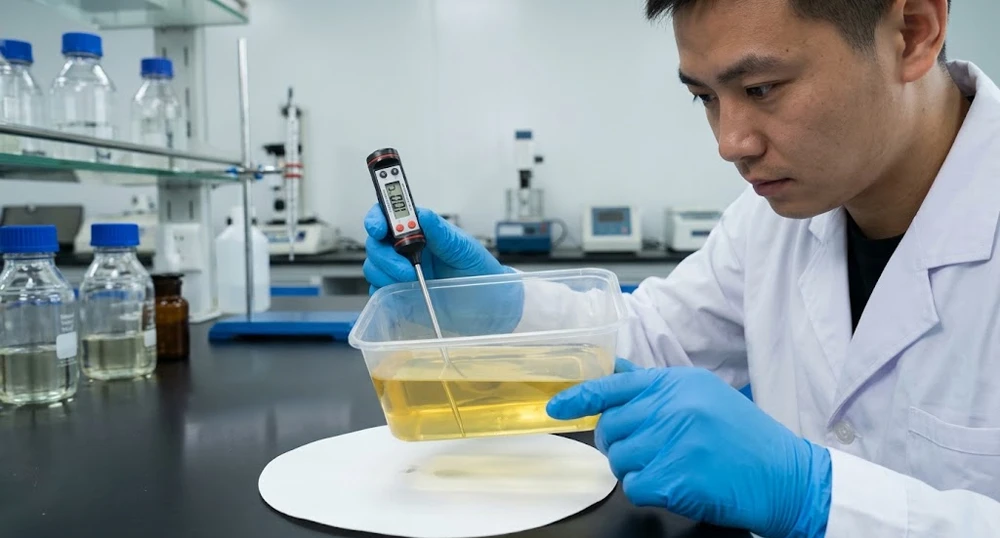
A: The “high-temperature hot oil static method” can be used: pour edible vegetable oil at 85℃ into the container to 2/3 of the rated capacity, close the lid tightly and place white filter paper at the bottom; then place a 1kg weight on top of the container and let it stand for 24 hours, observe whether the filter paper has oil penetration and whether there is overflow at the box edges.
Guanzhong Modification Technology and Full-Line Custom Solutions
In response to the aforementioned material barrier bottlenecks, high-temperature leakage mechanisms, and strict structural anti-seepage needs, Guanzhong provides global food containers wholesale buyers with food container solutions that comprehensively break through traditional limitations, relying on profound manufacturing foundations and technological R&D strength.
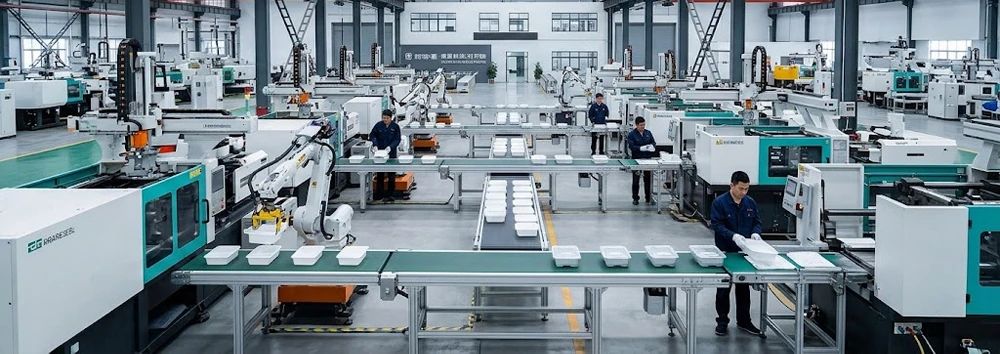
- Massive industrial park and standardized production scale: Guanzhong owns nearly 200,000 square meters of industrial park, including 100,000+ square meters of production facilities and 100,000 square meters of advanced R&D centers and standardized factories, supporting an annual output of up to 90,000 tons with 180 professional production personnel, ensuring a high degree of batch quality consistency.
- Breakthrough modification technology and patent R&D: Relying on its R&D center and 10+ patent technologies, it owns 3 biodegradable sheet extrusion lines and 5 bio-based modified masterbatch line, overcoming the industry problems of PLA material’s temperature difference resistance and easy leakage.
- Fully automated high-precision production lines: Equipped with 50 fully automatic injection molding lines, 8 fully automatic blister forming lines, 50 biodegradable film blown film printing production lines / 25 bag-making production lines, and 5 straw extrusion production lines, ensuring precise tolerances and zero-overflow snap-fits.
- Flexible B2B customization and fast-response supply chain: Using high-quality PET, PLA, PP, bio-based and biodegradable composite materials (excluding paper and sugarcane), supporting 7-15 days fast production, 30,000 pieces low minimum order quantity (MOQ), and OEM/ODM customization such as logo printing, exclusive structural mold development, and anti-seepage sealing design.
Through integrated masterbatch modification R&D and a high-automation production matrix, Guanzhong has thoroughly solved the pain point of insufficient oil and leak resistance in traditional eco-friendly tableware. Whether it is standard wholesale or deep personalized customization, Guanzhong can provide solid supply chain guarantees for global buyers.
💡 Frequently Asked Questions
Q: Can Guanzhong provide oil-resistant and leak-proof fully biodegradable containers that meet environmental protection requirements for custom buyers?
A: Yes. Relying on 5 bio-based modified masterbatch lines and patent modification technology, Guanzhong can produce PLA and biodegradable composite containers that meet international degradation standards (germination time 7-45 days) while possessing excellent oil-resistant and leak-proof performance, and supports OEM/ODM customization starting from MOQ 30,000 pieces.
Contact the Guanzhong team to get free leakproof container samples and custom quotes!
| Start Your Customization | WhatsApp: +86 13665956245 | Email: peters@quanzhong-bio.com |
When choosing disposable tableware, deeply understanding the molecular barrier mechanisms and structural anti-seepage principles of PP, PET, and PLA is the key to ensuring food safety and takeout quality.
As a manufacturing factory specializing in food packaging containers wholesale and food containers wholesale solutions with both R&D strength and scale production capacity, Guanzhong is always committed to protecting the global environment and supporting the long-term development of your business through eco-friendly material innovation and high-precision manufacturing. Whether you are looking for high oil-resistant PP hot food boxes, high-transparency PET cold-fresh containers, or custom modified PLA degradable tableware, Guanzhong is your trusted global partner.