Key Takeaways
- Structural Selection Logic: Different compartment layouts (single, double, triple), lid configurations (hinged vs. separate), and geometries (round, square, rectangular) dictate leak-proof performance, stacking stability, and delivery efficiency.
- Manufacturing Scale: Guangzhong operates a 200,000-square-meter industrial park with 100,000 square meters of advanced production facilities, delivering an annual capacity of 90,000 tons across 50 injection molding and 8 blister forming lines.
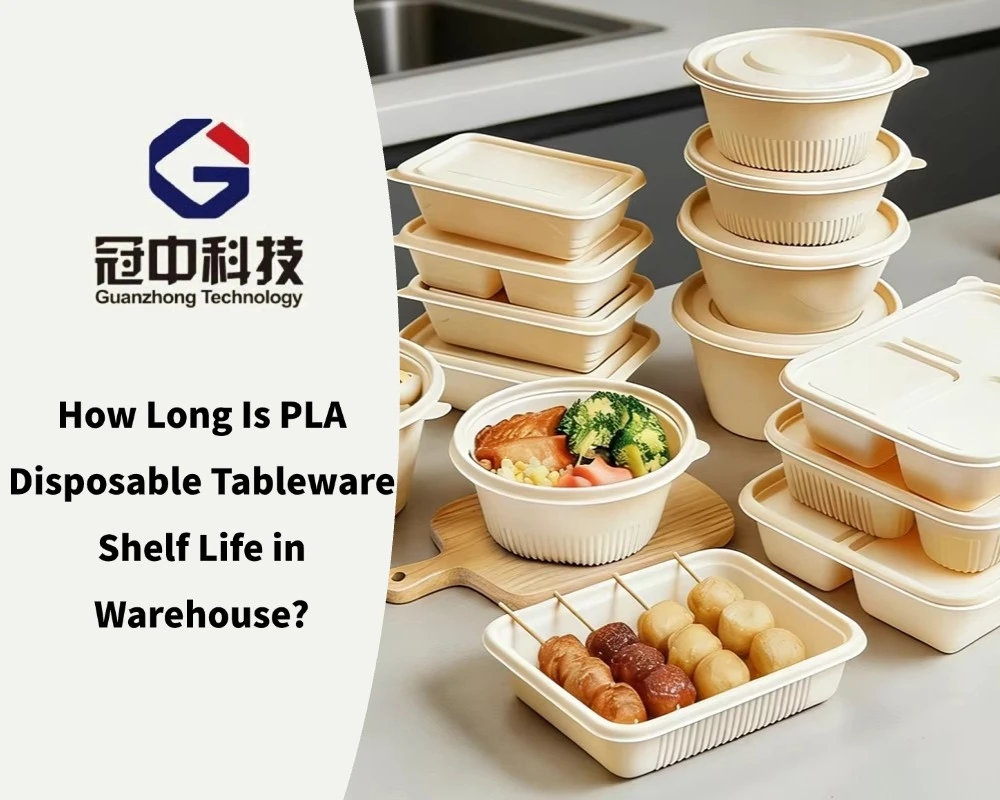
- Material Versatility: Utilizing premium PET, PLA, PP, bio-based, and biodegradable materials (excluding paper and sugarcane) with a 7 to 45-day degradation window to meet strict global environmental compliance.
- Customization and Lead Time: Flexible OEM/ODM capabilities with a minimum order quantity (MOQ) of 30,000 pieces for custom tableware, supported by a rapid 7 to 15-day production cycle.
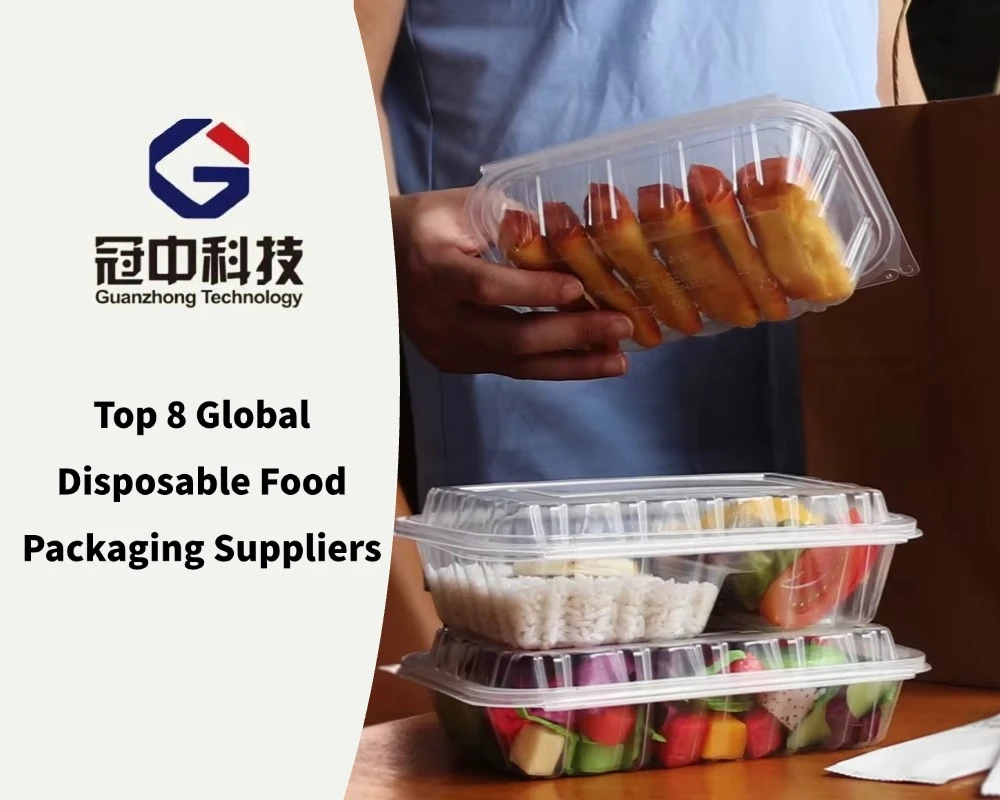
Sourcing reliable disposable lunch box wholesale solutions requires a deep understanding of structural engineering, material compliance, and logistical efficiency. For B2B procurement managers, restaurant chains, and packaging distributors, selecting the right food container directly impacts food safety, delivery integrity, and brand reputation. When navigating the global market for disposable food containers wholesale, buyers must evaluate how box geometry, compartment divisions, and lid mechanisms perform under real-world transport conditions.
Guangzhong has established itself as an industry-leading manufacturer, leveraging a massive 200,000-square-meter industrial park and an annual production capacity of 90,000 tons to deliver superior packaging solutions. From high-grade PP injection containers to eco-friendly PLA bioplastics, understanding the distinct types of disposable lunch boxes ensures that your supply chain meets both operational demands and environmental standards.
Selection Guide for Single-Cell and Multi-Cell Lunch Boxes
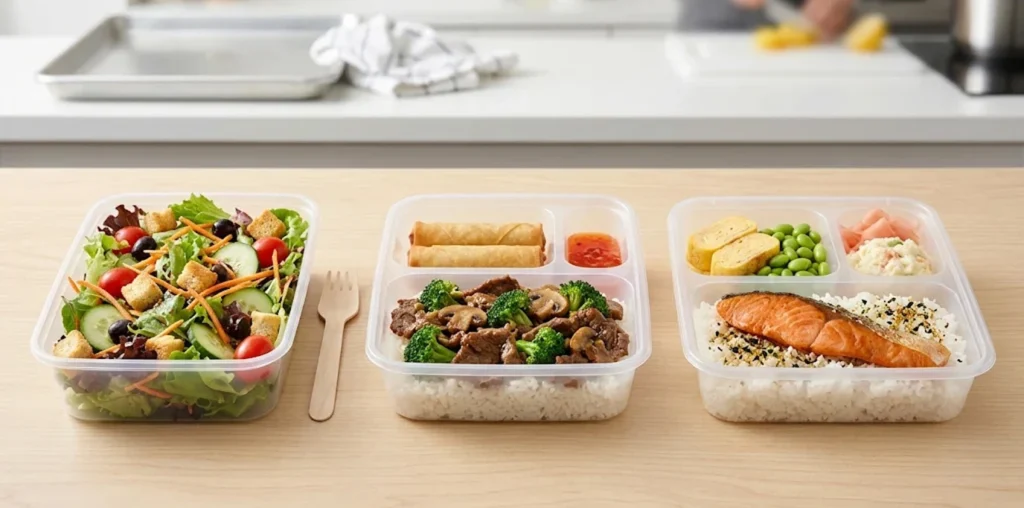
The structural layout of a disposable lunch box dictates how food is organized, transported, and presented to the end consumer. Selecting the right cell configuration is essential for maintaining meal integrity, preventing cross-contamination, and optimizing packing workflows in fast-paced commercial kitchens when purchasing disposable food containers wholesale.
- Single-Cell Design: Offers maximum interior volumetric capacity, making it ideal for single-item dishes such as fried rice, noodles, or large salads with unhindered surface areas.
- Double-Cell Layout: Effectively separates a main protein from side dishes, preventing flavor transfer and maintaining distinct food textures during transit.
- Triple-Cell Configuration: Engineered for complex bento boxes and institutional catering where multi-ingredient separation and precise portion control are mandatory.
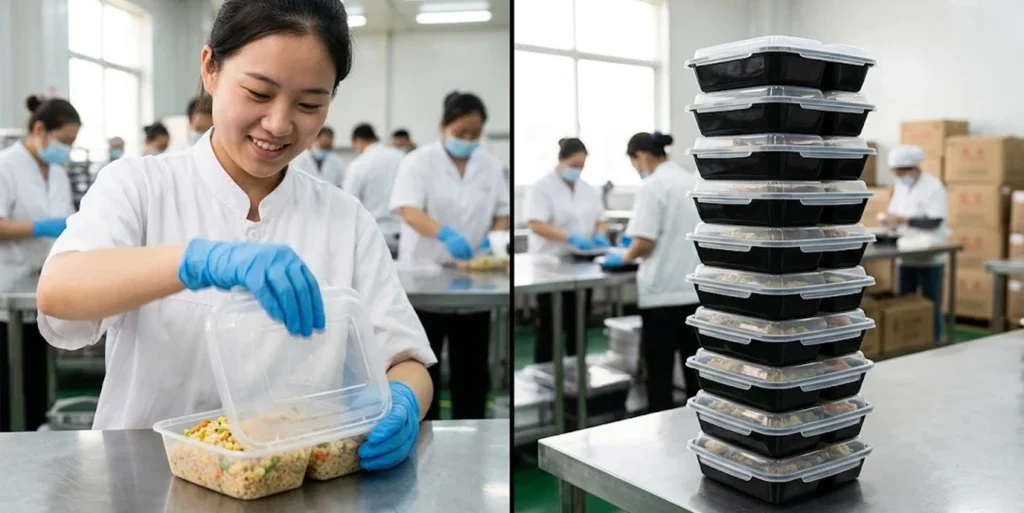
Guangzhong utilizes 50 fully automated injection molding lines with an approximate monthly capacity of 2,000 tons to produce rigid, high-precision multi-grid containers. These precision-molded partitions withstand internal liquid pressure, ensuring that sauces remain in their designated compartments and overall presentation remains pristine upon delivery.
💡 Frequently Asked Questions
Q: Which disposable lunch box structure is best for leak-proof soup delivery?
A: A separate-lid rectangular container made from high-grade polypropylene (PP) featuring a double snap-lock rim provides superior liquid containment, preventing soup leakage during bumpy transit.
Hinged vs. Separate Lid Lunch Boxes
Lid mechanism design is a critical factor influencing both warehouse packing efficiency and delivery stability. Understanding how lid integration affects operational speed helps procurement teams streamline their fulfillment processes while purchasing disposable lunch box wholesale products that safeguard food during long-distance delivery.
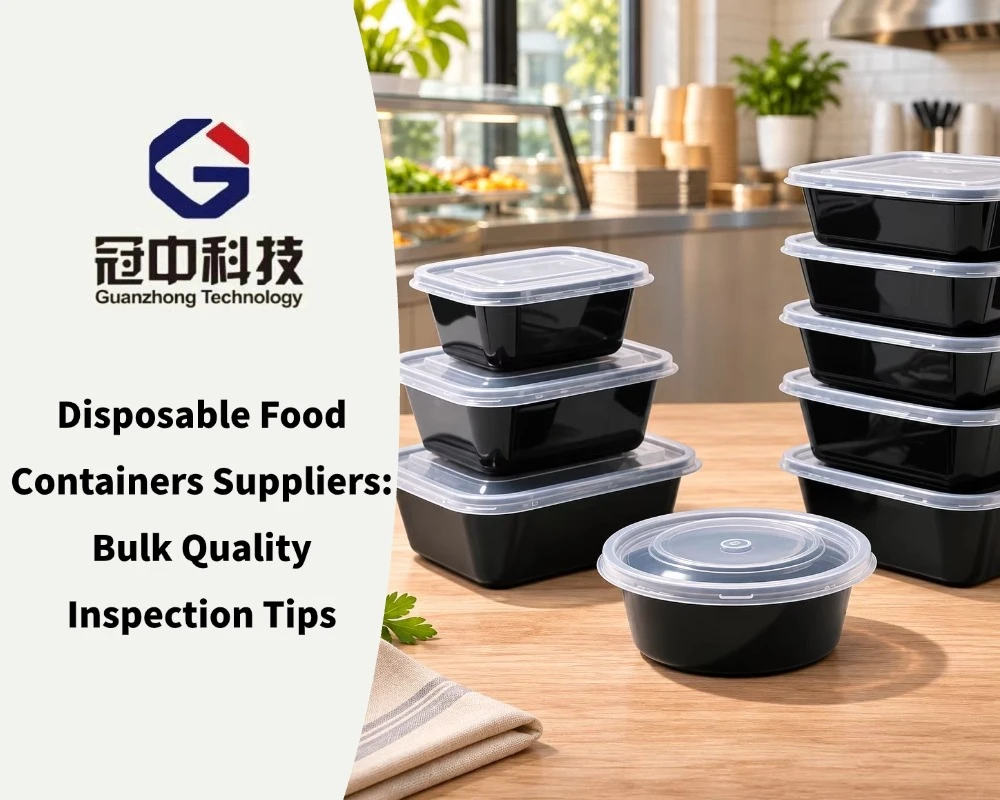
- Hinged Clamshell Design: Integrates the lid and base into a single unit via a flexible plastic hinge, cutting down box assembly time by up to 25% in busy commercial kitchens.
- Separate-Lid Detachable Cover: Features an independent lid that engages with the base using a 360-degree interlocking rim, distributing vertical weight evenly across stacked orders.
- Pressure Resistance: Separate lids provide superior vertical stacking strength, preventing container collapse when multiple delivery orders are stacked inside transport backpacks.
Guangzhong’s 8 fully automated blister forming lines, boasting an 800-ton monthly capacity, manufacture separate-lid containers with tight dimensional tolerances of less than 0.05 millimeters. This precision ensures a secure frictional fit, preventing accidental pop-offs while maintaining easy opening mechanisms for the end consumer.
💡 Frequently Asked Questions
Q: What is the main efficiency difference between hinged and separate lid food containers?
A: Hinged containers accelerate kitchen packing speed through integrated lid designs, whereas separate-lid containers provide superior vertical stacking strength and enhanced pressure resistance for heavy delivery orders.
Round, Square, and Rectangular Lunch Boxes
The geometric footprint of a disposable food container dictates its spatial efficiency during cold-chain transport, microwave reheating, and retail shelf display. Evaluating shape dynamics allows distributors seeking high-quality disposable food containers wholesale options to maximize shipping density and thermal performance simultaneously.
- Round Containers: Excel in thermal convection, allowing uniform heat distribution during microwave heating while simplifying liquid swirling for soups and gravies.
- Square and Rectangular Containers: Maximize internal spatial utilization, achieving over 95% volumetric efficiency inside standard delivery boxes and master cartons.
- Logistics Optimization: Rectangular geometries increase transport load density by up to 20%, significantly lowering freight costs per unit during international shipping.
Guangzhong provides comprehensive mold engineering for diverse geometries, allowing global B2B buyers to select shapes that balance microwave thermal performance with optimal palletization and container shipping metrics.
💡 Frequently Asked Questions
Q: How do compartment disposable containers reduce operational costs for catering?
A: Compartment containers eliminate the need for secondary inner packaging or separate sauce cups, reducing material expenses, minimizing container count per order, and speeding up assembly times.
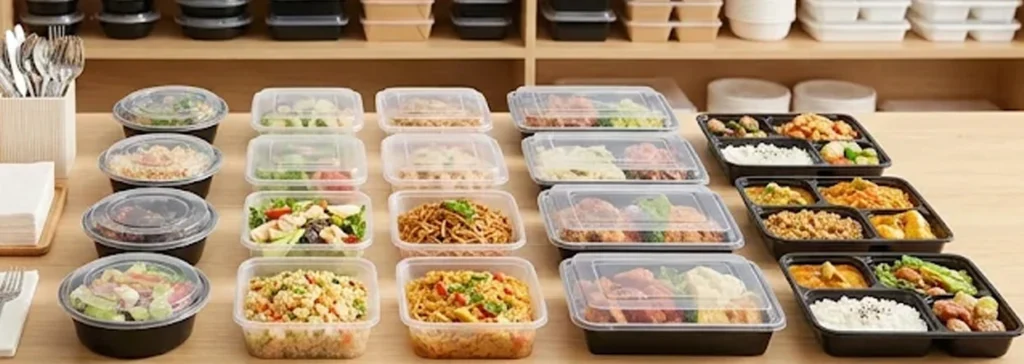
Pros, Cons, and Application Scenarios of Different Structures
Evaluating the mechanical trade-offs of each container structure helps procurement professionals match packaging specifications to specific menu items and distribution channels. Balancing cost, leak-resistance, and packing speed ensures optimal operational performance across diverse food service sectors when ordering disposable lunch box wholesale units.
- Single-Cell Efficiency: Low unit cost and high packing speed, but lacks ingredient separation for multi-item meals.
- Multi-Compartment Utility: High leak-resistance and excellent food presentation, though mold complexity slightly increases unit production cost.
- Hinged Convenience: Maximum packing speed for street food and bakeries, but lower vertical stacking weight limits.
| Container Structure | Cost Index | Leak-Resistance | Packing Speed | Primary Application |
| Single-Cell Rectangular | Low | Moderate | High | Fast food, noodles, rice, salads |
| Double/Triple Compartment | Moderate | High | Moderate | Bento meals, institutional catering |
| Hinged Clamshell | Low | Moderate | Very High | Bakery goods, street food, deli items |
| Separate-Lid Round | Moderate | High | Moderate | Soups, curries, wet gravies |
Integrating these structures into a commercial supply chain requires robust material backing. Guangzhong processes premium PET, PLA, PP, and biodegradable composite materials, avoiding paper and sugarcane to guarantee moisture resistance and structural rigidity. Backed by 3 biodegradable sheet extrusion lines and 5 bio-based masterbatch production lines yielding 2,000 tons monthly, Guangzhong ensures consistent wall thickness and stress endurance across all structural variants.
💡 Frequently Asked Questions
Q: What material is best for heat-resistant disposable lunch boxes?
A: High-grade polypropylene (PP) and specialized bio-based PP compounds are the optimal choices, offering thermal resistance up to 120°C for safe microwave heating without chemical leaching.
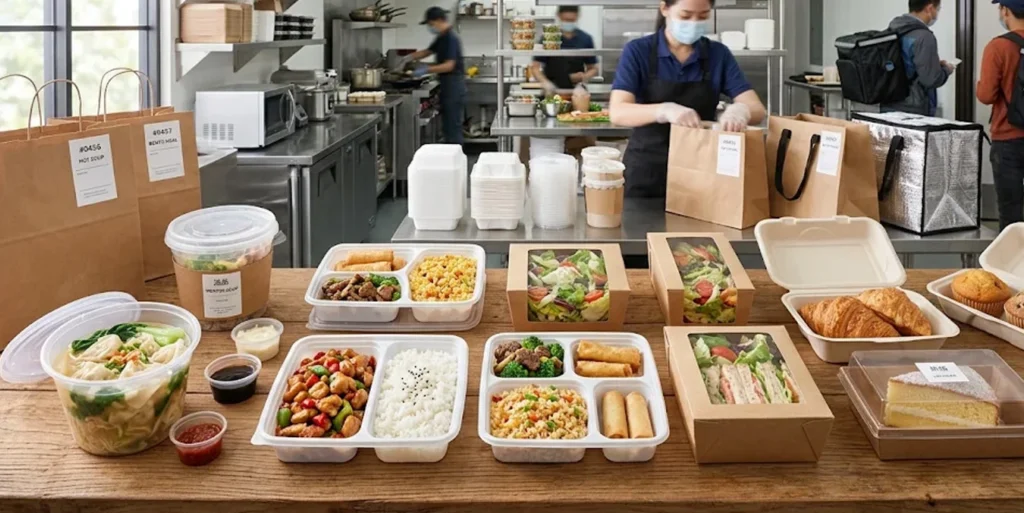
Guangzhong Full-Specification Lunch Boxes and Customization Advantages
As a premier manufacturing partner in the disposable packaging sector, Guangzhong operates a sprawling 200,000-square-meter industrial park equipped with 100,000 square meters of advanced production facilities and dedicated R&D centers. We provide direct factory pricing for buyers seeking disposable food containers wholesale with full customization capabilities.
- Complete Product Specifications and Models: We offer a comprehensive catalog of standardized and specialized containers, including round, square, rectangular, clamshell, and multi-compartment designs across various capacity sizes.
- Full OEM/ODM Customization Capabilities: Support tailored logo printing, custom dimensions, bespoke color shades, specialized structural molds, and custom material formulations (PET, PLA, PP, and bio-based composites).
- Massive Scale and Production Lead Time: Operating 50 injection molding lines, 8 blister forming lines, and 50 film blowing lines to deliver an annual capacity of 90,000 tons with a flexible MOQ of 30,000 pieces and a quick 7-15 day production cycle.
Guangzhong provides end-to-end manufacturing solutions designed to elevate your brand presence. Our continuous innovation backed by 10+ patents ensures that every client receives reliable, premium-quality food containers perfectly suited to their market requirements.
💡 Frequently Asked Questions
Q: What is the minimum order quantity (MOQ) and production lead time for custom wholesale containers?
A: The standard MOQ for custom disposable tableware and lunch boxes is 30,000 pieces, with a rapid production and delivery lead time ranging from 7 to 15 days.
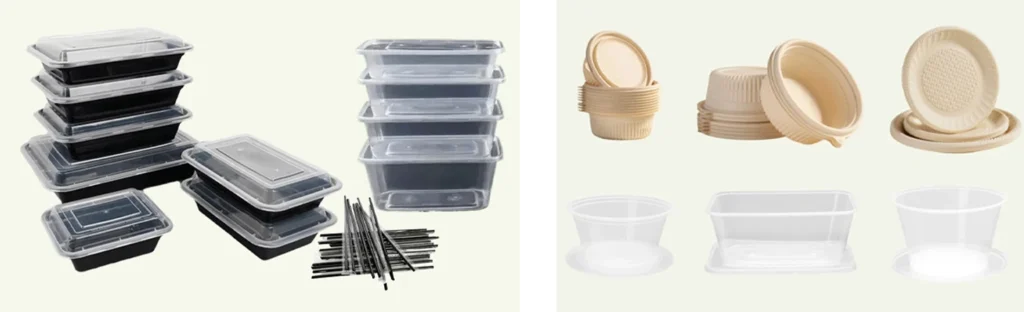
Contact Guangzhong today for free samples and wholesale factory quotes.
| Start Your Customization | WhatsApp: +86 13665956245 | Email: peters@quanzhong-bio.com |
Choosing the right container structure, lid mechanism, and geometry is essential for optimizing food delivery, customer satisfaction, and operational efficiency. As a leading direct factory manufacturer, Guangzhong offers extensive disposable lunch box wholesale solutions and disposable food containers wholesale options tailored to global B2B needs, combining robust manufacturing scale with versatile custom OEM/ODM services.