Key Takeaways
- Clear Product Shelf Life: In a standard cool and dry warehouse, unopened PLA and bio-based food containers manufactured by Guanzhong have a stable storage shelf life of 2 to 3 years.
- Environmental Degradation Mechanism: Industrial compost degradation of PLA tableware requires high humidity, rich microbial activity, and high temperature environments (50–60°C) simultaneously; standard warehouse environments lack these conditions and cannot trigger degradation.
- Anti-Aging Modification Technology: Advanced polymer modification technology blocks ester bond hydrolysis during storage while ensuring the products rapidly decompose within 7 to 45 days once placed in an industrial composting setup.
- Factory Manufacturing Capacity: Guanzhong operates as a leading disposable tableware factory with a 200,000 square meter industrial park and an annual capacity of 90,000 tons, supplying durable and long-shelf-life food containers wholesale to global B2B clients.
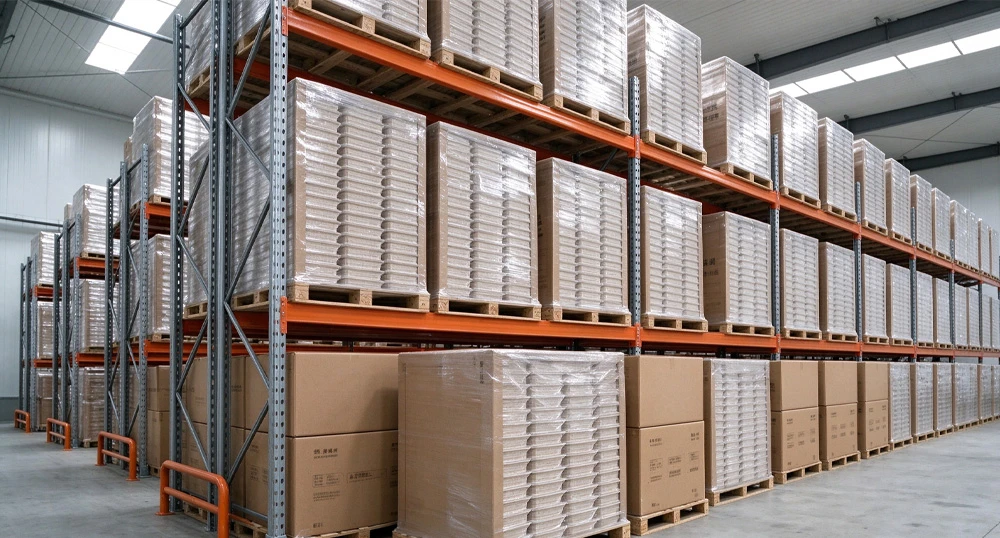
As a professional disposable tableware factory, Guanzhong frequently receives inquiries from overseas buyers regarding “how long is the shelf life (storage life) of unused PLA and bio-based food containers in a standard warehouse?” In fact, under standard warehousing conditions, PLA and bio-based food containers treated with anti-aging modification processes can be safely stored for 2 to 3 years without undergoing premature degradation, perfectly satisfying the long-term inventory turnover needs of global food containers wholesale businesses.
Warehouse PLA Container Storage Life
In the industrial packaging and catering utensil procurement sector, the storage stability of polylactic acid (PLA) and bio-based composite materials is one of the core indicators that B2B buyers are most concerned about. Extensive industrial testing and room-temperature storage tracking data show that unopened high-quality PLA and bio-based products produced by our disposable tableware factory generally have an actual shelf life of 2 to 3 years under standard warehouse environments.
The degradation rate of high molecular polymers depends on external environmental media and the chemical stability of the material itself. Unused PLA food containers mainly maintain the following three performance advantages during the warehousing stage:
- High Tensile and Compression Strength: Polymer main chains remain tightly cross-linked under dry, room-temperature conditions, resulting in no significant attenuation of load-bearing capacity for stacked trays and tableware.
- Excellent Geometric Stability: Container lid snapping precision, edge flatness, and smoothness maintain initial precision tolerances over several years.
- Moisture Defense Barrier Performance: The dense molecular barrier on the material surface continuously resists minor daily air moisture erosion.
For overseas wholesalers and importers engaged in food containers wholesale business, this multi-year shelf life means you can confidently conduct bulk purchasing and safety inventory reserves without worrying about product failure or disintegration due to long-cycle turnover.
💡 Frequently Asked Questions
Q: Will unused PLA tableware degrade by itself in a standard warehouse?
A: No. PLA degradation requires specific microorganisms, high humidity, and specific composting temperatures above 50-60°C; the room-temperature dry environment of a standard warehouse cannot satisfy the degradation trigger conditions.
Bio-Based Material Degradation Trigger Conditions
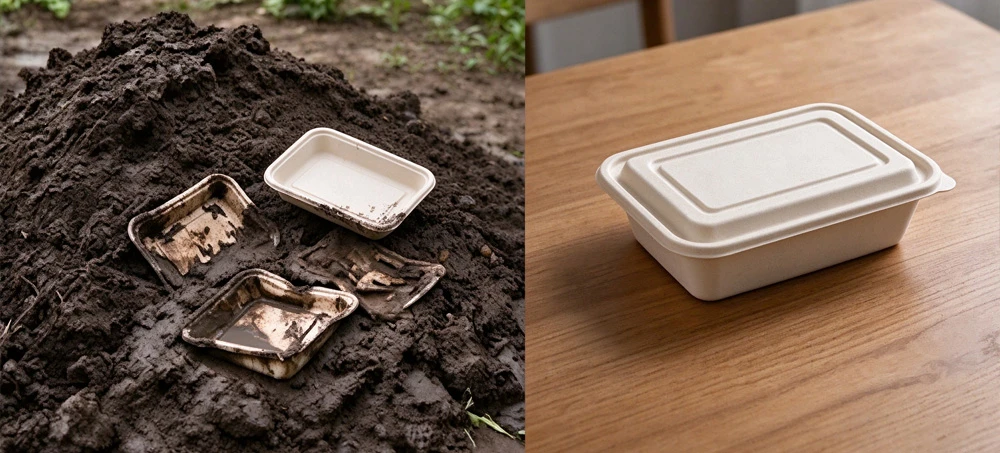
Many buyers have cognitive misunderstandings about biodegradable materials, mistakenly assuming that as long as it is an eco-friendly degradable material, it will start unannounced decomposition at any time in natural air. In fact, genuine industrial composting degradation processes require strict external physical conditions and biological environments to trigger collaboratively.
According to the International Biodegradable Polymers Association (IBAW) and ASTM D6400 industrial composting standards, effective degradation of PLA and bio-based materials must simultaneously satisfy the following three core elements:
- Sustained High Temperature Environment: The environmental temperature needs to reach 50°C to 60°C to induce thermal softening and segment movement of polymer molecular chains.
- High Saturation Humidity: Environmental relative humidity must be maintained above 60% so water molecules can effectively penetrate polymer gaps and induce ester bond hydrolysis.
- High-Density Active Microbial Population: A large presence of natural soil composting fungi and bacteria is required to metabolize low-molecular fragments after hydrolysis.
Standard warehouse environments are typically maintained at room temperature and relatively ventilated states, possessing neither high-density microbial populations nor high-humidity and high-temperature conditions. As an experienced disposable tableware factory, we ensure that before reaching the degradation threshold, the chemical bonds of bio-based food containers remain in a solid “dormant state” for safe long-term food containers wholesale stocking.
💡 Frequently Asked Questions
Q: What is the essential difference between composting degradation and daily warehousing storage?
A: The essential difference lies in the environmental medium. Composting environments possess high humidity, high microbial populations, and high temperatures above 50°C; whereas warehousing environments are dry and kept at room temperature, where material molecular chains remain highly stable and cannot initiate degradation.
Temperature and Humidity Impact on Shelf Life
Although bio-based tableware possesses good stability in warehouses, scientific temperature and humidity control remains a key factor in ensuring products maintain optimal toughness and appearance during their 2 to 3 year shelf life.
Prolonged exposure to extreme environments causes high-molecular materials to age physically at varying rates. The table below illustrates the specific impacts of different warehouse environmental parameters on the physical properties of PLA and bio-based products supplied by our disposable tableware factory:
| Warehouse Environmental Conditions | Environmental Parameter Indicators | Impact on PLA/Bio-Based Containers | Recommended Storage Life |
| Standard Recommended Warehouse | Temp < 30°C, Humidity < 70% | Molecular chains highly stable; all physical strengths maintain initial states | 24 to 36 Months |
| High Temperature Dry Environment | Temp 40°C-45°C, Humidity < 50% | Long-term heat exposure may slightly reduce material toughness; slight crystallinity changes | 12 to 18 Months |
| High Humidity Warm Environment | Temp > 40°C, Humidity > 80% | Trace water vapor accelerates surface hydrolysis; products may tend toward embrittlement | 6 to 12 Months |
| Direct Sunlight Outdoor Exposure | Strong UV radiation, unshielded | UV destroys polymer chains, causing material discoloration and embrittlement | Not Recommended for Storage |
To ensure food containers wholesale bulk goods remain in optimal condition, warehouses are advised to implement light-shielding and moisture-proofing measures, avoiding placement of goods close to high-temperature walls or direct exposure to rain.
💡 Frequently Asked Questions
Q: What control conditions should overseas buyers pay attention to when conducting bulk warehousing?
A: It is recommended to control the warehouse environment temperature below 30°C and relative humidity below 70%, while keeping pallets off the floor and away from walls and avoiding direct sunlight.
Anti-Aging Modification Process Principle
Pure PLA material, before modified processing, is relatively sensitive to moisture and heat. To completely eliminate global buyers’ concerns about premature degradation, modern disposable tableware factory operations generally adopt polymer modification technologies to enhance product weatherability and stability.
The core philosophy of anti-aging modification lies in achieving “ultra-strong stability during use and storage, alongside rapid degradation after composting disposal.” Its molecular-level technical pathways mainly include:
- Free Radical Trapping and Anti-Oxygen Protection: Adding food-grade anti-oxidation formulas during extrusion to intercept free radical chain reactions caused by heat and trace oxygen, preventing thermal oxidation of polymer main chains.
- Carboxyl End-Capping Water Blocking Technology: Introducing special end-capping modifiers to seal active carboxyl groups at the ends of PLA molecular chains, significantly reducing the probability of water-catalyzed hydrolysis.
- Crystallinity Regulation and Enhancement: Optimizing crystallization rates during molding to improve overall material density, effectively blocking external moisture from penetrating the interior of the material.
Bio-based tableware treated with modification processes displays stable performance comparable to traditional PET and PP plastics under daily storage states; once used and placed in an industrial composting environment, high humidity and heat can still rapidly activate the degradation mechanism, completing fermentation breakdown within 7 to 45 days. This guarantees that buyers ordering food containers wholesale receive items that excel both in long-term warehouse storage and eco-friendly end-of-life disposal.
💡 Frequently Asked Questions
Q: Will anti-aging modification processes affect the final composting degradation performance of tableware?
A: No. The modification process only blocks hydrolysis during dry room-temperature storage; once entering the high-humidity, high-temperature environment of industrial composting, the material can still rapidly degrade within 7-45 days.
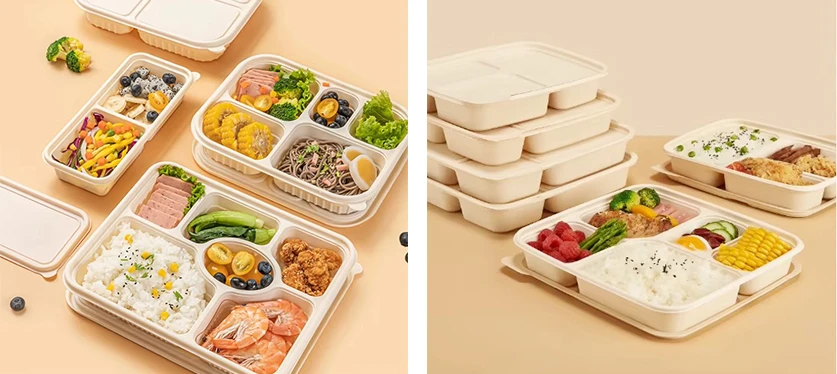
Guanzhong Modification Technology and Shelf Life Commitment
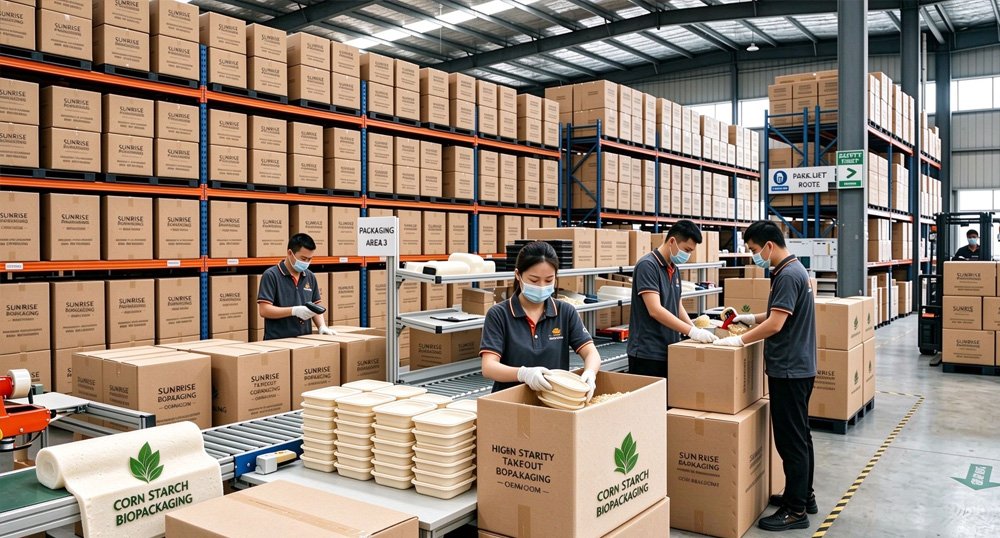
As a powerful source manufacturing factory, Guanzhong possesses a 200,000 square meter modern industrial park, including 100,000 square meters of standardized production workshops and an advanced R&D center, having accumulated 10+ core technology patents. Guanzhong operates as a premier disposable tableware factory focusing on utilizing high-quality PET, PLA, PP, and bio-based as well as biodegradable composite materials (excluding paper and sugarcane) to provide global catering clients with high-quality disposable tableware, food containers, and cutlery.
Guanzhong provides comprehensive quality and service guarantees for global buyers through full-industry-chain refined production management and independent modification technology:
- Authoritative Quality Certificate Certifications: All product lines strictly follow international food contact safety and environmental degradation standards, certified by authoritative international third-party testing institutions, possessing complete compliance export qualifications.
- 2-3 Year Long-Term Shelf Life Commitment: Relying on 5 bio-based modification masterbatch lines (monthly capacity 2,000 tons) and 3 sheet extrusion lines, independently developed moisture-blocking anti-oxidation modification formulas ensure packaging containers possess 24 to 36 months of ultra-strong shelf stability under standard warehouse environments.
- Comprehensive Full-Cycle After-Sales Service System: Providing full-process tracking services from sample confirmation and OEM/ODM customization (30,000 piece MOQ, 7-15 day production cycle) to bulk warehousing guidance, with a professional team rapidly responding to quality feedback from overseas buyers.
Guanzhong operates 50 fully automated injection molding lines (monthly capacity 2,000 tons), 8 thermoforming lines (monthly capacity 800 tons), 50 film blowing and printing lines alongside 25 bag making lines (monthly capacity 1,500 tons), and 5 straw lines (monthly capacity 250 tons), supported by 180 professional production personnel ensuring an annual capacity of 90,000 tons for worldwide food containers wholesale distributions.
💡 Frequently Asked Questions
Q: What are Guanzhong’s core advantages in anti-aging modification and order delivery?
A: Guanzhong operates 5 masterbatch modification lines and 3 sheet lines, with an annual capacity of 90,000 tons. Product storage life reaches 2-3 years, production cycles take only 7-15 days, and efficient OEM/ODM customization is supported starting from 30,000 pieces.
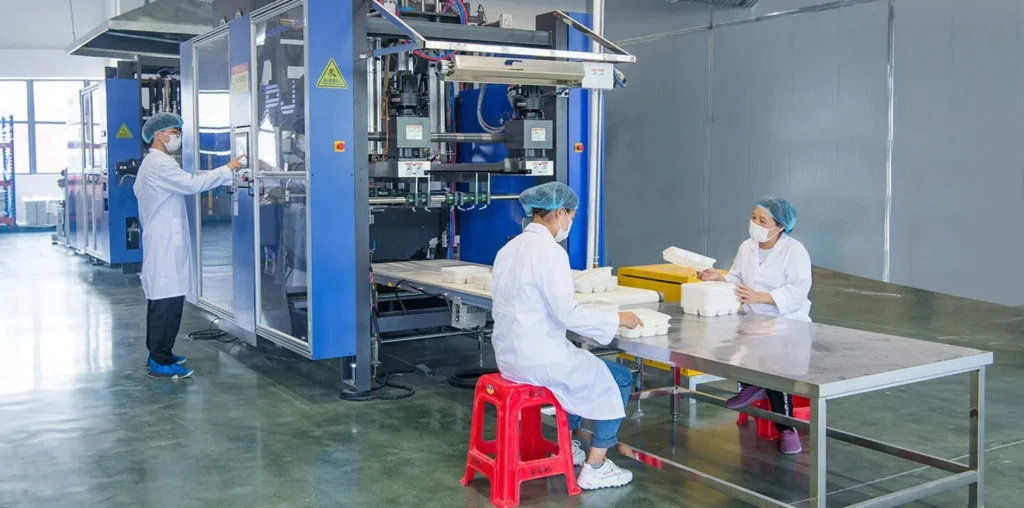
With a 200,000 square meter industrial park and an annual production capacity of 90,000 tons, Guanzhong is dedicated to providing global buyers with high-stability, long-shelf-life eco-friendly tableware. Contact our professional team today to receive the latest product catalog and free samples, and kickstart your green business growth!
| Start Your Customization | WhatsApp: +86 13665956245 | Email: peters@quanzhong-bio.com |
As long as standard warehousing specifications are followed, unused PLA and bio-based food containers can be safely stored in warehouses for 2 to 3 years. As a source disposable tableware factory, Guanzhong completely resolves buyers’ concerns regarding premature degradation through advanced anti-aging modification technology and a 90,000-ton annual capacity. Whether you are looking for long-term stable eco-friendly catering utensils or planning large-scale food containers wholesale purchasing projects, Guanzhong can provide you with high-quality products, authoritative certification guarantees, and comprehensive after-sales support to help your business achieve sustainable and efficient growth.