Key Takeaways
- Thermal Stability & Safety Threshold: Polypropylene (PP) features a high melting point of 160°C–170°C and a heat deflection temperature (HDT) up to 120°C, perfectly withstanding the instantaneous high heat generated by oily hot food and completely eliminating thermal softening and leakage risks.
- Physical Molecular Barrier: PP possesses a highly crystalline non-polar molecular structure with extremely low permeability to edible oils and water vapor, remaining non-softening, non-stick, and grease-proof under long-term contact.
- Microwave Heating Compliance: PP is the only commodity plastic recognized by authoritative global food safety agencies (FDA/EU) for direct microwave heating. It requires no phthalate plasticizers during production, ensuring hot food dining safety.
- Guanzhong Scale Assurance: Leveraging a 200,000 m² industrial park, an annual output of 90,000 tons, 50 fully automatic injection molding lines, and 10+ technical patents, Guanzhong provides global buyers with 7-15 days fast delivery and cost-effective OEM/ODM packaging customization services.
In today’s rapidly developing global food delivery and prepared dish industries, selecting high-quality takeaway packaging containers has become a core consideration for restaurant brands to enhance consumer experience, reduce customer complaints, and ensure food safety. Facing a wide array of plastic and composite materials on the market, how can buyers select packaging that withstands high-temperature oil without physical deformation or chemical migration? For B2B buyers seeking take away food containers wholesale, understanding the physical and chemical properties of underlying materials is essential.
As a leading pp food containers manufacturers worldwide, Guanzhong deepens its presence in the food-grade container manufacturing sector through high-precision automated production and a strict quality control system. With a melting point up to 160°C–170°C, superior molecular crystallinity, excellent microwave suitability, and significant physical lightweight advantages, Polypropylene (PP) builds an irreplaceable industry standard in oily and high-heat delivery scenarios, becoming the preferred material for hot and oily food packaging.
Physical and Thermal Performance under High-Oil and High-Temperature Environments
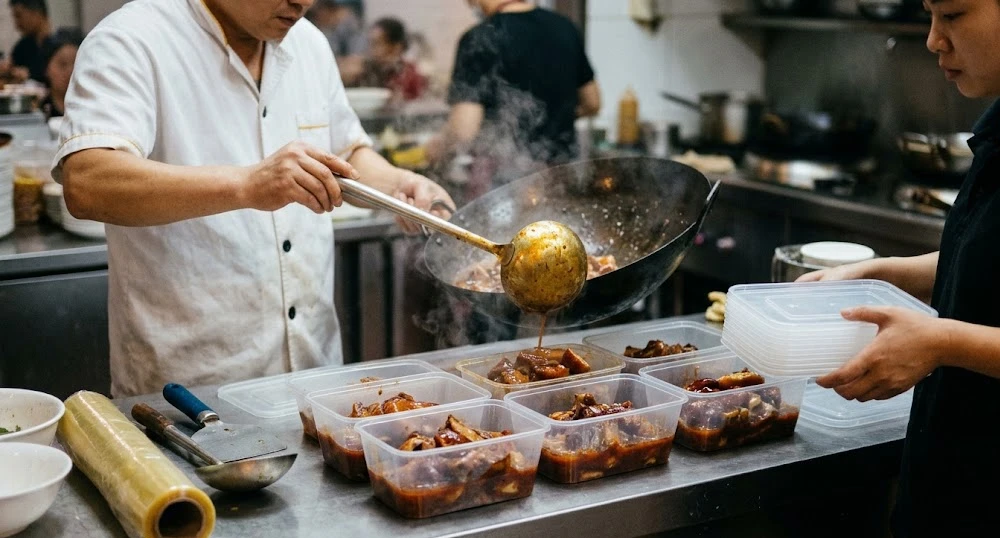
Oily dish takeaways (such as braised pork, Hunan and Sichuan stir-fries, fried chicken, and hot soups) usually reach temperatures between 90°C–110°C when packaged straight out of the pan. For catering distributors relying on take away food containers wholesale, evaluating thermal resilience is essential because the boiling point and heat retention capacity of edible oil are far higher than those of water, easily forming local high-temperature zones inside sealed containers that demand exceptional heat deflection temperatures (HDT) and high melting points from packaging materials.
When facing continuous heat transfer from high-temperature oils, the molecular chain stability of different resin materials demonstrates massive differences:
- Softening Point & Melting Upper Limit: Polypropylene (PP) is a semi-crystalline thermoplastic polymer with a melting point as high as 160°C–170°C, whereas the softening point of PET is only around 70°C, and PS undergoes thermal deformation at 80°C–90°C.
- Heat Deflection Temperature (HDT) Performance: Under standard loaded tensile stress testing (ASTM D648), the heat deflection temperature of PP can stably withstand continuous contact with hot oil at 110°C–120°C without internal blistering or wrinkling.
- Sealing and Anti-Drop Load Bearing: PP containers in high-heat states still maintain good rigidity and impact strength, preventing container bodies from softening and collapsing under heat, eliminating flipping and scalding risks during rider delivery.
Selecting materials with high thermal stability is core to ensuring safe delivery of restaurant takeaways. Experienced pp food containers manufacturers recognize that the outstanding thermal physical upper limit of PP fundamentally eliminates lid sealing failure and takeaway leakage caused by container heat softening, providing a solid physical protective barrier for oily hot food packaging.
💡 Frequently Asked Questions
Q: Why is polypropylene (PP) the preferred material for hot and oily takeaway food containers?
A: Polypropylene (PP) features a high melting point of 160°C–170°C and a heat deflection temperature reaching 120°C. Unlike PET or PS, PP maintains structural integrity and dimensional stability when in contact with hot oils (90°C–110°C), effectively preventing container deformation, lid failure, and thermal chemical migration.
Superior Oil Penetration Resistance Brought by Non-Polar Molecular Structure
Edible oils are mainly composed of long-chain fatty acid triglycerides, which exert strong swelling and penetration effects on many non-polar or weakly polar polymer materials. When restaurants purchase take away food containers wholesale, choosing containers with insufficient molecular barrier density leads to oil molecules penetrating the matrix at a microscopic level, causing surface oil hanging, seepage, or container softening.
Polypropylene (PP) is polymerized from propylene monomers through catalytic processes, featuring highly regular side methyl arrangements and high crystallinity (typically between 50%–70%). This tightly packed semi-crystalline structure forms a dense molecular barrier inside the material, making the permeability of water vapor and non-polar oils nearly zero.
| Physical & Chemical Property Indicator | Polypropylene (PP) | Polyethylene Terephthalate (PET) | Polystyrene (PS) |
| Melting Point Range (°C) | 160 – 170 | 250 – 260 | 240 (Amorphous Softening Point ~100) |
| Heat Deflection Temp (HDT @0.45MPa) | 110 – 120 °C | 65 – 70 °C | 75 – 85 °C |
| Oil Penetration Resistance (ASTM D722) | Excellent (No Seepage/Swelling) | Good | Poor (Easily Swollen by Aliphatic Hydrocarbons) |
| Microwave Heating Suitability | Safely Applicable | Not Applicable (Prone to Deformation) | Not Applicable (Prone to Melting and Monomer Release) |
| Material Density (g/cm³) | 0.90 – 0.91 | 1.38 – 1.40 | 1.04 – 1.06 |
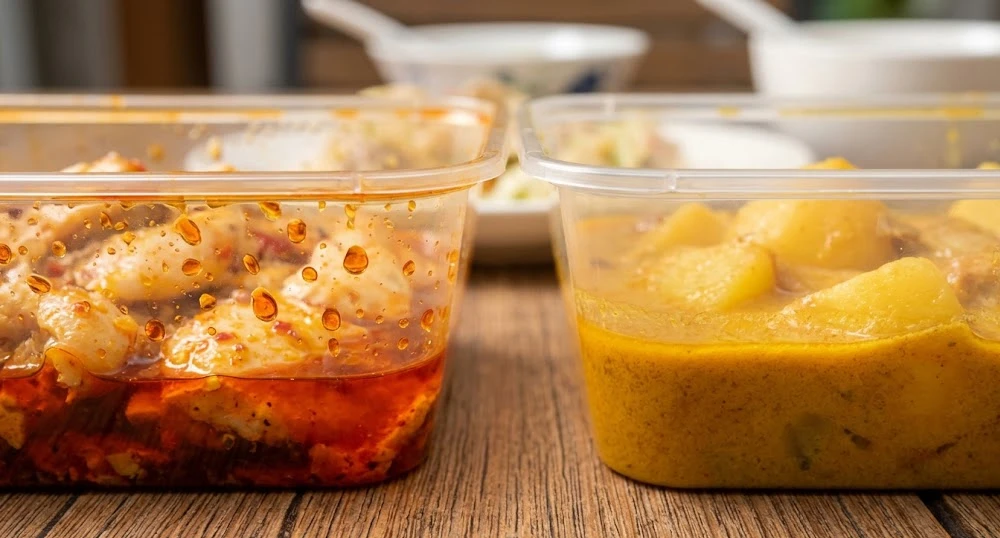
According to EU Food Contact Materials (FCM) migration test specifications (EU No 10/2011) and US FDA 21 CFR 177.1520 standards, products from certified pp food containers manufacturers demonstrate extremely low overall migration levels (below the 10 mg/dm² statutory limit) in overall migration tests using isooctane and water-based simulants. This chemical inertness ensures that under long-term immersion in chili oil, curry, and highly salty acidic dishes, PP containers will not hang oil or leak, nor will they absorb food flavors, perfectly preserving the original taste and quality of meals.
💡 Frequently Asked Questions
Q: How does the non-polar crystalline structure of PP protect against grease penetration?
A: PP possesses a semi-crystalline polymer structure with a crystallinity level of 50%–70%. This high density of polymer chains acts as a physical barrier against long-chain fatty acids in edible oils. It prevents grease absorption, wall softening, and oil leakage under long-term contact with hot food.
Microwave Heating Safety and Food Migration Compliance
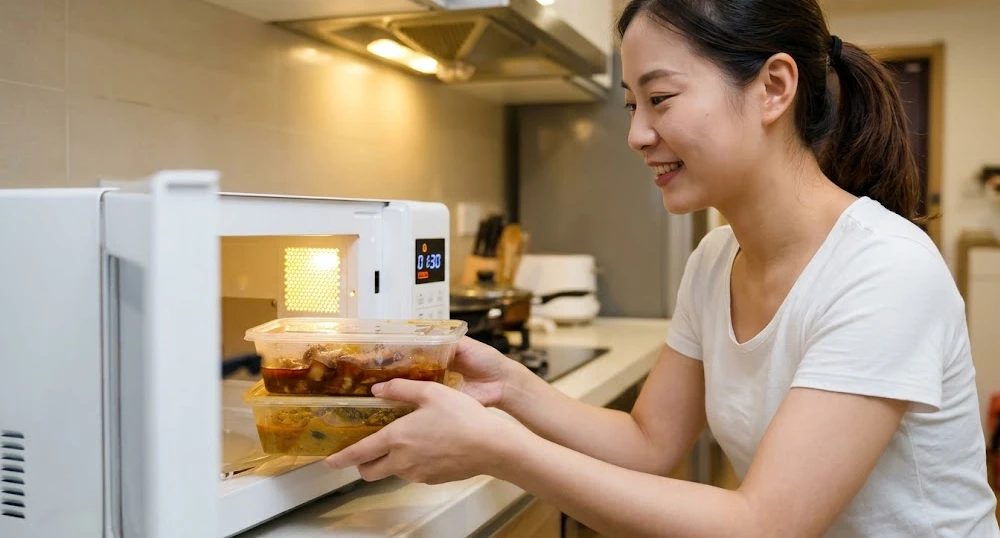
With changing modern dining consumption habits, secondary microwave heating has become an indispensable functional attribute of takeaway containers. B2B buyers sourcing take away food containers wholesale must prioritize consumer safety under high-frequency microwave electromagnetic fields (2450 MHz), where polar molecules (water and oil) rotate rapidly to generate intense friction heat.
As a commodity plastic recognized by global authoritative food safety regulatory agencies (including the FDA, EU EFSA, and Chinese National Standards) for direct microwave heating, products supplied by professional pp food containers manufacturers possess unique material safety attributes:
- Zero Plasticizer Leaching Risk: PP resin requires no phthalate plasticizers during synthesis and high-precision injection molding processes, eliminating migration of harmful substances during heating at the source.
- Extremely Low Dielectric Loss Factor: Microwaves directly penetrate PP container walls to act on food, while temperature rise of the container itself comes from thermal conduction of food, maintaining geometric dimension stability even under 120°C internal hot oil temperatures.
- Acid, Alkali & Oil-Hanging Resistance: Under high-temperature microwave environments, PP does not undergo chemical reactions with oil, acid, or salt components in food, safeguarding food purity after secondary heating.
In helping catering brands prevent compliance risks and protect end-consumer health, choosing compliant food-grade PP containers provides a baseline guarantee for closing the food safety loop. Microwave safety not only elevates consumer dining experience, but also serves as a core barrier for catering brands against food safety compliance risks.
💡 Frequently Asked Questions
Q: Can PP takeaway food containers be safely heated in a microwave?
A: Yes. PP is the only commodity plastic certified for direct microwave heating by international health authorities. Because PP contains no phthalate plasticizers and has a high thermal threshold, it does not melt, deform, or leach harmful chemicals when microwaving hot or oily meals.
Full Life Cycle Cost-Effectiveness and Recycling Advantages
For catering chain groups and wholesalers purchasing tableware on a large scale, packaging economy lies not only in unit prices, but also depends on material density, transit damage rates, and comprehensive Life Cycle Assessment (LCA) costs. When sourcing take away food containers wholesale, material density directly impacts shipping costs and raw material consumption.
Among common commodity plastics, PP provided by leading pp food containers manufacturers brings significant cost-reduction and efficiency-enhancement value to commercial procurement with its unique physical density and recycling advantages:
- Material Lightweighting Advantage: PP has the lowest resin density (0.90–0.91 g/cm³). Compared with PET (1.38 g/cm³), it saves 30%–35% of resin material weight under identical wall thickness and strength.
- Reduced Logistics and Freight Costs: The reduction in unit container weight directly lowers payload weights for long-distance land transportation and international sea freight, significantly cutting comprehensive logistics expenses for B2B bulk purchases.
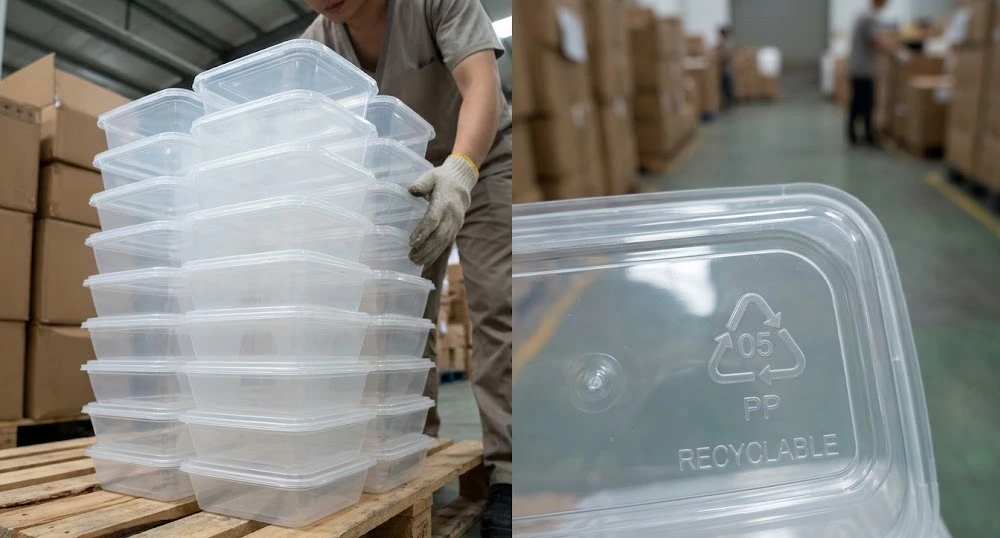
- Mature Waste Recycling System: PP is marked with the “05” triangular recycling code, exhibiting excellent melt-reprocessing performance and extremely high reutilization rates in industrial closed-loop recycling systems.
PP material achieves the best balance among performance, safety, and unit purchase cost. Choosing lightweight and highly recyclable PP food containers not only helps enterprises effectively control supply chain costs, but is also a wise move to respond to global ESG sustainable development policies.
💡 Frequently Asked Questions
Q: How does the low density of PP material lower wholesale packaging costs for buyers?
A: PP has a low polymer density of 0.90–0.91 g/cm³, which is 30%+ lighter than PET (1.38 g/cm³). This material efficiency lowers the raw resin weight required per unit, reducing both manufacturing unit costs and global freight expenses for bulk wholesale shipments.
Guanzhong’s Manufacturing Strength in PP Food Containers
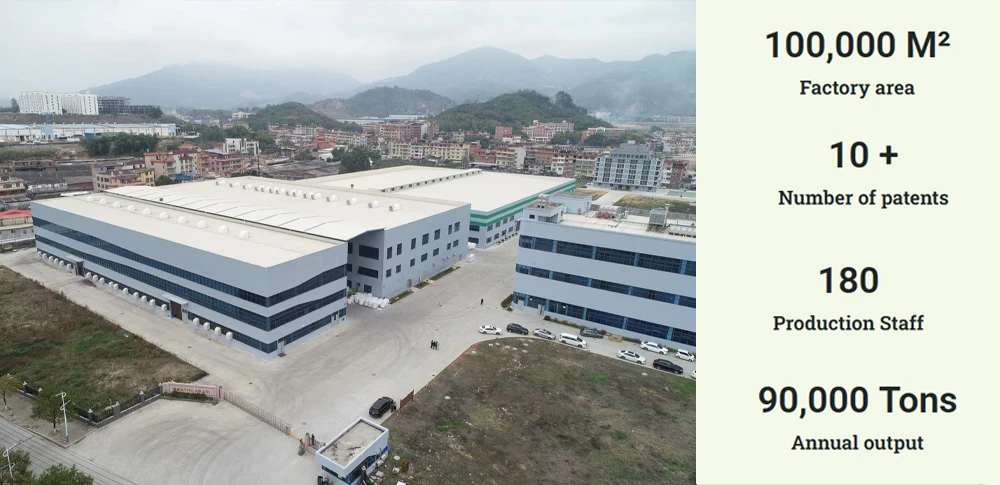
As an industry-leading pp food containers manufacturers choice, Guanzhong relies on a 200,000 m² industrial park to establish 100,000+ m² of production facilities and a 100,000 m² standardized factory and advanced R&D center. Equipped with 180 professional technical and production staff, an annual comprehensive output of 90,000 tons, and 10+ core technical patents, the factory demonstrates exceptional large-scale manufacturing capabilities for clients seeking take away food containers wholesale.
Focusing on precision manufacturing of PP food containers, Guanzhong has built a highly competitive fully automated production matrix and customized service model:
- Fully Automatic Injection Molding Production Lines: Featuring 50 fully automatic injection molding lines with a monthly PP food container capacity up to approx. 2,000 tons, fully ensuring uniform container wall thickness, tight sealing, and precise buckle structures.
- Fully Automatic Thermoforming Production Lines: Equipped with 8 fully automatic thermoforming lines with a monthly PP sheet thermoforming capacity of approx. 800 tons, achieving efficient molding of lightweight takeaway boxes and trays.
- Full-Chain Multi-Material Synergy: Combining 3 sheet extrusion lines and 5 masterbatch modification lines (approx. 2,000 tons/month), as well as film blowing (approx. 1,500 tons/month) and straw (approx. 250 tons/month) production lines, Guanzhong excels not only in PP, but synergizes PET, PLA, bio-based, and biodegradable composite materials (excluding paper and sugarcane) to deliver one-stop catering packaging solutions.
- Flexible OEM/ODM Customization Support: Fully supporting logo printing, custom types, and exclusive dimensional development. Minimum order quantities (MOQ) for custom tableware and plates are as low as 30,000 pieces, with fast shipping within a 7-15 days production lead time.
As a professional factory with strong manufacturing power, Guanzhong ensures that every batch of PP food containers meets international food contact safety standards through strict quality control and large production line scale. Whether facing high-frequency bulk orders or personalized customization needs, Guanzhong provides global catering clients with stable and reliable supply guarantees.
💡 Frequently Asked Questions
Q: What are Guanzhong’s standard production lead times and MOQs for custom PP containers?
A: Guanzhong offers a rapid production cycle of 7–15 days with a minimum order quantity (MOQ) of 30,000 pieces for custom molded containers and cutlery. Backed by 50 automatic injection molding lines and a 90,000-ton annual capacity, we fully support OEM/ODM requests including custom logos, dimensions, and base colors.
Upgrade Your Catering Takeaway Packaging Supply Chain! Welcome to contact us for quotes!
| Start Your Customization | WhatsApp: +86 13665956245 | Email: peters@quanzhong-bio.com |
In modern food delivery markets pursuing food safety, distribution efficiency, and dining quality, polypropylene (PP) firmly holds the top position for hot and oily takeaway packaging materials owing to its high melting point, high-temperature grease resistance, penetration resistance, microwave heating safety, and cost advantages. For businesses sourcing take away food containers wholesale, partnering with established pp food containers manufacturers like Guanzhong—backed by a 200,000 m² industrial park and a 90,000-ton annual capacity—ensures access to reliable, eco-friendly, and cost-effective packaging solutions engineered to meet rigorous international standards.